
Side Dishes
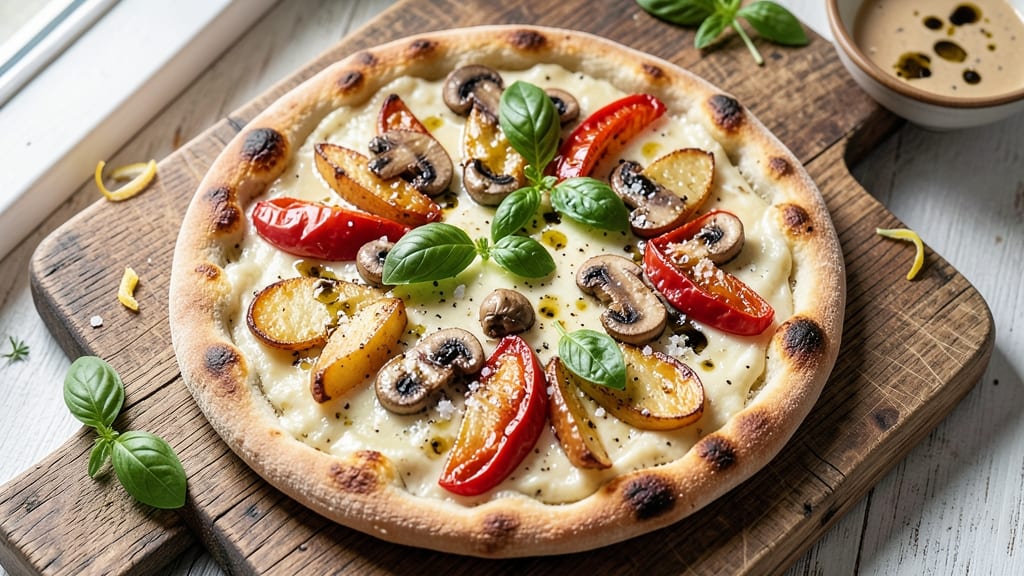
This vegan potato pizza recipe redefines comfort food with a crispy crust that holds its own against creamy cashew cheese and hearty roasted potatoes. 💛 The secret lies in a simple vegan dough that bakes up golden and sturdy, while the cashew cheese delivers that signature melt without a single dairy ingredient.
I developed this recipe after years of perfecting the balance between texture and flavor—no one will miss the cheese here.
The magic starts with the crust, made from basic pantry staples that transform into something restaurant-worthy. No special equipment needed—just a mixing bowl and your oven. The potatoes take center stage, roasted until tender with crispy edges, then layered with the cashew cheese that becomes irresistibly stretchy when baked.
This isn't just a vegan substitute; it's a dish that stands on its own.
By the time you pull this pizza from the oven, you'll have a golden, bubbling masterpiece with a crispy crust that shatters slightly at the edges and creamy cheese that pulls in long, satisfying strands.
The roasted potatoes add hearty substance, while the cashew cheese brings that familiar comfort of melted dairy—just without any animal products. It's the kind of meal that satisfies even the most devoted cheese lovers.
Perfect for weeknight dinners or when you're craving something hearty yet plant-based, this pizza proves vegan cooking can be just as indulgent. The recipe scales easily, so you can make one for two or feed a crowd.
Here's how to create this crispy, cheesy, potato-packed delight that everyone will beg for seconds of.
Ingredients for vegan potato pizza
Basic pantry staples transform into a golden crust and creamy cashew cheese that'll fool even cheese lovers.
| Ingredient | Amount | Notes |
|---|---|---|
| All-Purpose Flour 🌾 | 2 ½ cups | Unbleached preferred for lighter crust |
| Active Dry Yeast 🍄 | 1 tsp | Ensure yeast is fresh and active |
| Granulated Sugar 🍬 | 1 tbsp | Feeds yeast for better rise |
| Salt 🧂 | 1 tsp | Kosher or sea salt preferred |
| Olive Oil 🫒 | ½ cup | Extra-virgin for best flavor |
| Warm Water 💧 | 1 ¼ cups | 110°F for optimal yeast activation |
| Russet Potatoes 🥔 | 2 lbs | Medium-sized, organic preferred |
| Extra-Virgin Olive Oil 🫒 | 2 tbsp | For roasting potatoes |
| Salt 🧂 | 1 ½ tsp | For roasted potatoes |
| Garlic Powder 🧄 | 1 tsp | For potato seasoning |
| Raw Cashews 🥜 | 1 cup | Soaked in water for cheese |
| Nutritional Yeast 🧀 | ½ cup | For cheesy flavor |
| Lemon Juice 🍋 | 1 tbsp | Freshly squeezed |
| White Miso Paste 🍶 | 1 tbsp | For umami depth |
| Salt 🧂 | ½ tsp | Adjust to taste |
The crust starts with flour—King Arthur or Bob's Red Mill are my go-tos for that perfect rise. Yeast is non-negotiable here; grab fresh packets from the baking aisle (not the back of your pantry). The cashews? Trader Joe's or Costco sell them the cheapest, but any raw cashews work. Soak them overnight—this is crucial for that creamy texture. For the potatoes, organic russets from the grocery store's produce section give the best flavor, but any russet will do. Just make sure they're uniform in size so they roast evenly.
No cashews? Silken tofu blended with nutritional yeast works in a pinch, though texture won't be identical. Short on miso? White soy sauce at half the amount adds umami, but miso gives that deeper savory punch. The crust can handle substitutions—whole wheat flour at 50% replacement adds fiber but makes it denser. For the potatoes, skip the garlic powder if you've got fresh—roast 3 cloves minced with the oil for real flavor. And if you're worried about the crust being too dense, let the dough rest 30 minutes after mixing—this relaxes the gluten for a lighter bake.
Crust dough keeps 2 days wrapped in the fridge or 3 months frozen. The cashew cheese mix? 5 days max in the fridge—it separates fast. Roasted potatoes reheat beautifully; just pop them back in the oven with a drizzle of olive oil. Portion the cheese mix into ice cube trays before freezing—perfect for quick pizza toppings later. And if you make extra crust, freeze it between parchment paper for future pizzas or flatbreads.
Why You'll Love This Recipe
- No Yeast Hassle: I mix the dough in 5 minutes—just flour, yeast, sugar, and warm water—then let it rise while I prep the toppings. No kneading, no waiting hours, just a simple dough that stretches like a dream.
- Golden Crust Magic: That olive oil in the dough? It keeps the crust crispy without needing butter. The edges get perfectly browned, while the center stays soft—like a pizza should be.
- Potato Powerhouse: Between us, mashed potatoes as the base are a game-changer. They soak up sauce, add creaminess, and turn every bite into comfort food. (Yes, even on a Tuesday night.)
- Budget-Friendly Feast: Flour, yeast, and potatoes are pantry staples—this feeds four for under $5. Leftovers reheat beautifully, and the dough freezes like a champ for next week’s lazy dinner.
Step-by-step instructions for vegan potato pizza
Let's create a pizza that's crispy, cheesy, and packed with potato flavor—without any dairy or meat.
👨🍳 Step 1: Make the Creamy Cashew Cheese
First, soak the 1 cup raw cashews in hot water for 15 minutes—this softens them perfectly. Drain and transfer to a food processor with the 0.5 cup nutritional yeast, 1 tbsp lemon juice, 1 tbsp white miso paste, and 0.5 tsp salt. Pulse until completely smooth, scraping down the sides as needed. The texture should be like thick, creamy mayo—this is your magic cheese sauce!
Here's the thing—nutritional yeast gives that classic cheesy flavor, while miso adds umami depth. If it looks too thick, add 1-2 tablespoons of water until it reaches a spreadable consistency. Taste and adjust seasoning—you might want more salt or lemon juice depending on your preference. Cover and set aside while you prep the crust.
🍳 Step 2: Prepare the Potato Topping
While the cheese chills, preheat your oven to 425°F. Cut the 2 lbs russet potatoes into ¼-inch thick slices—uniform thickness ensures even cooking. Toss them in a large bowl with 2 tbsp extra-virgin olive oil, 1.5 tsp salt, and 1 tsp garlic powder. Spread them on two baking sheets in a single layer (don't overlap or they'll steam instead of crisp).
Roast for 25-30 minutes, flipping halfway, until the edges are golden brown and crispy. You want them tender but still holding their shape—like perfect potato chips. Let them cool slightly before using. The garlic powder gives a subtle kick that pairs perfectly with the creamy cheese.
👨🍳 Step 3: Mix and Shape the Crust
In a large bowl, whisk together the 2.5 cups all-purpose flour, 1 tsp salt, and 1 tbsp granulated sugar. Add the 0.5 cup olive oil and mix until crumbly. Pour in 1.25 cups warm water (about 110°F) and the 1 tsp active dry yeast. Stir with a wooden spoon until a shaggy dough forms.
Turn the dough onto a lightly floured surface and knead for 5-7 minutes until smooth and elastic. The dough should be slightly tacky but not sticky. Place it in a lightly oiled bowl, cover with a damp towel, and let rise in a warm place for 1-1.5 hours until doubled in size. I like to put it near the oven with the light on to create a warm environment—this helps the yeast work its magic.
🥘 Step 4: Assemble the Pizza
Preheat your oven to 450°F and line a baking sheet with parchment paper. Punch down the risen dough and divide it into two equal pieces. Roll each piece into a 12-inch circle on the parchment—about ¼-inch thick. If it resists, let it rest for 5 minutes while you preheat.
Spread half of the cashew cheese evenly over each crust, leaving a ½-inch border for the crust. Arrange the roasted potatoes in a single layer over the cheese, slightly overlapping them. Drizzle any remaining cheese on top and sprinkle with a pinch of salt if needed. The potatoes should be warm but not soggy—this is why we let them cool slightly before assembling.
🔥 Step 5: Bake to Crispy Perfection
Transfer the assembled pizzas to the preheated oven and bake for 12-15 minutes until the crust is deep golden brown and crispy at the edges. The cheese should be bubbly and slightly browned on top. If the crust browns too quickly, tent with foil to prevent burning.
Let the pizzas rest for 5 minutes before slicing—this gives the cheese time to set slightly and makes cutting easier. Each slice should have a crispy crust, creamy cheese pull, and tender roasted potatoes. Serve immediately with a side of vegan marinara or a fresh arugula salad for the ultimate comfort food experience!
Pro Tips For Making Vegan Potato Pizza
- Test Your Yeast First: Mix a teaspoon of yeast with warm water (110°F) and a pinch of sugar—if it bubbles in 5 minutes, your dough’s ready to rise. I learned this the hard way after sitting through a 2-hour wait for dough that never grew. Works especially well if you’re using store-bought yeast that’s been sitting in the pantry.
- Boil Your Potatoes Twice: Parboil sliced potatoes for 5 minutes, drain, then boil again for 8–10 minutes in fresh water. This keeps them from turning to mush under the pizza’s weight. (Yes, it’s extra work, but your toppings won’t sink into a soggy mess.)
- Oil the Rolling Pin: Lightly coat your rolling pin with olive oil before stretching the dough—it’ll slide smoother and stick less. I used to fight with the dough sticking to everything; this fix changed that. A little oil goes a long way.
- Pre-Bake the Crust: Slide the untopped pizza onto a preheated baking sheet and bake for 5–7 minutes at 475°F before adding toppings. This crispy base holds up to wet potatoes and sauce better than raw dough ever could. (Trust me, you’ll regret skipping this if you’re loading it with veggies.)
Serving suggestions for leftovers
Fresh Greens Contrast
Balance the richness of your vegan potato pizza with a bright arugula salad tossed in lemon vinaigrette. Use 4 cups baby arugula, 2 tbsp extra-virgin olive oil, 1 tbsp fresh lemon juice, and a pinch of sea salt.
The peppery bite cuts through the creamy cashew cheese beautifully. 🌿
Warm Breadsticks
Serve alongside homemade vegan breadsticks brushed with garlic-infused olive oil. Mix 1 cup all-purpose flour, 1 tsp baking powder, ½ tsp salt, and 2 tbsp olive oil, then roll into ropes. Bake at 400°F for 12-15 minutes until golden. The garlic flavor complements the potatoes perfectly.
Roasted Veggie Medley
Add a roasted vegetable medley of bell peppers, zucchini, and red onion for extra texture. Toss 1 cup each chopped veggies with 1 tbsp olive oil, ½ tsp smoked paprika, and ¼ tsp salt.
Roast at 400°F for 20 minutes until tender. The smoky notes enhance the pizza's flavors.
Quick Pickled Veggies
Brighten your plate with quick-pickled red onions or cucumbers. Thinly slice ½ red onion and soak in ¼ cup apple cider vinegar, 1 tbsp maple syrup, and ½ tsp salt for 15 minutes. The tangy crunch contrasts the creamy cheese and crispy crust wonderfully.
Dipping Sauces
Set out small bowls of vegan marinara or spicy cashew cream sauce for dipping. For the cashew cream, blend ½ cup soaked cashews, 2 tbsp lemon juice, 1 tbsp nutritional yeast, and 2 tbsp water until smooth.
Add ½ tsp cayenne for heat. These sauces add extra flavor without overwhelming the pizza.
Dessert Pairing
End the meal with something light like vegan lemon bars or dark chocolate-dipped strawberries. The citrusy sweetness cleanses the palate after the savory pizza.
For lemon bars, mix 1 cup crushed vegan graham crackers, ½ cup melted coconut oil, and ½ cup maple syrup for the crust, then fill with a lemon curd made from 1 cup silken tofu, ¼ cup maple syrup, and zest of 2 lemons. 🍋
Nutrition facts
Frequently asked questions
Can I use sweet potatoes instead of russet potatoes?
You can try sweet potatoes, but they'll change the flavor and texture significantly. Sweet potatoes have a naturally sweeter taste and softer texture when roasted, which may not complement the savory cashew cheese as well. If you want to experiment, slice them ⅛-inch thick and roast at 400°F for 20-25 minutes until tender. They'll work better in a dessert-style pizza rather than a savory one.
How do I make the cashew cheese extra stretchy?
The secret is adding a bit of moisture and heat! For maximum stretch, blend in 1 tbsp of water or plant-based milk to the cashew mixture, then bake the pizza at 475°F for 10-12 minutes instead of 450°F. The higher heat helps create that classic cheese pull. You can also add ½ tsp of apple cider vinegar to the mix for extra tang and elasticity.
What's the best way to store leftovers?
Store leftovers in an airtight container in the fridge for up to 4 days. To reheat, cover with foil and warm in a 350°F oven for 10-12 minutes until heated through. The crust will lose some crispiness but still taste delicious. For freezing, wrap individual slices tightly in plastic wrap and freeze for up to 2 months. Thaw overnight in the fridge before reheating.
Can I make this pizza without a food processor?
For the cashew cheese, soak the cashews and blend them with the other ingredients using a high-powered blender or even a mortar and pestle. If you don't have either, you can grind the soaked cashews finely with a knife and mix them with the other ingredients in a bowl until smooth. The texture won't be identical, but it'll still be creamy and flavorful. Just blend longer than usual to break down the cashews completely.
Why did my crust turn out dense instead of crispy?
Dense crusts usually happen from over-kneading, underproofing, or using cold ingredients. Make sure your water is 110°F (not boiling), knead just until smooth (5-7 minutes), and let the dough rise until fully doubled (1-1.5 hours). Also, preheat your oven for at least 30 minutes before baking. If the crust is still dense, try adding 1 extra tablespoon of olive oil to the dough next time for extra tenderness.