
Side Dishes
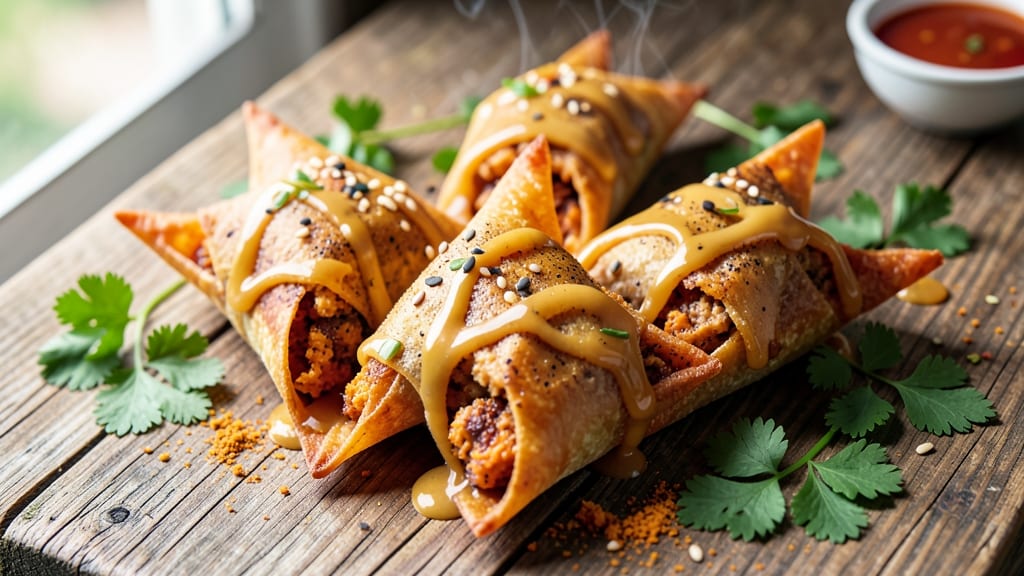
This sweet potato samosa recipe transforms a classic Indian street snack into a golden, crispy masterpiece with a vibrant spiced filling. ✨ The secret lies in perfectly roasting the sweet potatoes until tender yet firm, then blending them with aromatic spices like cumin, coriander, and garam masala for depth.
Homemade dough is ideal, but store-bought pastry sheets work in a pinch for that signature flaky, crispy exterior.
The filling must be dry enough to bind when pressed into the dough, yet moist enough to stay cohesive. Folding the samosas into precise triangles ensures even cooking, while a hot oil bath (or air fryer for a lighter version) creates that irresistible crunch.
The contrast of crispy pastry and warm, spiced sweet potato makes every bite unforgettable.
Serve these golden samosas with tamarind chutney or mint yogurt sauce for the ultimate balance of sweet, spicy, and tangy flavors. They're perfect for appetizers, festive gatherings, or a satisfying snack that feels like a restaurant-quality treat.
The key to success? Patience in the roasting and frying steps—rushing leads to soggy results.
This recipe bridges tradition and convenience, offering both the authentic experience and modern shortcuts. Whether you're making them for a party or a cozy night in, the crispy exterior and flavorful filling will impress everyone at the table. Let's get started on creating these delicious bites!
Ingredients for sweet potato samosa
Sweet potatoes, aromatic spices, and flaky dough create these crispy, golden samosas.
| Ingredient | Amount | Notes |
|---|---|---|
| Sweet Potatoes 🍠 | 2 lbs | Medium-sized, peeled and cubed |
| All-Purpose Flour 🌾 | 2 cups | Plus 2 tbsp for dusting |
| Cold Water 💧 | ¾ cup | For dough |
| Unsalted Butter 🧈 | ½ cup | Cold, cubed (for dough) |
| Salt 🧂 | ½ tsp | Fine sea salt |
| Garam Masala 🌶️ | 1 tbsp | Ground, for filling |
| Ground Cumin 🌿 | 1 tsp | Freshly ground preferred |
| Ground Coriander 🍃 | 1 tsp | For aromatic depth |
| Red Chili Powder 🔥 | ½ tsp | Adjust for heat |
| Fresh Ginger 🧄 | 1 tbsp | Grated, for filling |
| Vegetable Oil 🫒 | 3 cups | For frying (high smoke point) |
| Lemon Juice 🍋 | 1 tbsp | Freshly squeezed |
| Store-Bought Pastry Sheets 🍞 | 2 sheets | Optional shortcut |
| Vegetable Ghee 🧈 | 1 tbsp | For brushing dough |
The sweet potatoes are the heart of this recipe—choose firm, dry varieties like Jewel or Beauregard. Roast them until tender yet firm to avoid a mushy filling. For the dough, King Arthur or Bob's Red Mill flour works best, but any all-purpose will do. If making from scratch, keep the butter cold and work quickly to avoid a gummy texture. Store-bought pastry sheets (like Puff Pastry from Trader Joe's) are a game-changer for busy weeknights, though homemade dough delivers that authentic flakiness. The spices should be fresh—Penzeys or local Indian markets carry the best garam masala blends.
No fresh ginger? Substitute with 1/2 tsp ground ginger, though it lacks the same depth. Short on time? Pre-cut sweet potato cubes save 20 minutes of prep. The filling must be dry enough to bind when pressed into the dough—roast the sweet potatoes longer if needed. For a lighter version, use air fryer cooking spray instead of frying in oil. The pastry sheets should be thawed but still cold to prevent sticking. If using homemade dough, let it rest 30 minutes before rolling to relax the gluten and improve layering.
Store the dough between parchment paper in the fridge for up to 2 days, or freeze for 1 month wrapped tightly. The spiced filling keeps well in an airtight container for 3 days in the fridge. For frying, maintain oil at 350°F—too hot and they burn, too cool and they soak up oil. Leftover samosas reheat best in a 350°F oven for 10 minutes to restore crispiness. Portion the filling into small containers for easy assembly later—perfect for prepping ahead.
Why You'll Love This Recipe
- No-Fuss Dough: I swear by this dough—just flour, water, and a pinch of salt. No yeast, no waiting, no stress. Roll it out while the sweet potatoes roast, and boom, you’re halfway there.
- Sweet & Crispy Magic: Roasted sweet potatoes caramelize into something dangerously good—naturally sweet, buttery from that little cube of butter, and that crispy flour shell? It’s the kind of bite that makes you forget you’re eating a weeknight snack.
- Lunchbox Hero: Between us, these keep perfectly for days. Pack a few in a container, and you’ve got a lunch that’s way more exciting than a sad sandwich. (My kids actually eat them cold—no lie.)
- Budget Win: Sweet potatoes are cheap, flour’s a pantry staple, and butter stretches far. For the cost of takeout, I feed my whole family something that tastes like a restaurant’s appetizer. Worth every penny.
Step-by-Step instructions for sweet potato samosa
Here's how to craft crispy samosa shells with a fragrant sweet potato filling—every bite delivers perfect texture and flavor.
👨🍳 Step 1: Prepare the Sweet Potato Filling
Preheat your oven to 400°F. Toss the 2 lbs sweet potatoes (peeled and cubed) with 1 tbsp vegetable ghee, 1 tbsp grated fresh ginger, 0.5 tsp salt, and 1 tbsp lemon juice. Spread on a baking sheet and roast for 25-30 minutes until tender and caramelized.
While roasting, combine 1 tbsp garam masala, 1 tsp ground cumin, 1 tsp ground coriander, and 0.5 tsp red chili powder in a small bowl. Once the sweet potatoes are soft, mash them lightly with a fork and stir in the spice blend. The filling should be moist but not wet—if needed, add 1 tsp cold water to bind. Let cool completely before using.
🍳 Step 2: Make the Samosa Dough
In a large mixing bowl, combine the 2 cups all-purpose flour and 0.5 tsp salt. Cut in the 0.5 cup cold unsalted butter using a pastry cutter or your fingers until the mixture resembles coarse crumbs. Gradually add the 0.75 cup cold water, mixing just until the dough comes together.
Turn the dough onto a lightly floured surface and knead for 5-7 minutes until smooth and elastic. Wrap in plastic wrap and refrigerate for 30 minutes to firm up. This resting period prevents the dough from shrinking during rolling. If using store-bought pastry sheets, skip to Step 4.
🥘 Step 3: Roll and Assemble the Samosas
Divide the chilled dough into 8 equal portions (about 1.5 oz each). Roll each portion between two sheets of parchment paper into a 6-inch circle, about 1/16-inch thick. If using pastry sheets, cut into circles using a 6-inch round cutter or plate.
Place 1 tbsp of the sweet potato filling at the center of each circle. Fold the dough in half to form a semicircle, then pinch the edges tightly. Using a sharp knife, trim any excess dough and make decorative cuts along the edges. Brush the folded edges with a little cold water to help seal.
🔥 Step 4: Fry to Golden Perfection
Heat 3 cups vegetable oil in a deep pot to 350°F. Fry the samosas in batches, 2-3 at a time, for 3-4 minutes per side until they turn a deep golden brown. The oil should sizzle gently—if it smokes excessively, reduce the heat slightly.
Once golden, remove the samosas with a slotted spoon and drain on a wire rack or paper towels. Serve immediately while still crispy. For extra crunch, sprinkle with a pinch of salt and serve with mint chutney or tamarind sauce.
Pro Tips For Making Sweet Potato Samosa
- Boil Sweet Potatoes Until Fork-Tender: I learned this the hard way—overcooking turns them mushy, but undercooking means a chewy filling. Aim for a knife slipping in easily (not falling out), then mash while still warm. Cold potatoes resist blending, and you’ll end up with lumps that ruin the texture.
- Chill the Dough Longer Than You Think: Skip the rush and let the dough rest in the fridge for at least 30 minutes—ideally an hour. Cold butter + chilled dough layers mean flakier pastry. I used to skip this, and the samosas always ended up greasy and dense. (Yes, even if you’re impatient like me.)
- Salt the Filling Early: Mix salt into the sweet potato mash before adding butter—it distributes evenly and prevents bland pockets. Unsalted butter? Add an extra pinch to the filling, not just the dough. Trust me, you’ll taste the difference in every crisp bite.
- Fry in Small Batches: Crowding the pan steams the samosas instead of frying them, leading to soggy shells. Work in batches of 3–4 at a time, and keep the oil at 350°F (175°C). A thermometer is your friend here—oil too cool = greasy; too hot = burnt edges.
Essential equipment for sweet potato samosa
Dough Rolling Tools
For the homemade dough, a rolling pin is essential—but not just any rolling pin! I recommend a marble or granite rolling pin (like the OXO Good Grips model) for even pressure and temperature control. The cool surface prevents the dough from sticking while you roll.
If you don’t have one, a bottle wrapped in parchment paper works in a pinch. For store-bought pastry sheets, skip rolling entirely and use a 6-inch round cutter (or a plate) to shape your circles. 🥖
Frying Essentials
A deep, heavy-bottomed pot (like a Lodge cast iron skillet or All-Clad stainless steel) is non-negotiable for frying. It distributes heat evenly and prevents hot spots that can burn your samosas.
Use a deep-fry thermometer (I love the Thermoworks Smoke) to monitor oil temperature—350°F is critical for golden, crispy results. A slotted spoon with long handles helps remove samosas without splashing hot oil. 🔥
Dough Cutters & Shapers
Precision matters when shaping samosas! A 6-inch round cutter (or a plate) ensures uniform circles for even cooking. For decorative edges, use a sharp paring knife to make triangular cuts along the folded dough.
If you’re feeling fancy, a pastry wheel creates clean, professional-looking edges. For store-bought pastry sheets, a cookie cutter works perfectly. 💫
Oil & Temperature Control
Use vegetable oil or ghee for frying—both have high smoke points and neutral flavors. Avoid olive oil, as it burns at lower temps. A candy or deep-fry thermometer is your best friend—keep oil at 350°F for crispiness.
If your oil smokes excessively, reduce heat slightly. For a lighter version, use an air fryer (like the Ninja Foodi) at 375°F for 8-10 minutes, spraying with oil halfway through. ⚡
Cooling & Serving Tools
After frying, transfer samosas to a wire cooling rack (or a plate lined with paper towels) to drain excess oil. A slotted spoon helps avoid soggy bottoms. For serving, a wooden board or ceramic platter keeps them warm and adds rustic charm.
Keep mint chutney or tamarind sauce in small bowls for dipping—use a mini whisk to blend fresh herbs if making it from scratch. 🌿
Nutrition facts
Frequently asked questions
Can I make sweet potato samosas without frying?
For a lighter version, bake them at 375°F for 15-18 minutes on a wire rack (not directly on the pan) until golden. Brush with a little oil first for crispiness. Air fryers also work—cook at 375°F for 8-10 minutes, shaking halfway. The texture won't be as crispy as fried, but it's still delicious!
Why is my samosa dough tearing when I fold it?
Dough tears usually mean it's too dry or not rested enough. If using homemade dough, ensure it's chilled for 30 minutes before rolling. Add 1 tsp cold water if too crumbly, or let it rest longer if too sticky. Store-bought pastry sheets should be thawed but still cold—don't let them soften too much. Keep your work surface floured too!
How do I store leftover sweet potato samosas?
Cool completely, then store in an airtight container at room temp for 1 day (best eaten fresh). For longer storage, refrigerate for up to 3 days. To reheat, bake at 350°F for 10 minutes or air fry at 350°F for 3-4 minutes to restore crispiness. Avoid microwaving—they'll get soggy!
Can I substitute sweet potatoes with regular potatoes?
Yes, but the flavor and texture will differ. Regular potatoes are starchier and less sweet, so roast them longer (40-45 minutes) until fully tender. Add 1 tsp honey or maple syrup to the filling to mimic sweetness. For best results, use a mix of 50% sweet potato and 50% regular potato for balance.
What's the best way to make the filling extra flavorful?
Roast the sweet potatoes with 1 tsp smoked paprika or 1/2 tsp turmeric for depth. Add 1/4 cup finely chopped cilantro or mint to the filling for freshness. For umami, stir in 1 tsp soy sauce or 1/2 tsp asafoetida (hing). A pinch of black salt (kala namak) adds a subtle sulfurous note like eggs!