
Side Dishes
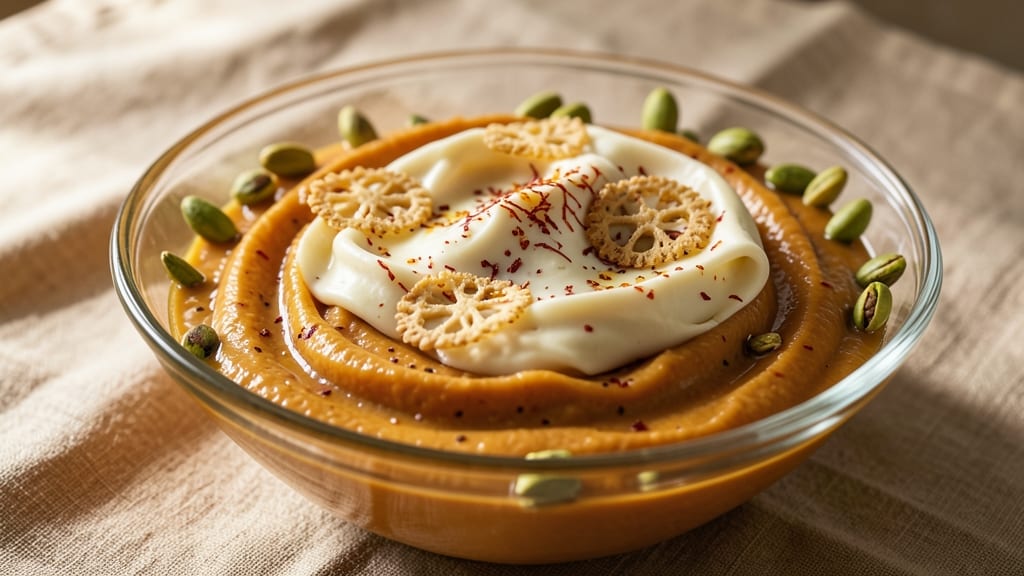
This sweet potato rabdi recipe transforms a humble root vegetable into a velvety, cardamom-spiced dessert that balances earthy sweetness with creamy richness. The secret lies in blending roasted sweet potatoes into the rabdi base, creating a subtle depth that elevates this classic Indian treat beyond traditional versions.
I developed this recipe after years of experimenting with vegetarian desserts that deliver restaurant-quality texture without requiring hours of simmering.
The process begins with slow-cooked sweet potatoes that infuse the rabdi with natural sweetness and a velvety body. Cardamom and saffron work together to create that signature aromatic profile, while a touch of gram flour transforms the milk into a thick, silky sauce.
What makes this version special is how the sweet potato enhances rather than overpowers the delicate flavors—each spoonful delivers a perfect harmony of warmth and creaminess.
By the time you're done, you'll have a dessert that's smooth enough to sip straight from the bowl yet substantial enough to serve at gatherings.
The rabdi develops a glossy sheen and a texture that's neither too thick nor too runny—just right for garnishing with toasted nuts or a sprinkle of rose water. This recipe proves that even humble ingredients can create something extraordinary with the right technique.
Perfect for festive occasions or as a comforting end to a vegetarian meal, this sweet potato rabdi offers a modern twist on a timeless classic. The method is straightforward yet requires attention to temperature control for that signature silky consistency.
Let's create this dessert that will have everyone asking for seconds.
Ingredients for sweet potato rabdi
Roasted sweet potatoes meet velvety yogurt in this cardamom-kissed dessert that delivers restaurant-quality texture.
| Ingredient | Amount | Notes |
|---|---|---|
| Sweet Potatoes 🍠 | 2 medium | Organic preferred, peeled and cubed |
| Greek Yogurt 🧀 | 2 cups | Full-fat, unsweetened, strained overnight |
| Cardamom Pods 🌿 | 8 whole | Green cardamom, lightly crushed |
| Saffron Threads 🧡 | ¼ tsp | High-quality, soaked in 1 tbsp warm milk |
| Gram Flour 🌾 | 2 tbsp | Also called chickpea flour |
| Whole Milk 🥛 | 2 cups | Full-fat for creaminess |
| Sugar 🍚 | ½ cup | Granulated, adjust to taste |
| Rose Water 🌸 | 1 tsp | Pure, food-grade |
| Ghee 🧈 | 1 tbsp | Clarified butter, for richness |
| Pistachios 🥜 | ¼ cup | Toasted and chopped, for garnish |
| Salt 🧂 | ¼ tsp | Fine sea salt |
| Vanilla Extract 🌸 | ½ tsp | Pure, for subtle depth |
The sweet potatoes are the foundation—organic, vibrant orange ones work best for their natural sweetness. Roast them until tender, then blend into a smooth puree. Whole Foods or local farmers markets often carry the sweetest varieties. For the cardamom, green pods from Indian specialty stores provide the most aromatic punch—crush them lightly to release their oils without turning to powder. The saffron is non-negotiable for authentic flavor; buy from reputable spice merchants who source high-quality threads.
No Greek yogurt? Thick plain yogurt strained overnight works just as well. Substituting cardamom? Cinnamon at half the amount gives warmth but lacks the floral notes. Rose water can be tricky—pure, food-grade versions from Indian grocery stores are ideal, but avoid perfumed varieties. The gram flour is essential for thickening; substitute cornstarch at 1:1 ratio if needed. For the pistachios, unsalted varieties prevent overpowering the delicate flavors—lightly toast them until golden for maximum aroma.
The rabdi develops its signature texture over time—chill for at least 2 hours before serving to let flavors meld. Store in an airtight container in the fridge for 3-4 days, though it's best enjoyed fresh. For longer storage, freeze portions in ice cube trays—thaw gently in the fridge before serving. The saffron-infused milk can be made ahead; simply reheat and whisk before combining with the yogurt mixture.
Why You'll Love This Recipe
- No Boil, No Fuss: I roast the sweet potatoes whole—yes, whole—until they’re tender enough to mash with a fork. No peeling, no dicing, no mess. The skin even adds a subtle earthiness that makes it taste like it simmered for hours.
- Silky Creamy Magic: That gram flour slurry? Total game-changer. It thickens the yogurt into a velvety, almost custard-like texture without a single clump. And the saffron? Just a pinch, but it turns this into something that feels fancy—like a dessert you’d order at a restaurant.
- Weeknight to Party: Same recipe, different vibes. Serve it warm with a sprinkle of cardamom for a cozy dinner, or chill it for 30 minutes and top with pistachios for a showstopping dessert. My in-laws think it’s a special occasion dish—our secret is that it’s the same bowl.
- Leftovers That Last: This keeps for days in the fridge, and honestly? It gets better overnight. The flavors meld, the sweetness balances out, and I’ve reheated portions for breakfast yogurt bowls or even stuffed it into wraps. Budget-friendly, too—sweet potatoes and yogurt stretch far.
Step-by-step instructions for sweet potato rabdi
This velvety Indian dessert transforms humble sweet potatoes into a luxurious, cardamom-infused yogurt sauce.
Cook the Sweet Potatoes Until Silky
Peel and cube the 2 medium sweet potatoes, then place them in a medium saucepan with the 2 cups whole milk. Bring to a gentle boil over medium heat, then immediately reduce to a simmer. Cover and cook for 15-20 minutes until the potatoes are fork-tender and the milk has reduced by about one-third. The mixture should be creamy with no resistance when pierced with a fork.
Drain the mixture through a fine-mesh sieve, pressing gently to extract all the liquid. This step is crucial—any remaining potato starch will make your rabdi grainy. Reserve the cooked sweet potato pulp for the next step, and discard the milk solids.
Prepare the Spiced Yogurt Base
In a clean saucepan, combine the 2 cups Greek yogurt, the 0.25 cup sugar, and the 0.25 tsp salt. Warm over low heat, stirring constantly, until the mixture reaches 160°F—just until it begins to steam but doesn't bubble. This gentle heating prevents the yogurt from curdling while infusing the sweetness.
Remove from heat and stir in the 0.5 tsp vanilla extract and the 1 tsp rose water. Add the cooked sweet potato pulp and mix thoroughly. The texture should be smooth and velvety, with no lumps. If you notice any graininess, strain through a fine sieve once more to ensure perfection.
Thicken with Gram Flour Slurry
In a small bowl, whisk together the 2 tbsp gram flour with 2 tablespoons of cold water to form a smooth paste. Slowly drizzle this slurry into the warm yogurt mixture while stirring continuously over low heat. The moment the mixture begins to thicken—usually after 2-3 minutes—remove from heat immediately. Overcooking will make the rabdi rubbery.
Stir in the 1 tbsp ghee and the 8 lightly crushed cardamom pods. The ghee adds richness while the cardamom releases its aromatic oils. Let the mixture sit for 5 minutes, stirring occasionally, until it reaches a pudding-like consistency. The rabdi should coat the back of a spoon but still be pourable.
Fold in Saffron and Garnish
Strain the rabdi through a fine sieve into a serving bowl to ensure absolute smoothness. Stir in the soaked saffron threads (with their warm milk) and let it infuse for 5 minutes. The saffron will deepen the color to a golden hue and add its signature floral aroma. Taste and adjust sweetness if needed—you can add a pinch more sugar if desired.
Garnish with the 0.25 cup toasted and chopped pistachios just before serving. The pistachios add a delightful crunch that contrasts beautifully with the silky rabdi. Serve immediately while warm, or chill for 30 minutes before serving for a slightly firmer texture.
Serve Traditionally
Traditionally, rabdi is served in small earthenware bowls called katoris during festive occasions. Pour the rabdi into serving dishes and let each guest add their own garnish of pistachios. The cardamom-infused aroma will fill your kitchen, creating an inviting atmosphere.
For an authentic experience, serve with warm sheermal (saffron-infused flatbread) or kheer (rice pudding). The contrast of temperatures—warm rabdi with cool yogurt—enhances the sensory experience. Each spoonful should deliver a perfect balance of sweetness, spice, and creamy texture.
Pro Tips For Making Sweet Potato Rabdi
- Boil Sweet Potatoes Until Fork-Tender: I learned this the hard way—undercooked sweet potatoes turn your rabdi into a gritty, uneven mess. Test doneness by piercing with a fork; it should slide in like butter. If it fights back, give it another 5-10 minutes. Overcooked? No problem—just mash them extra smooth.
- Toast Cardamom Pods Before Grinding: Crush the pods lightly first, then dry-toast them in a pan for 30 seconds until fragrant. This unlocks their aroma—ground raw, they’ll just taste like bitter dust. (Yes, even if you’re impatient like me, wait for that nutty scent.)
- Soak Saffron in Warm Milk First: Skip the direct yogurt soak—saffron’s color and flavor fade fast. Bloom it in 2 tablespoons warm milk for 10 minutes, then stir that into your rabdi. The milk also thins the yogurt mixture more evenly, preventing lumps.
- Temper Gram Flour with Cold Yogurt: Whisk the gram flour into cold yogurt first—this prevents clumping and gives you a smoother rabdi. Heat it gradually later, or you’ll end up with a gluey, grainy texture. (Your future self will thank you.)
Essential equipment for perfect results
Essential Cooking Tools
Start with a medium saucepan with lid—I recommend a 3-quart stainless steel pot for even heat distribution. A fine-mesh sieve (like the OXO Good Grips) is crucial for straining the sweet potato mixture to achieve that signature silky texture.
Don't skip this step—it removes any starch that could make your rabdi grainy. 🥄
Precision Thermometer
A kitchen thermometer (I use the Thermoworks Thermapen ONE) is your best friend for monitoring the yogurt's temperature. You want to heat it to 160°F—any hotter and you risk curdling.
This tool ensures perfect consistency every time, especially when working with dairy. It's a small investment that makes a huge difference.
Whisk and Spatula
Use a heat-resistant silicone whisk (like the OXO Good Grips) for blending the gram flour slurry—it prevents splattering and ensures smooth incorporation. A flexible silicone spatula helps scrape every last bit of rabdi from the pot.
I keep both within arm's reach while cooking to maintain that velvety texture. 🔥
Small Mixing Bowl
For the gram flour slurry, a small glass mixing bowl (about 8-ounce capacity) works perfectly. Glass won't retain flavors like plastic might, and it's easy to clean.
I like to use one with measurement markings to ensure I'm using exactly 2 tablespoons of water for the slurry—precision here prevents lumps in your final rabdi.
Earthenware Serving Bowls
For authentic presentation, serve your rabdi in small earthenware bowls (called katoris). If you don't have these, ceramic or glass ramekins work beautifully. The porous nature of earthenware actually enhances the cardamom aroma—just a little trick I picked up from my grandmother's kitchen.
These bowls also keep the rabdi warm longer if serving immediately after cooking.
Optional: Immersion Blender
If you prefer your sweet potatoes completely smooth, an immersion blender (like the Ninja Foodi) lets you blend the cooked potatoes directly in the pot. This eliminates the need for extra bowls and makes cleanup a breeze.
Just pulse until completely smooth, then proceed with the recipe as written. It's not essential, but it's a game-changer for busy cooks. ✨
Nutrition facts
Frequently asked questions
Can I make this rabdi without saffron?
Yes! While saffron adds that signature floral aroma, you can substitute with ½ teaspoon turmeric for color and warmth. For a similar floral note, use ½ teaspoon rose water (already in the recipe) or a pinch of orange blossom water. The dish will still be delicious—just with a slightly different flavor profile.
Why is my rabdi too thick or grainy?
Graininess often comes from potato starch—always strain the cooked sweet potato mixture thoroughly. For thickness, reduce the gram flour to 1.5 tbsp and stir in 1 tbsp warm milk instead of water for the slurry. Overheating the yogurt base can also cause graininess, so keep it below 160°F. Let it cool slightly between steps to prevent lumps.
Can I use regular potatoes instead of sweet potatoes?
Not recommended! Sweet potatoes provide natural sweetness and a velvety texture that regular potatoes lack. If you must substitute, use ½ cup mashed roasted butternut squash (cooked until very soft) for a similar earthy sweetness. The flavor will be different but still delicious.
How do I make this vegan?
Replace Greek yogurt with 2 cups coconut yogurt (thick, unsweetened) and whole milk with coconut milk. Use 1 tbsp agar-agar powder instead of gram flour for thickening—dissolve it in 2 tbsp cold water first. For richness, add 1 tbsp coconut oil instead of ghee. The texture will be slightly different but still creamy.
Can I prepare this rabdi ahead of time?
This rabdi actually tastes better after resting. Store in an airtight container in the fridge for up to 3 days. Stir well before serving and reheat gently (don't boil) if you prefer it warm. For longer storage, freeze portions in ice cube trays—thaw overnight in the fridge before serving. The flavors develop beautifully over time!