
Side Dishes
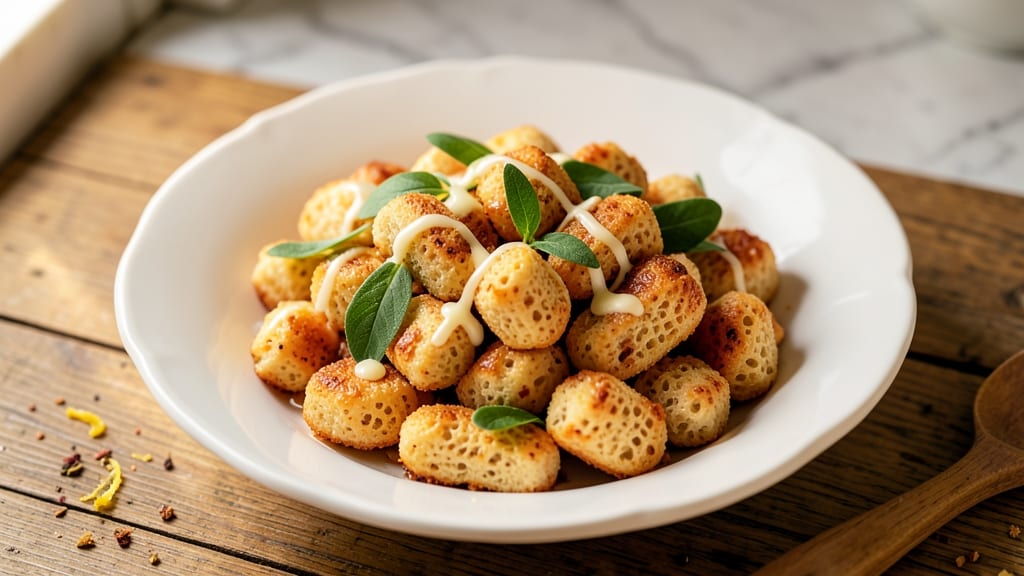
This sweet potato gnocchi recipe no egg transforms humble sweet potatoes into pillowy, nutty dumplings that rival traditional egg-based versions. The secret lies in blending roasted sweet potatoes with flour and a touch of olive oil, creating a dough that’s light yet sturdy enough to hold its shape when boiled.
I developed this method after realizing how versatile sweet potatoes could be beyond mashed sides or roasted wedges—this dish proves they’re perfect for elevated comfort food.
The beauty of this recipe is its simplicity: no eggs, no fuss, and no special equipment beyond a mixing bowl and a fork. The dough comes together in minutes, and shaping the gnocchi is easier than you’d think—just roll and cut, then boil until they float.
The result? Dumplings with a delicate, almost lace-like texture and a flavor that’s rich, earthy, and subtly sweet, thanks to the roasted sweet potato base.
What makes this recipe stand out is its versatility. Toss the cooked gnocchi in sage butter, a light tomato sauce, or even a vegan pesto for a meal that’s as satisfying as it is customizable.
The egg-free technique ensures these dumplings are foolproof—no risk of overworking the dough or dealing with sticky, temperamental mixtures. Perfect for vegetarian meals, side dishes, or even a hearty main with added protein.
Ready in under 30 minutes, this recipe delivers restaurant-quality results without the complexity. The key to success? Roasting the sweet potatoes until tender but not mushy, and letting the dough rest briefly before shaping.
Trust me, once you try these pillowy, nutty dumplings, you’ll never go back to traditional gnocchi.
Ingredients for sweet potato gnocchi recipe no egg
Roasted sweet potatoes and flour create the perfect egg-free gnocchi dough for pillowy, nutty dumplings.
| Ingredient | Amount | Notes |
|---|---|---|
| Medium Sweet Potatoes 🍠 | 2 lbs | Organic preferred, peeled and cubed |
| All-Purpose Flour 🌾 | 2 cups | White or whole wheat blend |
| Extra-Virgin Olive Oil 🫒 | ½ cup | High-quality, fruity variety |
| Salt 🧂 | 1 ½ tsp | Diamond Crystal kosher salt |
| Fresh Sage Leaves 🌿 | ¼ cup | Chopped for sage butter topping |
| Unsalted Butter 🧈 | ¼ cup | Cold, cubed for sage butter |
| Garlic Cloves 🧄 | 2 cloves | Minced for sage butter |
| Black Pepper 🌶️ | ½ tsp | Freshly ground for seasoning |
| Vegetable Oil 🫒 | 2 tbsp | For cooking gnocchi |
| Fresh Basil Leaves 🌿 | ⅛ cup | Chopped for optional garnish |
| Marinara Sauce 🍅 | 1 ½ cups | Homemade or quality jarred |
The sweet potatoes are the foundation—organic or heirloom varieties yield the best flavor and texture. Look for firm, vibrant tubers at Whole Foods or your local farmers market, as they tend to have higher starch content. Avoid those with green spots or soft patches. Roast them until tender but not mushy—this balance is key to achieving that delicate gnocchi texture. For the flour, King Arthur brand is my go-to for its consistent protein content, but any all-purpose flour will work. The olive oil should be extra-virgin with noticeable fruitiness—California Olive Ranch or Colavita are excellent choices that elevate the final dish.
No fresh sage? Dried sage at one-third the amount works in a pinch, though fresh imparts a brighter flavor. Substituting the olive oil for another neutral oil like avocado oil is fine, but extra-virgin adds depth. For a gluten-free version, replace the all-purpose flour with a 1:1 gluten-free flour blend (like Bob's Red Mill), though the texture will differ slightly. The marinara sauce can be homemade or a quality jarred brand—Rao's or Barilla are reliable options. If you prefer a lighter sauce, a simple tomato-basil reduction works beautifully with these dumplings.
Roasted sweet potatoes can be refrigerated for 5 days or frozen for 3 months before using in the dough. The shaped gnocchi should be cooked immediately or refrigerated for up to 24 hours before boiling. For meal prep, cook the gnocchi and store them in the fridge for 3 days or freeze for 2 months. Reheat gently in a skillet with a touch of olive oil or butter—never microwave, as it can make them gummy. The sage butter keeps well in the fridge for 1 week, making it perfect for quick weeknight meals.
Why You'll Love This Recipe
- I’ll be real: rolling dough without eggs feels intimidating, but sweet potatoes handle the job. That starchy mash? It binds like a dream—no fragile lumps, no last-minute scrambling. Just boil, mash, mix, and shape.
- No Egg, No Stress: I’ll be real: rolling dough without eggs feels intimidating, but sweet potatoes handle the job. That starchy mash? It binds like a dream—no fragile lumps, no last-minute scrambling. Just boil, mash, mix, and shape.
- Sage-Kissed Comfort: Between us, the crispy edges and that caramelized sage aroma? Pure satisfaction. Toss them in olive oil and a pinch of salt, then finish with fresh leaves—suddenly, weeknight dinners taste like a cozy Italian trattoria.
- Leftovers That Work: I make a double batch on Sundays, and these gnocchi reheat like a champ. Toss with marinara or brown butter—no soggy texture, just that same pillowy bite. (Yes, even on a Tuesday night.)
Step-by-step instructions for sweet potato gnocchi
Master this egg-free technique for light, pillowy gnocchi with a perfect sweet potato flavor.
Cook and Mash the Sweet Potatoes
Preheat your oven to 400°F. Pierce the 2 lbs medium sweet potatoes with a fork and bake directly on the middle oven rack for 45-50 minutes until fork-tender. The skin should be slightly charred and the flesh easily pierced with a paring knife.
Transfer the potatoes to a clean kitchen towel and let them steam for 10 minutes to remove excess moisture. Peel off the skin and transfer the flesh to a food processor. Add 1.5 tsp salt and pulse until you achieve a smooth, slightly sticky purée. The texture should be consistent with mashed potatoes—no lumps remain. If you prefer a finer texture, transfer to a bowl and mash with a potato masher or fork.
Mix the Dough and Knead Gently
Transfer the sweet potato purée to a large mixing bowl and let it cool for 10 minutes until it reaches room temperature. Gradually add the 2 cups all-purpose flour, mixing with a wooden spoon until combined. The dough will be shaggy and sticky at first.
Turn the dough onto a lightly floured surface and knead gently for 3-4 minutes until it forms a smooth, elastic ball. Avoid overworking—this dough is delicate. If it feels too sticky, wet your hands slightly and continue kneading. The dough should feel soft but not wet, and it should spring back slightly when pressed. Cover with a damp towel and let it rest for 15 minutes at room temperature.
Roll and Cut the Gnocchi
Divide the dough into 4 equal portions and roll each portion into a long rope about ½-inch thick using a pasta machine or rolling pin. If using a pasta machine, start on the widest setting and gradually reduce the thickness to ⅛-inch for the final roll. For a rolling pin, keep the pressure even to maintain consistent thickness.
Use a sharp chef's knife or gnocchi board to cut the ropes into 1-inch pieces. Press each piece gently with your thumb or the tines of a fork to create ridges—this helps them hold their shape when cooked. Arrange the gnocchi on a floured baking sheet and cover with a damp towel to prevent drying.
Cook the Gnocchi to Perfection
Bring a large pot of water to a rolling boil and add 1.5 tsp salt. Add the gnocchi in batches and cook for 2-3 minutes until they float to the surface. They're ready when they're cooked through but still tender—not mushy. Use a slotted spoon to remove them and drain well.
For the sage butter topping, melt the 0.25 cup unsalted butter in a large skillet over medium heat. Add the 2 cloves minced garlic and 0.25 cup chopped fresh sage leaves, cooking for 1 minute until fragrant. Toss the cooked gnocchi in the skillet with the butter mixture until evenly coated. Season with 0.5 tsp black pepper and garnish with 0.125 cup chopped fresh basil leaves.
Serve with Marinara Sauce
Divide the gnocchi among plates and drizzle with the 1.5 cups marinara sauce. The sauce should coat the gnocchi lightly—add more if needed. Serve immediately while the gnocchi are still warm and pillowy. The sweet potato flavor shines through the tender texture, and the sage butter adds a rich, aromatic finish.
For best results, serve with a side of garlic bread and a simple arugula salad. The gnocchi should be tender yet hold their shape, with a slightly crisp exterior from the sage butter. Enjoy your restaurant-quality egg-free gnocchi!
Pro Tips For Making Sweet Potato Gnocchi Recipe No Egg
- BOIL ‘EM UNTIL SOFT: Sweet potatoes need to be truly tender—no resistance when you pierce them with a fork. I learned this the hard way when my gnocchi turned out dense and chewy; now I boil them until a knife slides in like butter. Overcooking? Not here—just keep them submerged until they’re a dream to mash.
- DON’T SKIP THE REST: After mixing the dough, let it sit for at least 20 minutes before rolling. This isn’t optional—it’s what makes the texture light. I used to rush it, and the gnocchi would either stick to the pan or fall apart. Give it time, even if you’re impatient like me.
- FLOUR BY FEEL, NOT MEASURE: Sweet potatoes vary in moisture, so adjust flour as you go. Start with about 1 cup per 2 pounds of potatoes, but add more if the dough feels sticky. Too much flour? The gnocchi will be dry. Too little? They’ll glue together. Trust your hands—this is where the magic happens.
- SAGE AT THE END: Add fresh sage leaves after cooking, not before. Toss them in the oil or sprinkle over finished gnocchi to keep their aroma bright. I used to chop them into the dough, and the flavor got lost in the mix. A few whole leaves at the end make all the difference—no overpowering, just a whisper of perfume.
Make-ahead tips for this recipe
Prep Ahead Dough
Make the dough up to 24 hours ahead for convenience. After kneading, wrap the dough tightly in plastic wrap and refrigerate. Bring it to room temperature for 30 minutes before rolling to prevent cracking.
I find this especially helpful for busy weeknights when I want to shape and cook the gnocchi fresh but don’t have time to make everything in one go. 💡
Shape and Store
Shape the gnocchi and store them on a floured baking sheet in the refrigerator for up to 24 hours. Cover them loosely with a damp towel to prevent drying.
For longer storage, freeze shaped gnocchi on a parchment-lined tray for 1 hour before transferring to a freezer bag. This prevents them from sticking together. 🧊
Cook from Frozen
Frozen gnocchi cook beautifully without thawing. Simply drop them directly into boiling water and add 1 minute to the cooking time. I’ve found this method works best for batch cooking—just increase the water volume slightly to account for the ice melt.
The texture remains light and pillowy when cooked properly. ❄️
Sauce Prep
Prepare the sage butter and marinara sauce ahead of time to streamline serving. The sage butter keeps well in the fridge for 1 week in an airtight container, while the marinara can be made 3 days in advance.
Reheat gently before tossing with the cooked gnocchi to maintain their delicate texture. This is my go-to strategy for meal prep Sundays. 🍽️
Reheating Tips
Reheat cooked gnocchi in a skillet with 1 tablespoon olive oil over medium-low heat for 3-4 minutes until warmed through. Avoid microwaving as it makes them gummy. For a quick fix, toss reheated gnocchi with extra sage butter or a splash of warm marinara to revive their flavor.
This method keeps them tender and delicious. 🔥
Portion Control
Divide the dough into individual portions before rolling to simplify the cooking process. Store each portion in a separate airtight container or zip-top bag. This way, you can cook just what you need without dealing with a large batch.
I often make 2 portions for a family of four, which reheats perfectly for leftovers. 📦
Nutrition facts
Frequently asked questions
Can I substitute regular potatoes for sweet potatoes in this recipe?
While it’s possible, I don’t recommend it—sweet potatoes add a unique nutty sweetness and moisture that regular potatoes lack. For the best texture and flavor, stick with sweet potatoes. If you’re out of sweet potatoes, try a mix of ½ sweet potato and ½ regular potato for a milder flavor, but the dough may be slightly drier.
Why is my dough too sticky or crumbly?
Sticky dough usually means the sweet potatoes weren’t dry enough—let them cool and steam longer to absorb excess moisture. Crumbly dough often happens if the flour is added too quickly or the dough is overworked. Gradually mix the flour and knead gently for 3-4 minutes only. If it’s still crumbly, add 1 tablespoon olive oil and knead again.
What’s the best way to test if the gnocchi are fully cooked?
Drop a few pieces into boiling water—they’re done when they float to the surface (usually 2-3 minutes). Cut one open: the center should be tender with no raw dough. Overcooking makes them mushy, so remove them immediately when they float.
Can I make this recipe gluten-free?
Yes! Replace the all-purpose flour with a 1:1 gluten-free flour blend (like Bob’s Red Mill). The texture will be slightly denser, so add 1 extra tablespoon of olive oil to the dough for flexibility. You may also need to adjust the water content—add 1-2 tablespoons if the dough feels too dry.
How do I store leftover cooked gnocchi?
Store cooked gnocchi in an airtight container in the fridge for 3-4 days or freeze for 2 months. To reheat, pan-fry in 1 tablespoon olive oil over medium heat for 3-4 minutes until golden. Avoid microwaving—they’ll turn gummy. Toss with fresh sage butter or marinara to revive their flavor.