
Side Dishes
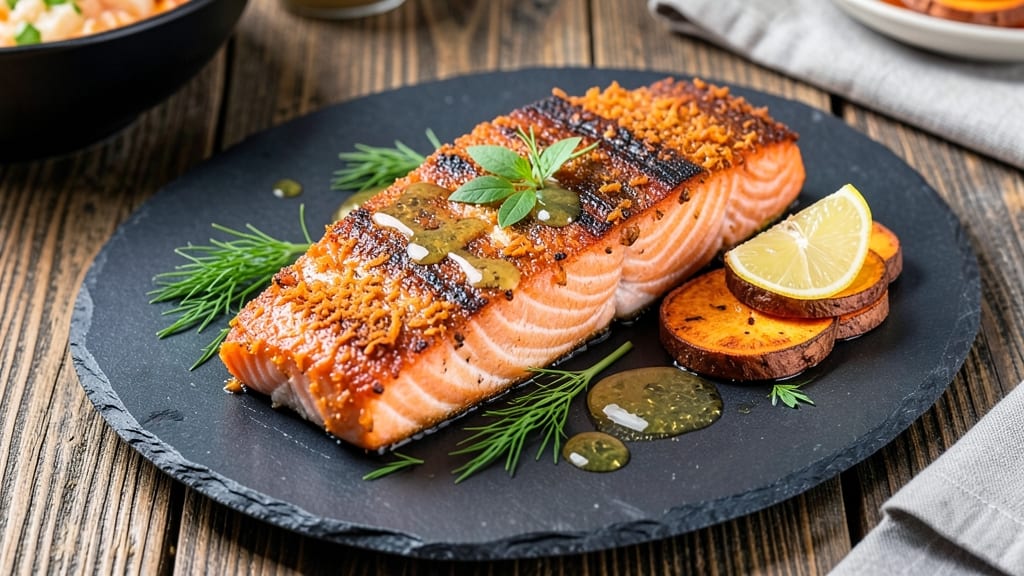
This sweet potato crusted salmon recipe transforms ordinary weeknight dinners into a restaurant-worthy experience with its crunchy exterior and silky interior. The secret lies in blending roasted sweet potatoes into a fine crust that caramelizes beautifully while keeping the fish perfectly tender.
I developed this technique after struggling to find a crispy coating that didn't dry out the salmon—until I discovered sweet potatoes' natural sweetness and moisture balance.
The process is surprisingly simple: roast sweet potatoes until tender, blend them into a smooth paste, then coat the salmon fillets before baking. This method ensures every bite delivers that satisfying crunch while maintaining the delicate texture of the fish.
The crust isn't just decorative—it adds subtle sweetness that complements the salmon's natural richness without overpowering it.
What makes this recipe truly special is how it elevates ordinary salmon into something extraordinary with minimal effort. The crust develops a beautiful golden-brown color while the fish remains moist and flaky inside.
Serve it with a simple lemon-dill sauce or roasted asparagus to highlight both the crust's texture and the salmon's natural flavors.
Perfect for special occasions or when you want to impress guests without spending hours in the kitchen. The technique works equally well for pan-searing or baking, giving you flexibility based on your preferred cooking method. Let's create this showstopping dish together—your taste buds will thank you.
Ingredients for sweet potato crusted salmon
Restaurant-quality crunch meets silky salmon—just eight ingredients transform ordinary weeknight fish into a showstopper.
| Ingredient | Amount | Notes |
|---|---|---|
| Fresh Salmon Fillets 🐟 | 4 pieces | Skinless, center-cut, 6-8 oz each |
| Medium Sweet Potatoes 🍠 | 2 whole | Organic if possible, peeled |
| Extra-Virgin Olive Oil 🫒 | 2 tbsp | For roasting sweet potatoes |
| Unsalted Butter 🧈 | 2 tbsp | Full-fat for best flavor |
| Fresh Lemon 🍋 | 1 whole | Zest and juice for brightness |
| Fresh Dill 🌿 | ¼ cup | Chopped, stems removed |
| Garlic Cloves 🧄 | 3 cloves | Minced for crust flavor |
| Diamond Crystal Kosher Salt 🧂 | 1 ½ tsp | For seasoning crust |
| Ground Black Pepper 🌶️ | ½ tsp | Freshly cracked |
| Panko Breadcrumbs 🍞 | ¼ cup | For added texture |
| Fresh Parsley 🌿 | 0.1 cup | Chopped for garnish |
| Lemon-Dill Sauce 🍋 | ½ cup | Optional serving suggestion |
Sweet potatoes are the star here—organic if you can find them—they roast more evenly and have better flavor. I grab mine from Whole Foods when I'm feeling fancy, but regular grocery store sweet potatoes work perfectly fine. The key is roasting them until they're completely tender so they blend into a smooth paste—no gritty texture in your crust! For the salmon, center-cut fillets stay the most tender, and 6-8 oz each gives you a perfect portion. If you can't find skinless, just remove the skin yourself—it's quick and makes all the difference in the final texture.
No organic sweet potatoes? Regular sweet potatoes work—just peel them extra well to remove any tough spots. Running short on dill? Fresh parsley at half the amount gives a milder flavor, but it's still delicious. The crust can be baked or pan-seared—both work beautifully. For extra crunch, toast your panko breadcrumbs in a dry pan for 2-3 minutes before mixing them in. The lemon juice is non-negotiable—it keeps the crust from getting too heavy and adds that bright pop of flavor that makes this dish sing. Want to skip the sauce? A simple squeeze of lemon and sprinkle of flaky salt works just as well.
Roast the sweet potatoes ahead of time—they keep well in the fridge for 3-4 days wrapped in foil. The blended crust mixture can be prepped a day in advance and stored in an airtight container. For the salmon, keep it covered in the fridge for up to 24 hours before cooking. The crust develops its best flavor when baked fresh, but if you're prepping ahead, store the coated fillets on a parchment-lined tray in the fridge for up to 6 hours before baking. The leftovers? Taste even better the next day—just reheat gently in the oven with a splash of water to keep the crust crispy.
Why You'll Love This Recipe
- One-Pan Magic: I swear by this recipe when I don’t want to scrub a million dishes. The sweet potatoes roast right alongside the salmon—same tray, same oven, no fuss. Just peel, slice, and let the butter and olive oil work their magic while you sip your wine (or coffee, no judgment).
- Sweet & Savory Crunch: That crispy sweet potato crust? It’s the star. The natural sugars caramelize into something addictive, while the salmon stays juicy inside. Honestly, the first time I bit into it, I nearly dropped my fork—it’s that good.
- Weeknight to Weekend: Between us, this dish works for everything. Toss it together for a lazy Tuesday dinner, bring it to a potluck, or serve it at a dinner party. The lemon brightens it up enough to feel special, but it’s still simple enough to make when you’re in sweatpants.
- Budget-Friendly Luxury: Salmon can feel fancy, but the sweet potatoes stretch it into something hearty and filling. I’ve made this feed four people for under $20, and the leftovers? Even better the next day. (Yes, I’ve reheated it cold—it’s that good.)
Step-by-step instructions for sweet potato crusted salmon
Here's how to create a restaurant-worthy crust that balances sweet, savory, and crunchy textures perfectly.
Roast the Sweet Potatoes Until Caramelized
Preheat your oven to 425°F and line a baking sheet with parchment paper. Peel the 2 whole medium sweet potatoes and cut them into ¼-inch thick rounds using a mandoline or sharp knife. Toss the slices with 1 tablespoon of the extra-virgin olive oil and ½ teaspoon of the diamond crystal kosher salt.
Spread the sweet potato slices in a single layer on the baking sheet, leaving ½-inch between each piece. Roast for 20-25 minutes until the edges are deep golden brown and the centers yield slightly when pressed with a fork. Remove from the oven and let them cool completely before processing—this prevents the crust from becoming soggy.
Prepare the Sweet Potato Crust Mixture
While the sweet potatoes cool, pulse them in a food processor until they resemble coarse sand. You want a texture that's fine but still retains some bite—think somewhere between sand and breadcrumbs. In a small bowl, combine the sweet potato pulp with ¼ cup panko breadcrumbs, 3 minced garlic cloves, 1 teaspoon diamond crystal kosher salt, and ½ teaspoon ground black pepper.
Mix everything thoroughly with your hands or a fork until the mixture is evenly distributed. The sweet potatoes should hold their shape when pressed, but still crumble easily. This blend creates the perfect balance of sweetness and crunch that will encase your salmon beautifully.
Season and Crust the Salmon Fillets
Pat the 4 fresh salmon fillets dry with paper towels—this is crucial for getting a good sear. Place them on a clean work surface and season both sides generously with the remaining ½ teaspoon diamond crystal kosher salt and ½ teaspoon ground black pepper. Let them sit at room temperature for 10 minutes while you prepare the crust.
Press the sweet potato mixture firmly onto both sides of each fillet, using your palms to create an even, ¼-inch thick layer. The crust should adhere well but still feel slightly crumbly. Place the crusted fillets on a plate and refrigerate for 15 minutes—this helps the crust set and prevents it from falling off during cooking.
Cook the Salmon to Perfect Doneness
Heat 1 tablespoon extra-virgin olive oil and 2 tablespoons unsalted butter in a large skillet over medium heat until the butter melts and begins to foam. Add the crusted salmon fillets and cook for 4-5 minutes per side, pressing down gently with a spatula during the first minute to ensure even contact with the pan.
You'll know they're ready when the crust is deep golden brown and the salmon flakes easily with a fork. The internal temperature should reach 145°F when measured at the thickest part. Remove from the pan and let rest for 3-4 minutes before serving—this ensures the crust stays intact and the fish remains juicy.
Garnish and Serve with Lemon-Dill Sauce
Transfer the salmon to serving plates and immediately sprinkle with ¼ cup chopped fresh dill and 0.1 cup chopped fresh parsley. Zest the whole fresh lemon over the top and serve with the remaining 0.5 cup lemon-dill sauce on the side for dipping.
Each bite should deliver a perfect harmony of textures: the crispy sweet potato crust gives way to silky salmon, while the bright lemon-dill sauce ties everything together. The crust should be golden and slightly caramelized, not burnt, and the salmon should be moist with just a hint of pink in the center.
Pro Tips For Making Sweet Potato Crusted Salmon
- PRECOOK SWEET POTATOES: Roast the sweet potatoes at 400°F (200°C) for 20-25 minutes until fork-tender—this makes them easier to mash into a crust and prevents a soggy texture. I used to skip this and ended up with a gluey mess; trust me, the extra 10 minutes saves the dish.
- PAT DRY SALMON: Wipe the salmon fillets thoroughly with paper towels before pressing them between two dry towels for 5 minutes—this guarantees a crisp crust instead of a steamed one. Wet skin is the enemy of a good sear, no matter how good your olive oil is.
- SKIP THE OVERMIXING: Once you mash the sweet potatoes with butter and lemon zest, stop stirring when it’s just combined—overworking it turns the crust into paste. I learned this after making a lumpy, uneven coating that didn’t stick; rough is better than smooth here.
- LOW-AND-SLOW FINISH: After searing the salmon skin-side down for 3-4 minutes, transfer it to a 350°F (175°C) oven for 8-10 minutes—this keeps the crust intact while cooking the fish through. High heat at the end ruins the texture; patience pays off with a golden, flaky result.
Common mistakes when making this dish
Overcooking Sweet Potatoes
Roasting sweet potatoes until they're too soft will turn your crust into a mushy mess. Aim for deep golden brown edges with slightly firm centers—they should yield to gentle pressure but not collapse. Overcooked sweet potatoes release excess moisture that weakens the crust's structure.
I once ruined a batch by roasting them for 30 minutes instead of 20-25 minutes, and the crust fell apart during cooking. Set a timer and check at 20 minutes to avoid this common mistake. 🍠
Uneven Crust Application
The crust won't adhere properly if you don't press it firmly onto the salmon. Use your palms to create an even ¼-inch thick layer, pressing hard enough to make contact but not so hard you compress the fish itself.
I recommend working with one fillet at a time to maintain consistency. If the crust crumbles when you try to press it, your sweet potato mixture needs to be slightly more moist—add 1 teaspoon of lemon juice to bind it together. 🧂
Skipping the Resting Period
Rushing to cook the salmon immediately after crusting leads to disaster. The 15-minute refrigeration before cooking is crucial—it allows the crust to set and prevents it from sliding off during cooking.
I learned this the hard way when I tried to cook the fillets right away, and half the crust ended up in the pan. This resting period also helps the salmon come to room temperature gradually, ensuring even cooking. Don't skip it, even if you're eager to eat! ⏰
Using Wet Salmon
Moisture on the salmon's surface creates a barrier that prevents the crust from sticking. Always pat your fillets completely dry with paper towels before seasoning and crusting. I keep extra towels handy because salmon often releases more moisture as it sits.
If you notice condensation forming, blot it again right before applying the crust. This simple step makes all the difference in achieving that perfect golden crust. 💧
Overcrowding the Pan
Cooking multiple fillets at once lowers the pan temperature and steams the salmon instead of searing it. For perfect results, cook one fillet at a time in a large skillet with enough oil and butter to create a thin, even layer.
I use a 10-inch cast iron skillet for this recipe—it provides enough surface area for one fillet without overcrowding. If you must cook two at once, space them 1 inch apart and reduce heat slightly to medium-low. 🔥
Ignoring Internal Temperature
Salmon is done when it reaches 145°F internal temperature at the thickest part. Relying on visual cues alone can lead to overcooked, dry fish. I recommend using a meat thermometer for accuracy—insert it horizontally into the thickest part of the fillet.
The crust will continue caramelizing slightly after removal, but the fish should be perfectly cooked when you pull it from the pan. Overcooking by even 5°F can turn tender salmon into a rubbery mess. 🌡️
Nutrition facts
Frequently asked questions
Can I use regular potatoes instead of sweet potatoes for the crust?
While you can use regular potatoes, sweet potatoes make all the difference! Their natural sweetness and moisture balance creates a richer, more flavorful crust that caramelizes beautifully. Regular potatoes tend to produce a drier, less flavorful coating. If you must substitute, try using a mix of ½ sweet potato and ½ regular potato for better results.
How do I store leftovers without making the crust soggy?
Store cooked salmon in an airtight container with a piece of parchment paper between layers to absorb moisture. Reheat gently in the oven at 350°F for 5-7 minutes—never microwave, as it steams the crust. For extra crispiness, broil for 1-2 minutes at the end. Leftovers keep well for 2-3 days in the fridge.
Can I make this recipe ahead of time?
Prep the sweet potato crust mixture up to 2 days ahead and store it in an airtight container. For the salmon, crust the fillets and refrigerate them on a parchment-lined tray for up to 6 hours before cooking. This gives you flexibility while keeping the crust intact. Just cook fresh for the best texture.
What's the best way to serve this dish?
Pair your sweet potato crusted salmon with bright flavors like lemon-dill sauce, roasted asparagus, or a simple arugula salad. The crust's sweetness works beautifully with tangy elements. For a complete meal, serve with quinoa or wild rice and steamed green beans. The contrast of textures makes every bite exciting!
Why did my crust fall off during cooking?
This usually happens when the salmon isn't completely dry or the crust wasn't pressed firmly enough. Always pat fillets thoroughly dry and press the crust ¼-inch thick using your palms. Also ensure you refrigerated the crusted salmon for 15 minutes before cooking—this helps the crust adhere. If it still falls apart, your sweet potato mixture may need more moisture—add 1 teaspoon lemon juice to bind it.