Side Dishes
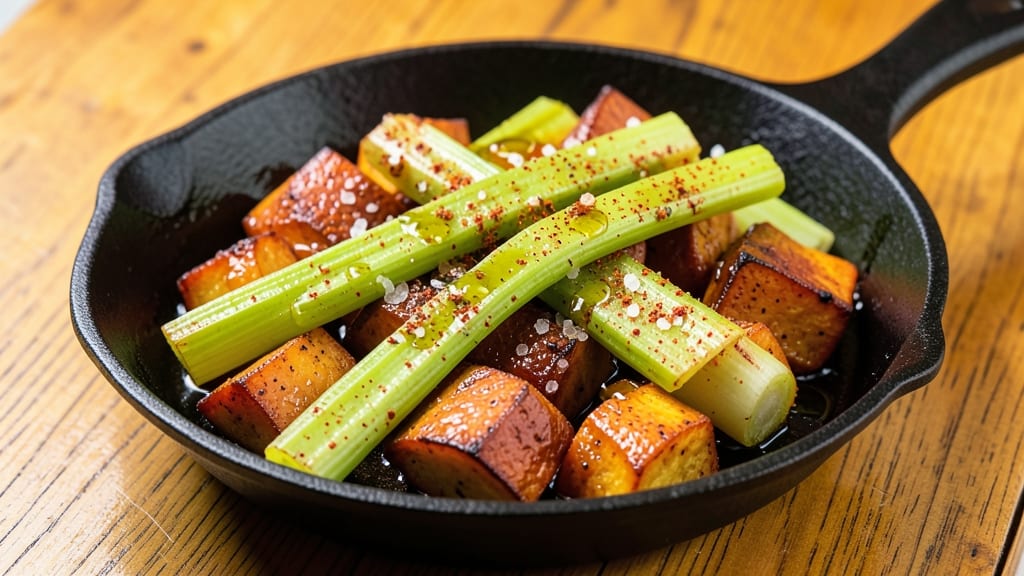
This sweet potato and celery recipe transforms humble ingredients into a vibrant, spice-kissed side dish with charred edges that add depth to any meal. The natural sweetness of sweet potatoes pairs beautifully with celery’s earthy crunch, creating a balance that’s both comforting and sophisticated.
Roasting brings out their caramelized flavors while keeping the texture tender yet slightly crisp at the edges.
The secret lies in the spice blend—smoky paprika, warm cinnamon, and a touch of cayenne—that infuses every bite with complexity. Unlike traditional roasted sweet potatoes, this recipe incorporates celery for a subtle bitterness that cuts through the sweetness, making it a well-rounded side.
It’s vegetarian-friendly, packed with fiber, and ready in under 45 minutes with minimal effort.
What you’ll end up with is a dish that’s visually stunning—deep golden sweet potatoes and crisp-tender celery spears—while delivering a flavor profile that’s rich, slightly spicy, and perfectly balanced.
The charred edges add a smoky contrast that elevates the natural sweetness, making it a standout addition to grilled meats, hearty stews, or even as a main dish when paired with grains like quinoa or farro.
This recipe isn’t just about the ingredients; it’s about harmony. The celery adds a refreshing crunch, while the sweet potatoes provide a satisfying sweetness that’s tempered by the spices.
Whether you’re serving it at a weeknight dinner or a holiday feast, it’s a dish that brings texture, flavor, and nutrition to the table without overpowering the main course.
Ingredients for sweet potato and celery
Sweet potatoes and celery transform into a vibrant, spice-kissed side dish with charred edges and perfect harmony.
| Ingredient | Amount | Notes |
|---|---|---|
| Sweet Potatoes 🍠 | 2 lb | Medium-sized, peeled and cubed |
| Celery Stalks 🧅 | 4 whole | Trimmed, cut into 2-inch pieces |
| Extra-Virgin Olive Oil 🫒 | ¼ cup | For roasting and charring edges |
| Smoked Paprika 🌶️ | 1 tbsp | For smoky depth and charred edges |
| Ground Cinnamon 🌿 | ½ tsp | Warm, aromatic note |
| Cayenne Pepper 🔥 | ¼ tsp | Adjust for spice preference |
| Kosher Salt 🧂 | 1 ½ tsp | Diamond Crystal preferred |
| Freshly Ground Black Pepper 🌶️ | ½ tsp | For balanced seasoning |
| Garlic Cloves 🧄 | 3 cloves | Minced for aromatic depth |
| Fresh Thyme Leaves 🌿 | ¼ cup | Chopped, for herbal brightness |
| Maple Syrup 🍯 | 1 tbsp | For subtle sweetness balance |
| Vegetable Oil Spray 🫒 | 2 tsps | For crisp charred edges |
The sweet potatoes are the foundation—organic varieties like Jewel or Beauregard develop the deepest caramelized flavor. Whole Foods or local farmers markets often carry these with vibrant, unblemished skins. Celery should be crisp with no yellowing; organic stalks from the produce section ensure cleaner flavor. For the spices, Penzeys or bulk bins provide the freshest paprika and cinnamon, critical for that smoky-warm complexity. Pre-peel and cube the sweet potatoes while they're still firm to maintain texture during roasting—avoid overcrowding the cutting board for even charring later.
No smoked paprika? Substitute half the amount of regular paprika plus a pinch of liquid smoke for depth. Fresh thyme unavailable? Dried thyme at one-third the quantity works, but toast it lightly first in a dry pan for 30 seconds to intensify flavor. The maple syrup can be swapped for agave nectar or honey (though honey isn't vegetarian). For extra crispiness, bake an additional 5 minutes uncovered if your oven runs hot. Celery stalks can be substituted with fennel or jicama for similar texture, though fennel adds an anise note that pairs beautifully with the sweetness.
Roast the vegetables immediately after tossing to prevent moisture loss—450°F is ideal for those coveted charred edges. Store leftovers in an airtight container for 5 days, though they reheat best when warmed gently in a skillet with a splash of water to restore crispness. For meal prep, portion into glass containers with parchment paper between layers to maintain texture. Freeze for 3 months if desired, though texture may soften slightly upon thawing—best served fresh or reheated quickly.
Why You'll Love This Recipe
- One-Pan Magic: I swear by this recipe when I’m too tired to wash pots—just toss sweet potatoes and celery stalks on a sheet pan, drizzle with olive oil, and let the oven do the work. The celery adds a subtle crunch that disappears into something almost caramelized, while the sweet potatoes soften perfectly. No chopping boards, no mess.
- Smoky-Sweet Obsession: Between us, that smoked paprika and cinnamon combo is chef’s kiss—it turns humble veggies into something dangerously addictive. The paprika gives it this deep, earthy warmth, while the cinnamon lingers like a hug. Honestly, I’ve caught myself sneaking bites straight from the pan.
- Lunchbox Hero: This recipe is my secret weapon for meal prep—pack it cold for work lunches or reheat it for dinner, and it’s just as good the second time. The celery holds its shape (unlike soggy lettuce), and the sweet potatoes stay creamy. My kids actually finish their lunch now. (Yes, even on a Tuesday.)
- Pantry Staple Power: Sweet potatoes and celery are two of the cheapest veggies out there, and they stretch into a filling side for almost nothing. Add a sprinkle of smoked paprika and cinnamon, and suddenly you’ve got flavor without breaking the bank. I’ve made this for game nights, potlucks, and lazy Sundays—it’s my go-to when I don’t want to overthink dinner.
Step-by-step instructions for roasted sweet potatoes with charred celery
Transform humble sweet potatoes and celery into a sophisticated roasted dish with deep caramelization and aromatic complexity.
Prepare the Vegetables for Maximum Flavor Development
Begin by preheating your oven to 425°F with a rack positioned in the lower third. This high heat position ensures even browning and crisp edges. While the oven heats, cut the 2 lb sweet potatoes into 1.5-inch cubes—uniform size guarantees consistent doneness. Trim the 4 whole celery stalks and cut them into 2-inch pieces, reserving the tender inner stalks for a more tender bite.
Place both vegetables in separate large bowls. For the sweet potatoes, toss with 0.25 cup extra-virgin olive oil until evenly coated. For the celery, use just 1 tablespoon of the olive oil to prevent sogginess. This careful oil separation prevents the celery from becoming mushy while allowing the sweet potatoes to develop their signature caramelized crust.
Season and Arrange for Optimal Caramelization
In a small bowl, combine the 1 tbsp smoked paprika, 0.5 tsp ground cinnamon, 0.25 tsp cayenne pepper, 1.5 tsp kosher salt, and 0.5 tsp freshly ground black pepper. Sprinkle this spice blend evenly over the sweet potatoes, tossing gently to distribute. The celery receives the same seasoning but with half the cayenne—its natural bitterness doesn't need the same heat boost.
Arrange both vegetables on two separate large baking sheets in a single layer, leaving ½-inch space between each piece. This spacing ensures maximum surface area exposure to the hot air, creating those coveted charred edges. For extra crispiness, lightly spray both baking sheets with 2 tsps vegetable oil spray—this prevents sticking and enhances browning without additional oil.
Roast Until Sweet Potatoes Are Caramelized and Celery Is Charred
Place the baking sheets in the preheated oven and roast for 25 minutes, stirring once halfway through. The sweet potatoes should develop a deep golden-brown crust with visible caramelization at the edges. The celery should darken to a rich amber color with slightly crisp edges—this contrast in textures creates the dish's signature harmony.
Here's the crucial moment: after 25 minutes, remove the celery from the oven and set aside. Return the sweet potatoes to roast for an additional 10-15 minutes until they reach 205°F internally and develop a glossy, almost sticky caramelized surface. The celery's earlier removal prevents it from becoming overcooked while the sweet potatoes finish their transformation.
Finish with Aromatics and Maple Glaze
While the sweet potatoes roast their final minutes, heat a small skillet over medium heat and add 1 tablespoon extra-virgin olive oil. Add the 3 minced garlic cloves and sauté for 30 seconds until fragrant but not browned. Immediately stir in the 0.25 cup chopped fresh thyme leaves and cook for another 10 seconds
Transfer the roasted sweet potatoes and celery to serving plates. Drizzle each portion with the garlic-thyme oil mixture, then finish with 1 tablespoon maple syrup spread evenly over the top. The syrup enhances the sweet potatoes' natural sweetness while balancing the celery's earthy bitterness. Serve immediately while the edges remain crisp and the aromatics are at their peak.
Pro Tips For Making Sweet Potato And Celery
- CUT CELERY IN BIASED PIECES: I learned this the hard way—slicing celery too thin makes it turn to mush. Instead, cut it into ¼-inch thick half-moons (yes, even the tough outer stalks) so it holds its shape and soaks up the olive oil. The wider pieces also caramelize better when roasted.
- ROAST SWEET POTATOES SKIN-ON: Peel them if you’re fancy, but leave the skin on for better texture and flavor—it crisps up like a snack. Prick the skin with a fork first (3-4 times) so they don’t explode, then roast at 400°F (200°C) until tender but still slightly firm inside. Overcooking turns them into glue.
- SAUTÉ CELERY FIRST: Don’t toss everything in raw—start by cooking the celery in olive oil over medium heat for 3-4 minutes until it softens and releases its bitterness. Add the sweet potatoes later; this keeps them from steaming and turning soggy. (Your future self will thank you.)
- USE WARM SPICES: Toast the smoked paprika and cinnamon in a dry pan for 30 seconds until fragrant—it deepens their flavor without overpowering. Sprinkle them over the warm sweet potatoes and celery at the end so they bloom into the dish instead of sitting as dust. (Yes, even if you’re impatient like me.)
Essential equipment for sweet potato and celery
Must-Have Roasting Pan
Invest in a heavy-duty, rimmed baking sheet—I recommend All-Clad Stainless Steel or Ozeri 18/8—to handle the high heat of 425°F without warping. The deep edges prevent spills, and the stainless steel conducts heat evenly for those perfect charred edges.
A half-sheet pan (13x18 inches) works best for even airflow around your sweet potatoes and celery. 🔥
High-Temp Thermometer
Use an infrared thermometer like the Thermoworks IR Mini to monitor your oven’s actual temperature—many ovens run 25°F hotter or cooler than set. For precise doneness, a meat thermometer ensures sweet potatoes reach 205°F internally.
I also use a digital probe thermometer to track celery’s internal temp—it should reach 190°F for perfect tenderness.
Oil Sprayer for Crispiness
A vegetable oil sprayer (like Misto) is your secret weapon for achieving crispy charred edges without soggy vegetables. Lightly spray the baking sheets before arranging the veggies—this creates a non-stick surface that promotes browning.
For extra crispiness, spray again halfway through roasting. The 2 tsp specified in the recipe ensures even distribution without excess oil.
Tongs for Easy Tossing
Use long-handled silicone tongs (I love OXO Good Grips) to toss the sweet potatoes and celery mid-roasting. The long handles keep your hands safe from the oven’s heat, and the silicone grips prevent slipping.
For even better control, preheat your tongs in the oven for 2 minutes before handling hot veggies—this prevents them from sticking.
Garlic Press for Aromatics
A garlic press (like OXO Garlic Press) makes mincing 3 cloves effortless and consistent. Freshly minced garlic releases more aromatic oils than pre-minced, which is key for that bright finish.
Press the garlic directly into your skillet while it’s still warm—this ensures the oils infuse instantly with the thyme and olive oil for maximum flavor impact. 💫
Storage Containers for Leftovers
Transfer leftovers to glass Pyrex containers with airtight lids to maintain texture for up to 5 days. For freezing, use quart-sized freezer bags—squeeze out excess air to prevent freezer burn.
I like Stasher Silicone Bags for reheating, as they’re microwave-safe and keep the dish’s crispness intact when warmed gently.
Nutrition facts
Frequently asked questions
Can I use regular potatoes instead of sweet potatoes?
While you can substitute regular potatoes, the flavor and texture will differ significantly. Sweet potatoes provide a natural sweetness and creamier texture that pairs beautifully with celery's earthy crunch. If you must use regular potatoes, opt for Yukon Gold for a slightly sweeter taste, but expect less caramelization and a firmer bite.
How do I prevent the celery from getting mushy?
Celery's delicate texture requires careful handling. Use just 1 tablespoon olive oil when tossing (half of what you'd use for sweet potatoes) and arrange pieces in a single layer with ½-inch spacing on the baking sheet. Roast for only 25 minutes—remove it early while the sweet potatoes finish their final 10-15 minutes to maintain crisp edges.
What are good protein pairings for this dish?
This vegetarian-friendly side pairs beautifully with grilled chicken, baked salmon, or plant-based proteins like tofu or tempeh. For a complete meal, serve with quinoa or farro to add heartiness. The charred edges and smoky spices complement grilled meats perfectly, while the celery's crunch balances rich proteins like steak or pork tenderloin.
Can I make this recipe in an air fryer?
Yes! For an air fryer version, reduce the olive oil to 1 teaspoon total (split between veggies) and cook at 400°F for 12-15 minutes, shaking halfway. The celery should cook first—remove it at 8 minutes while sweet potatoes finish. Watch closely to avoid burning, as air fryers concentrate heat. The result will be crispier but with less caramelization than oven-roasted.
Why does my dish taste bland?
Blandness usually comes from underseasoning or overcooking. Ensure you're using fresh spices (especially smoked paprika and cinnamon) and follow the 1.5 tsp salt measurement. For extra depth, add ½ teaspoon of liquid smoke to the spice blend or finish with a squeeze of lemon juice before serving. Roast at 425°F for maximum flavor development—lower temps yield milder results.