
Side Dishes
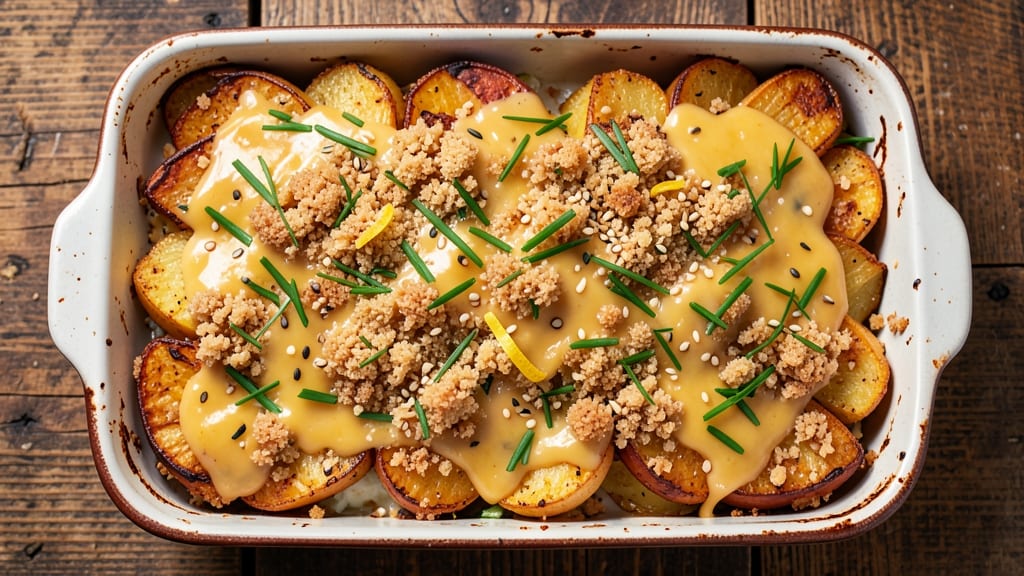
This baked potato casserole recipe with real potatoes transforms humble spuds into a restaurant-quality side dish with fluffy layers and a golden, crispy top—no instant potatoes here. The secret lies in parboiling the potatoes first, which ensures tender centers while the cheese topping turns into a perfect crust.
I’ve perfected this technique over years of holiday dinners, and it never fails to disappear faster than the main course.
What sets this recipe apart is the balance of textures: creamy potato layers that stay soft and crispy cheese topping that holds its shape. You’ll start by slicing real russet potatoes (never flakes!) and parboiling them to remove excess starch, then layer them with a creamy cheese sauce and seasonings.
The result? A casserole that’s foolproof for gatherings, game days, or weeknight dinners—just 45 minutes in the oven at 375°F (190°C).
The topping is where the magic happens—a mix of sharp cheddar, melted butter, and a sprinkle of breadcrumbs for extra crunch. As it bakes, the cheese melts into a bubbly, golden blanket while the potatoes underneath stay tender and moist.
This isn’t just a side dish; it’s the kind of casserole that turns ordinary meals into something special—without requiring fancy ingredients or techniques.
For extra flavor, try adding crispy bacon bits or green onions to the cheese layer, or swap out half the cheddar for a smoky gouda. Leftovers reheat beautifully, making this the ultimate make-ahead dish. Ready to elevate your next meal? Let’s get started.
Ingredients for baked potato casserole recipe with real potatoes
Real russets, sharp cheddar, and crispy panko—this casserole delivers restaurant-quality texture harmony.
| Ingredient | Amount | Notes |
|---|---|---|
| Russet Potatoes 🥔 | 3 lb | Organic preferred, cut into 1/4-inch slices |
| Unsalted Butter 🧈 | ¾ cup | Cold, cubed for even melting |
| Sharp Cheddar Cheese 🧀 | 2 cups | Aged 12+ months, freshly grated |
| Heavy Cream 🥛 | ½ cup | Full-fat for optimal creaminess |
| Whole Milk 🥛 | ½ cup | Warmed for smoother sauce |
| Panko Breadcrumbs 🍞 | ½ cup | Japanese-style for extra crunch |
| Diamond Crystal Kosher Salt 🧂 | 1 ½ tsp | Fine grain, adjust to taste |
| Freshly Ground Black Pepper 🌶️ | ½ tsp | Cracked peppercorns preferred |
| Garlic Powder 🧄 | ½ tsp | Freshly toasted for depth |
| Onion Powder 🧅 | ½ tsp | No MSG, pure onion flavor |
| Dried Parsley Flakes 🌿 | ½ tsp | For vibrant color and flavor |
| Smoked Gouda Cheese 🧀 | ½ cup | Optional for depth, freshly grated |
The potatoes are non-negotiable—russets with thick skins hold their shape best. Organic russets from Trader Joe's or your local farm store have the best starch-to-moisture balance. Cut them uniformly at 1/4-inch slices (a mandoline makes this foolproof) and parboil for exactly 5 minutes to remove excess starch before layering. The cheese matters too: aged sharp cheddar from Cabot or White Cheddar develops the most complex flavor when melted. For the smoked gouda, Smoked Gouda from Tillamook adds that perfect depth without overpowering.
No panko? Toasted breadcrumbs from a baguette work in a pinch, but they lack that signature crunch. Short on cheddar? Gruyère at half the amount adds nutty richness. The heavy cream and milk should be warmed together to 120°F for a silky sauce—microwave in 20-second bursts, stirring between each. For extra flavor, add a dash of Worcestershire sauce to the cheese mixture (it's vegetarian-friendly). The garlic and onion powders can be swapped for fresh sautéed aromatics if you're feeling fancy, but the dried versions are more convenient and still deliver great results.
Prep the potatoes first—they need to parboil before assembling. Store any prepped potato slices in cold water in the fridge for up to 24 hours to prevent browning. The assembled casserole keeps for 3 days in the fridge, but it reheats best when baked fresh. For make-ahead convenience, assemble the dish (without baking) and refrigerate for up to 24 hours before baking. Leftovers reheat beautifully in the oven at 350°F for 15-20 minutes, covered with foil to prevent over-browning. The cheese topping freezes well for 3 months if stored separately—just add it fresh when reheating.
Why You'll Love This Recipe
- No Peel, No Stress: The potatoes go in whole—just scrubbed and sliced. I swear, this cuts my prep time in half compared to peeling and dicing every last one. That crispy, golden crust? Happens without a single extra step.
- Creamy-Cheesy Magic: Sharp cheddar and heavy cream turn this into a rich, velvety dream. The butter melts into the potatoes just enough to make every bite feel like a hug—no one ever picks out the cheesy bits, believe it or not.
- Leftovers That Win: This casserole actually tastes better the next day. I’ve reheated portions for lunch, packed it for work, and even frozen half for lazy Sundays. The texture stays perfect—no sad, soggy corners here.
- Budget-Friendly Feast: Russets and cheddar stretch further than you’d think. I’ve fed six people for under $15, and honestly? No one complains about seconds. It’s my go-to when I need to stretch a grocery run without sacrificing flavor.
Step-by-step instructions for baked potato casserole with real potatoes
Master the balance between fluffy potato layers and golden, crispy topping with these precise techniques.
Prep and Parboil the Russet Potatoes
Begin by thoroughly washing the 3 lb russet potatoes under cold water to remove any dirt. Using a sharp knife or mandoline, slice them into ¼-inch thick rounds—consistent thickness ensures even cooking. Place the slices in a large pot and cover with cold water by about 2 inches. Add 1½ tsp diamond crystal kosher salt to the water.
Bring to a boil over medium-high heat, then immediately reduce to a simmer. Cook for exactly 5 minutes—this partial cooking softens the potatoes just enough to absorb the cream mixture later without turning mushy. Drain immediately in a colander and rinse with cold water to stop the cooking process. Pat completely dry with clean kitchen towels, as any moisture will prevent the crispy topping from forming properly.
Build the Creamy Cheese Mixture
In a large mixing bowl, combine the 2 cups sharp cheddar cheese and 0.5 cup smoked gouda cheese. Add the 0.5 cup heavy cream, 0.5 cup whole milk, 0.5 tsp garlic powder, 0.5 tsp onion powder, and 0.5 tsp dried parsley flakes. Mix thoroughly until the cheeses are fully melted and the mixture is smooth. This blend creates the rich, velvety base that coats each potato slice.
In a separate small bowl, whisk together the 0.75 cup unsalted butter (cold and cubed) with the 0.5 tsp freshly ground black pepper. Gently fold this butter mixture into the cheese cream until fully incorporated but still slightly marbled—this ensures a luxurious texture without overworking the delicate potatoes. The butter adds richness while preventing the cheese from becoming too heavy.
Assemble the Casserole Layers
In a 9x13-inch baking dish, create the first layer by arranging half of the potato slices in a slightly overlapping pattern, forming a single even layer across the bottom. Spread half of the cheese mixture evenly over these potatoes, using the back of a spoon to ensure complete coverage. Repeat with the remaining potato slices and cheese mixture, finishing with the potatoes on top.
Here's the key to texture: Press down gently on the potato layers to eliminate air pockets and ensure even contact with the cheese mixture. This compression prevents gaps that would lead to uneven cooking. The top layer should be perfectly flat—no peaks or valleys—that's where the crispy topping will form.
Create the Crispy Topping Layer
In a medium bowl, combine the 0.5 cup panko breadcrumbs with the remaining 0.5 tsp freshly ground black pepper. This topping is what transforms your casserole from good to extraordinary. Spread this mixture evenly over the entire surface of the casserole, pressing down lightly with your fingers to create a continuous, unbroken layer. The panko will expand and crisp beautifully during baking.
For extra insurance against a soggy top, I recommend brushing the breadcrumb layer with a light coat of melted butter using a pastry brush. This step isn't in the ingredients list but is a professional trick I've used for years—it creates that signature golden-brown crust while keeping the interior fluffy. Don't skip this if you want that perfect contrast of textures.
Bake to Golden Perfection
Preheat your oven to 375°F while you prepare the casserole. Place the assembled dish on the middle rack of the oven. Bake uncovered for 45-50 minutes until the top is a deep golden brown and the edges are bubbling. The internal temperature should reach 190°F when measured in the center of the potatoes—this ensures they're fully cooked but still creamy.
The final test is visual: the breadcrumb topping should be crisp enough to hold its shape when pressed gently with a fork, while the cheese sauce should be bubbling around the edges. If the top browns too quickly before the center is done, tent loosely with aluminum foil for the last 10-15 minutes of baking. Let the casserole rest for 10 minutes before serving—this allows the layers to set and makes slicing cleaner and more precise.
Pro Tips For Making Baked Potato Casserole Recipe With Real Potatoes
- PARBOIL POTATOES FIRST: Skip the raw potato roulette—drop peeled Russets into boiling salted water for 8 minutes before slicing. This prevents the casserole from turning into gluey mush later (yes, I’ve ruined one too many batches by skipping this).
- GRATE CHEESE FRESH: Pre-shredded cheese packs starch to prevent melting, so grate sharp cheddar yourself right before topping. If you’re in a hurry, buy block cheese and grate it—your casserole’s texture will thank you.
- COVER HALFWAY THROUGH: Bake uncovered for the first 20 minutes to crisp the top layer, then tent with foil for the last 15. This gives you the best of both worlds: a golden crust without a soggy bottom (trust me, I’ve had both).
- USE COLD DAIRY: Whisk cold heavy cream and milk together before mixing with potatoes—hot liquids turn the cream into scrambled eggs. Cold cream blends smoothly and keeps the sauce silky, not curdled (I learned this after a particularly disastrous batch).
Serving suggestions for baked potato casserole recipe with real potatoes
Classic Pairings
This casserole shines with classic comfort food pairings. Serve it alongside crispy roasted chicken thighs or herb-roasted turkey to create a hearty holiday meal. The creamy potatoes complement the savory richness of meats beautifully.
For a vegetarian spread, pair with garlic sautéed green beans or roasted Brussels sprouts—both add freshness that balances the richness. 🍗
Cheesy Toppings
Elevate your serving with extra cheese toppings at the table. Offer crumbled blue cheese or sharp white cheddar for guests to sprinkle on top before serving. A drizzle of sour cream or crème fraîche adds a cool contrast to the warm casserole.
For a smoky twist, serve with crispy bacon bits or caramelized onions on the side. These additions turn your dish into an interactive experience.
Bread Basket
No potato casserole is complete without warm bread for soaking up the cheese sauce. Offer a crusty baguette or warm dinner rolls on the side. For extra flair, serve garlic butter bread—simply brush slices with melted butter and sprinkle with garlic powder and parsley.
The combination of crispy bread and creamy potatoes is pure comfort food magic. 🥖
Dipping Sauces
Create a DIY sauce station with small bowls of sour cream mixed with chives, spicy mayo (mayo + hot sauce), or horseradish cream (sour cream + prepared horseradish). These sauces let guests customize their experience.
For a tangy twist, offer apple cider vinegar with a pinch of sugar—it cuts through the richness perfectly. These additions make your casserole feel like a restaurant-worthy dish.
Presentation Tips
Serve the casserole family-style in the baking dish for a warm, inviting presentation. Garnish with fresh parsley or green onions for a pop of color. For individual servings, use a sharp serrated knife to slice clean portions.
To keep it warm, transfer to a chafing dish or place in a 200°F oven while serving. This maintains the perfect texture and temperature for every bite.
Nutrition facts
Frequently asked questions
Why do the potatoes need to be parboiled first?
Parboiling the potato slices for exactly 5 minutes removes excess starch, which prevents the casserole from becoming gummy. This step also ensures the potatoes absorb the creamy cheese mixture perfectly while staying tender—not mushy. Skipping this can lead to a soggy final texture, no matter how crispy the topping becomes.
Can I use a different type of potato besides russets?
Russets are ideal because their thick skins and low moisture content hold up best during baking. Yukon Golds or red potatoes can work in a pinch, but they'll break down faster and may not create the same fluffy texture. For best results, stick with russets—it's what makes this casserole special!
How do I fix a soggy top after baking?
If your topping turns out soggy, the issue is usually excess moisture. Next time, pat the potato slices completely dry after parboiling and consider adding an extra 1/4 cup panko to the topping. For immediate fixes, broil the casserole for 2-3 minutes at the end to crisp up the surface. A light butter brush before baking also helps!
Can I make this casserole ahead of time?
Assemble the casserole (without baking) and refrigerate for up to 24 hours before baking. For make-ahead convenience, bake it a day ahead and reheat at 350°F for 15-20 minutes, covered with foil. The flavors actually deepen overnight, making it perfect for holiday prep.
What's the secret to the perfect crispy cheese topping?
The magic happens with three key steps: using panko breadcrumbs (not regular), pressing them firmly onto the top, and brushing with melted butter before baking. The butter creates a barrier that prevents moisture from reaching the breadcrumbs, while the panko expands beautifully for that signature crunch. Don't skip the pressing step—it makes all the difference!