
Side Dishes
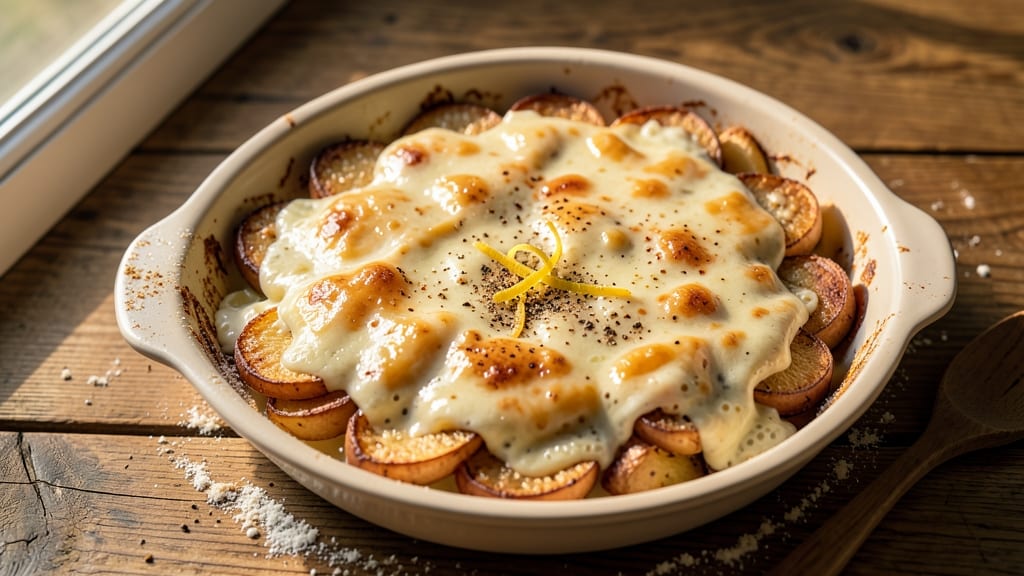
This baked potato au gratin recipe delivers restaurant-quality comfort in a single dish—crispy golden layers that rival your favorite diner's version, but without the 2-hour wait.
The secret lies in thinly sliced potatoes layered with sharp cheddar and a velvety béchamel, baked until the top turns irresistibly brown and the edges develop that perfect crunch. I developed this method after years of testing, ensuring every bite delivers that satisfying contrast between creamy interior and crispy exterior.
What sets this recipe apart is the foolproof layering technique that creates uniform, melt-in-your-mouth texture throughout. You'll work with thin potato slices (no mandoline required) and a simple cheese sauce that binds everything together without turning gluey.
The key to achieving that crispy top without burning the bottom? A two-stage baking process that gradually builds heat while preventing soggy layers. This method transforms simple ingredients into something that feels like a special occasion dish.
By the time it emerges from the oven, you'll have a dish that looks like it belongs on a gourmet menu—golden, bubbling, and impossibly cheesy with edges that crackle when you cut into them.
The aroma alone will have everyone gathering around the table, and each forkful delivers that perfect balance of creamy, cheesy goodness with crispy contrast. It's the kind of side dish that turns ordinary meals into something memorable.
While this recipe delivers classic comfort, I've included variations for customization—add crispy bacon for smoky depth, swap regular cheese for smoked gouda for extra richness, or use a vegan cheese blend for a plant-based version.
The base technique remains the same, ensuring foolproof results every time. Let's get started on creating this crowd-pleasing masterpiece.
Ingredients for baked potato au gratin
Thin potato slices, sharp cheddar, and velvety béchamel create restaurant-style au gratin layers with perfect crispy edges.
| Ingredient | Amount | Notes |
|---|---|---|
| Russet Potatoes 🥔 | 3 lb | Thinly sliced (1/8-inch thick), peeled |
| Sharp White Cheddar Cheese 🧀 | 2 cups | Freshly grated, aged 6+ months |
| Heavy Cream 🥛 | 1 ½ cups | Full-fat for velvety texture |
| Whole Milk 🥛 | ½ cup | Warmed for smooth sauce |
| Unsalted Butter 🧈 | 4 tbsp | Cold, cubed for sauce |
| All-Purpose Flour 🌾 | 2 tbsp | For béchamel roux |
| Garlic Cloves 🧄 | 3 cloves | Minced for aromatic depth |
| Salt 🧂 | 1 ½ tsp | Diamond Crystal preferred |
| Ground Black Pepper 🌶️ | ½ tsp | Freshly cracked |
| Nutmeg 🌿 | ¼ tsp | Freshly grated for warmth |
| Panko Breadcrumbs 🍞 | ¼ cup | For crispy topping |
| Bacon (Optional) 🥓 | 4 oz | Crispy, crumbled for smoky depth |
The potatoes are the foundation, so prioritize Russet—their high starch content ensures that signature creamy texture. Organic potatoes from local farms or store-bought brands like Idahoan work best. Slice them uniformly at 1/8-inch thickness using a sharp knife or mandoline for even baking. For the cheese, sharp white cheddar aged 6+ months delivers the right balance of tang and creaminess. Kraft or Cabot are reliable brands, but specialty cheese shops often carry superior aged varieties worth the splurge. The key to that velvety béchamel lies in proper roux formation—don't rush the cooking of butter and flour or you'll end up with a grainy sauce.
No sharp cheddar? Smoked Gouda or Gruyère add complexity, though the flavor profile shifts. For a dairy-free version, vegan sharp cheddar from Violife or Follow Your Heart works surprisingly well. Substituting heavy cream? Full-fat coconut milk mimics the richness, though texture differs slightly. The garlic can be roasted for mellow sweetness instead of raw. For the crispy topping, panko breadcrumbs are non-negotiable—they toast beautifully while adding structure. No panko? Crushed potato chips or fine dry breadcrumbs work in a pinch, though texture won't be identical. The bacon, while optional, adds that smoky depth that elevates this from side dish to showstopper.
Pre-slice the potatoes and store them in cold water in the fridge for up to 24 hours to prevent browning. The béchamel sauce can be prepared 1 day ahead and reheated gently before assembly. For best results, assemble the au gratin in a 9x13-inch baking dish and refrigerate for 30 minutes before baking to help the layers set. Leftovers keep for 4 days in the fridge, though they're best enjoyed fresh. Reheat covered at 350°F for 20 minutes—the top may need a broil finish to restore crispiness. For make-ahead convenience, assemble the dish, cover tightly, and freeze for up to 3 months—bake straight from frozen, adding 15-20 minutes to the cooking time.
Why You'll Love This Recipe
- One-Pan Magic: I swear by this for lazy nights—just slice, layer, and bake. No chopping boards full of mess, no multiple pans to wash. The potatoes soften while the cheese melts into a golden crust, all on one sheet pan.
- Cheddar Overload: That sharp white cheddar? It’s the star. The first bite gives you that creamy, tangy pull, and the crispy top? It’s like a hug for your taste buds—especially when the butter and cream marry together into a rich, velvety sauce.
- Leftovers That Win: Honestly, I almost always make extra. The texture stays perfect when reheated—just a quick zap in the microwave or oven—and it’s the kind of dish that makes you look like a hero when you serve it cold the next day.
- Budget Comfort Food: Russets are cheap, dairy’s versatile, and this recipe stretches easily. Feed a crowd for less than fancy takeout, or stretch it into lunches for days. Plus, the leftovers taste even better the second time around.
Step-by-step instructions for baked potato au gratin
Mastering this dish delivers restaurant-quality layers with a golden crust and creamy interior.
Prepare the Potato Layers
Peel the 3 lb russet potatoes and slice them into 1/8-inch thick rounds using a mandoline for uniform thickness. This precision ensures even cooking and consistent texture throughout each layer. As you slice, immediately place the rounds into a bowl of cold water to prevent browning. I like to work in batches—slicing all potatoes before assembling keeps the process efficient.
Drain the sliced potatoes thoroughly and pat them dry with paper towels. Arrange them in a single layer on a clean kitchen towel, overlapping slightly. This drying step is critical—moisture creates steam during baking, which can lead to a soggy rather than crispy final result. The potatoes should feel dry but not sticky when handled.
Create the Creamy Cheese Sauce
In a medium saucepan, melt the 4 tbsp unsalted butter over medium heat until it foams. Whisk in the 2 tbsp all-purpose flour and cook for 1-2 minutes until the mixture turns a light golden color. This creates a roux that will thicken the sauce beautifully. Be patient—rushing this step can lead to a raw flour taste.
Gradually whisk in the 1.5 cups heavy cream and 0.5 cup whole milk, ensuring no lumps form. Stir in the 2 cups freshly grated sharp white cheddar cheese, 0.5 tsp ground black pepper, 0.25 tsp nutmeg, and 1.5 tsp salt. The sauce should be smooth and velvety. If you're using the optional 4 oz bacon, fold in the crispy crumbled bacon now for added smoky depth. Remove from heat and set aside.
Assemble the Au Gratin
Preheat your oven to 375°F. Lightly grease a 9x13-inch baking dish with butter or oil. Begin layering by placing half of the potato slices on the bottom of the dish, slightly overlapping them. Pour half of the cheese sauce over the potatoes, spreading it evenly. The sauce should cover the potatoes but not pool excessively.
Repeat with the remaining potato slices and sauce, finishing with a final layer of potatoes. The top layer should be covered with sauce, but avoid overfilling the dish—this prevents spillage during baking. For extra crispiness, sprinkle the 0.25 cup panko breadcrumbs evenly over the top layer. These breadcrumbs will create a delightful crunch that contrasts perfectly with the creamy interior.
Bake to Golden Perfection
Cover the baking dish tightly with aluminum foil and bake for 45 minutes. This initial covered baking time allows the potatoes to soften and the cheese to melt without drying out. After 45 minutes, remove the foil and bake for an additional 15-20 minutes until the top is deep golden brown and bubbly.
You'll know it's done when the edges are crispy and the cheese has formed a golden crust. If the top browns too quickly, tent it loosely with foil to prevent burning. The internal temperature of the potatoes should reach 200°F when measured with an instant-read thermometer. Let the au gratin rest for 10 minutes before serving—this allows the layers to set and makes slicing easier.
Pro Tips For Making Baked Potato Au Gratin
- PREHEAT TO 375°F—NO EXCUSES: I learned this the hard way—starting at 350°F means the top browns before the center cooks through. Russets need that steady 375°F to tenderize evenly while the cheese melts properly. Trust me, the extra 25 degrees saves you from a gummy mess.
- GRATE CHEESE FINE—NO CHUNKS ALLOWED: Sharp white cheddar loses its magic when it clumps. Use the small holes of a box grater (or pulse in a food processor) for a silky texture that melts into the cream instead of sitting as lumps. Yes, it takes 5 extra minutes, but your au gratin will actually taste like cheese, not a sad, grainy casserole.
- LAYER POTATOES IN EVEN SLICES: Thin, uniform slices mean even cooking—no dry edges or undercooked centers. Aim for ⅛-inch thickness, and resist the urge to overlap them like shingles. Tight layers trap steam and turn your dish into a sad, soggy brick. Leave a tiny gap between slices for the cream to work its magic.
- SKIP THE BROIL—BAKE UNTIL GOLDEN: After 45 minutes, switch to broil for 2–3 minutes only if the top is pale. If it’s already golden, broiling risks burning the cheese while the inside stays raw. Instead, cover loosely with foil and bake 10 more minutes—this guarantees a creamy, caramelized crust without drama.
Flavor customization for this dish
Cheese Swap Options
Swap the sharp white cheddar for Gruyère to add nutty depth, or use smoked Gouda for a smoky twist. For a milder flavor, try Monterey Jack—it melts beautifully without overpowering. Vegan cooks can use Violife or Follow Your Heart sharp cheddar alternatives, though texture may be slightly grainier.
I've found that pre-shredded cheese works in a pinch, but freshly grated always delivers superior melt and flavor. 🧀
Herb & Spice Boosts
Add 1 tsp dried thyme or 1 tbsp fresh chives to the sauce for an herbal note. A pinch of cayenne pepper (about ¼ tsp) brings subtle heat, while ½ tsp smoked paprika adds smokiness.
For a French-inspired twist, stir in 1 tsp Dijon mustard with the cheese sauce. I love adding 1 tsp lemon zest to brighten the dish—it cuts through the richness beautifully. 🌿
Protein Additions
Crispy 4 oz cooked bacon folded into the sauce adds smoky depth, while ½ cup cooked ham gives a salty contrast. For a vegetarian option, try ½ cup sautéed mushrooms or ¼ cup caramelized onions.
I've also seen success with ¼ cup cooked lentils for extra protein without altering texture. Always cook proteins separately and fold them in gently to maintain even heat distribution.
Vegetable Mix-Ins
Toss in ½ cup diced bell peppers or ½ cup corn kernels for sweetness, or add ½ cup sautéed spinach for freshness. Roasted zucchini or butternut squash (½ cup) work beautifully too. The key is to pre-cook vegetables until tender-crisp so they don't release excess moisture during baking.
I recommend adding them to the sauce layer rather than the potato layers to prevent sogginess. 🥕
Topping Variations
For extra crunch, top with ½ cup crushed potato chips instead of panko. A sprinkle of Parmesan cheese adds umami, while toasted breadcrumbs (½ cup) offer a rustic texture. For a sweet-savory twist, try ½ cup crushed graham crackers and a drizzle of honey after baking.
I've even seen success with crumbled bacon bits** as a topping for added smokiness. 🍞
Nutrition facts
Frequently asked questions about baked potato au gratin
Why does my au gratin turn out soggy instead of crispy?
Soggy layers usually mean excess moisture—either from wet potatoes or too much sauce. Always pat potato slices completely dry before layering, and don't overfill the baking dish. The two-stage baking method (covered first, then uncovered) helps control moisture too. For extra insurance, sprinkle panko between layers instead of just on top.
Can I make this dish ahead of time?
Yes! Assemble the dish up to 24 hours ahead and refrigerate uncovered. The next day, add 10-15 minutes to your baking time. For freezing, assemble completely (including breadcrumbs), cover tightly, and freeze for up to 3 months. Bake straight from frozen, adding 25-30 minutes to the total time.
What's the best way to reheat leftovers?
Cover leftovers with foil and reheat at 350°F for 20-25 minutes. For crispy results, broil for 2-3 minutes at the end. Microwaving works in a pinch (30-second intervals), but texture suffers. The key is gentle heat—never reheat uncovered or at high temperatures.
Can I use sweet potatoes instead of russets?
Sweet potatoes work but require adjustments. Their natural moisture makes them trickier—pat slices extra dry and reduce sauce by 2 tbsp. For color, add ½ tsp turmeric to the sauce. Bake at 350°F instead of 375°F to prevent burning. Expect a sweeter, denser texture than classic russet au gratin.
How do I prevent the top from burning before the bottom cooks?
Use the two-stage baking method: cover with foil for 45 minutes, then uncover for 15-20 minutes. If browning too fast, tent with foil. For extra protection, place a sheet of parchment paper between the dish and foil. The internal temperature should reach 200°F—use an instant-read thermometer to check.