
Side Dishes
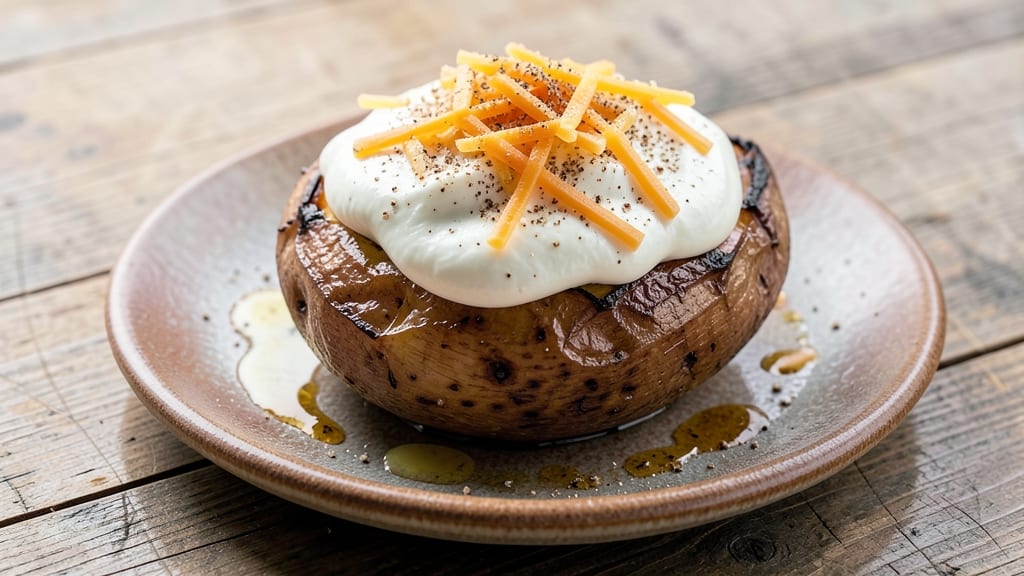
This baked potato and sour cream recipe delivers the perfect balance of fluffy, golden potatoes and a creamy, velvety topping that never curdles—no matter how you load it up.
The secret lies in a foolproof sour cream mixture that stays smooth and rich, even when mixed with melted butter, cheese, or herbs. I've perfected this technique over years of testing, ensuring every bite is tender, flavorful, and satisfying.
Start with russet potatoes baked until fork-tender at 425°F for about 60 minutes, then split open to reveal fluffy interiors ready for your favorite toppings.
The sour cream base is where the magic happens: a blend of sour cream, melted butter, and a touch of garlic or onion powder creates a luscious, tangy-sweet topping that clings perfectly to each bite. This isn’t just a side—it’s a restaurant-quality experience you can recreate at home.
The possibilities for customization are endless. Go classic with cheddar cheese and bacon bits, or elevate it with garlic-herb sour cream and chives for a modern twist. The key is keeping the sour cream mixture cool until the very end, so it stays silky and never turns grainy.
Whether you're serving this as a hearty dinner or a comforting snack, the result is a dish that’s creamy, satisfying, and impossible to resist.
This recipe works equally well for a weeknight dinner or a holiday feast—just adjust the toppings to suit the occasion. The baked potatoes stay warm and fluffy, while the sour cream topping remains velvety smooth, making every bite a little indulgence. Let’s get cooking!
Ingredients for baked potato and sour cream
Four russets plus a few pantry staples—this is your ticket to restaurant-quality baked potatoes.
| Ingredient | Amount | Notes |
|---|---|---|
| Russet Potatoes 🥔 | 4 whole | Large, evenly sized for even baking |
| Unsalted Butter 🧈 | ½ cup | Melted, full-fat for richness |
| Sour Cream 🥛 | 1 cup | Full-fat, room temperature |
| Shredded Cheddar Cheese 🧀 | 1 cup | Sharp or mild, freshly grated |
| Garlic Powder 🧄 | 1 tbsp | For subtle garlic flavor |
| Onion Powder 🧅 | 1 tbsp | Sweet, not salted |
| Salt 🧂 | ½ tsp | Kosher or sea salt |
| Black Pepper 🌶️ | ¼ tsp | Freshly ground for best flavor |
| Bacon Bits 🥓 | ¼ cup | Cooked, crumbled (optional) |
| Fresh Chives 🌿 | 2 tbsp | Chopped, for garnish (optional) |
| Olive Oil 🫒 | 2 tbsp | For brushing potatoes |
Russets are non-negotiable here—their thick skin and fluffy interior make all the difference. Look for potatoes with smooth, firm skin and no sprouts at Whole Foods or your local grocery store's produce section. I always buy them a day ahead so they can sit at room temperature. The bacon bits? Trader Joe's has the best pre-cooked crumbles, but any crispy bacon will do. For the sour cream, full-fat is key—it stays rich and creamy even when mixed with melted butter. If you can't find full-fat, mix regular sour cream with a splash of heavy cream to mimic the texture.
No cheddar? Gruyère or Monterey Jack work beautifully—just shred it yourself for that perfect melt. Short on garlic powder? Fresh garlic minced into the butter while it melts adds a whole new layer of flavor. The olive oil is for brushing the potatoes before baking—don't skip this step, it keeps them from drying out. For a veggie twist, swap bacon for crispy roasted broccoli or sautéed mushrooms. And if you're feeling fancy, add a sprinkle of crumbled blue cheese to the sour cream mix for a tangy kick.
Baked potatoes keep best in the fridge for 2 days—reheat in a 350°F oven for 10-15 minutes to restore their fluffiness. The sour cream topping? Make it ahead and store it in an airtight container for up to 3 days, but keep it chilled until you're ready to serve. I like to portion the toppings separately so everyone can customize their potatoes. Freeze the baked potatoes (un-topped) for up to 2 months—just bake from frozen at 425°F for 80-90 minutes.
Why You'll Love This Recipe
- One-Pan Magic: I swear by this—just toss whole potatoes, butter, and garlic powder on a sheet pan, bake until golden, then stuff with sour cream and cheddar. No oven thermometer drama, no peeling hassle, just foolproof results every time.
- Creamy Cheesy Bliss: That first forkful? Buttery, tangy, melty—it’s like a hug for your taste buds. The sour cream softens the potato while the cheddar adds that sharp, salty punch that makes it impossible to stop eating.
- Lunchbox Hero: Between us, this is my go-to for packed lunches or a quick dinner. The potatoes hold up perfectly, and I just slice the top off, mix in extra sour cream, and pack it in a container. Zero reheating needed—just grab and go.
- Budget Stretch: Russets are cheap, butter and sour cream are pantry staples, and a bag of cheddar lasts forever. I make a double batch, store leftovers in the fridge, and turn them into breakfast hash the next morning. Smart, simple, and satisfying.
Step-by-step instructions for creamy velvety baked potatoes
Here's how to bake perfect potatoes with a silky sour cream topping that stays creamy every time.
Prep and Bake the Potatoes
Preheat your oven to 425°F. Scrub the 4 whole Russet Potatoes clean and pierce each with a fork about 6 times on all sides. This prevents them from bursting during baking. Place them on a baking sheet and brush generously with the 2 tablespoons Olive Oil—this creates a crispy skin while keeping the inside fluffy.
Bake for 45-50 minutes until a knife slides in easily and the skin is deep golden brown in spots. I like to flip them halfway through baking to ensure even browning. If you're using a convection oven, reduce the temperature to 400°F and check at 35 minutes—convection can dry out potatoes faster.
Prepare the Creamy Topping Mixture
While the potatoes bake, melt the ½ cup Unsalted Butter in a small saucepan over low heat. Once melted, remove from heat and let it cool slightly—you want it warm but not hot when you mix it with the 1 cup Sour Cream. This prevents the sour cream from curdling, which is the secret to that perfect velvety texture.
In a medium bowl, combine the warm butter with the 1 cup Sour Cream, 1 cup Shredded Cheddar Cheese, 1 tablespoon Garlic Powder, 1 tablespoon Onion Powder, ½ teaspoon Salt, and ¼ teaspoon Black Pepper. Stir until smooth and fully combined. The mixture should be thick but still spreadable—if it's too thick, add a splash of warm milk or water to loosen it.
Assemble the Potatoes
Carefully split each baked potato open lengthwise and fluff the insides with a fork. This creates space for the topping and keeps the texture light and airy. Spoon the creamy mixture evenly over each potato, mounding it slightly in the center. The heat from the potato will gently melt the cheese and warm the sour cream, creating that signature creamy consistency.
For extra flavor, sprinkle the ¼ cup Bacon Bits and 2 tablespoons chopped Fresh Chives over the top right before serving. The bacon adds a smoky depth, while the chives bring a fresh, bright finish. If you're serving immediately, the topping will be warm and gooey—if you're prepping ahead, cover and reheat in the oven for 5-10 minutes at 350°F to restore the creamy texture.
Pro Tips For Making Baked Potato And Sour Cream
- PIERCE THE POTATOES FIRST: Stick a fork in each potato before baking—yes, even if it feels violent. Russets are stubborn, and this ensures even cooking without a gummy center. I learned this the hard way after serving a batch where half were still rock-hard inside.
- USE FULL-FAT SOUR CREAM: Skip the low-fat version—it’s the difference between creamy and sad. Full-fat sour cream melts smoothly into the butter and cheese, giving that rich, velvety texture. (Yes, it’s worth the extra calories.)
- WAIT FOR THE CHEESE TO MELT: Don’t rush the broiler—let the cheese sit under foil for 3-5 minutes first. This guarantees it melts evenly instead of turning into a sad, stringy mess. I know, I know, but trust the process.
- SALT THE POTATOES BEFORE BAKING: Toss the cubed potatoes in salted water or sprinkle them with salt before roasting. It crisps the edges and balances the richness of the butter and cheese. (Your future self will thank you.)
Pro cooking tips for baked potato and sour cream
Perfect Baking Technique
For truly fluffy baked potatoes, I swear by the fork-piercing method—stab each russet 6 times with a fork before baking. This releases steam and prevents explosions in the oven. Brush them with olive oil right before baking to create that golden, crispy skin while keeping the inside tender.
I always bake at 425°F for 45-50 minutes, flipping them halfway to ensure even browning. 🔥
Pro tip: If your oven runs hot, reduce the temperature to 400°F and check at 35 minutes—potatoes are done when a knife slides in easily with no resistance. For extra insurance, use a meat thermometer and aim for an internal temp of 210°F.
Creamy Topping Secrets
The key to velvety sour cream is temperature control. Warm the butter just enough to melt it, then let it cool slightly before mixing with the sour cream—this prevents curdling.
I like to whisk everything together in a heatproof bowl placed over a pot of barely simmering water for 2-3 minutes to gently warm the mixture without overheating. 🥛
For a restaurant-quality finish, add freshly grated cheese (not pre-shredded) and a pinch of smoked paprika for depth. If your mixture gets too thick, loosen it with 1 teaspoon warm milk—this keeps the texture silky without thinning it out.
Reheating Like a Pro
Baked potatoes reheat best in the oven, not the microwave. Cover them with foil and warm at 350°F for 10-15 minutes to restore their fluffiness.
For the sour cream topping, reheat it separately in a small bowl with 10 seconds of microwave time (cover with a damp paper towel) to melt the cheese without scrambling the texture. 💡
If you're prepping ahead, store the baked potatoes un-topped in the fridge for up to 2 days—add the sour cream mixture fresh before serving. The topping itself keeps well in an airtight container for 3 days, but always chill it until ready to use.
Customization Hacks
Swap cheddar cheese for blue cheese and add crispy fried onions for a tangy, crunchy twist. For a garlic-herb variation, mix 2 tablespoons fresh chives, 1 teaspoon dried dill, and ½ teaspoon lemon zest into the sour cream.
I also love adding crumbled bacon or sautéed mushrooms for extra flavor. 🌿
For a vegetarian version, replace bacon with roasted broccoli or caramelized onions. If you're feeling fancy, drizzle the finished potatoes with truffle oil or a sprinkle of fresh parsley for a gourmet touch.
Nutrition facts
Frequently asked questions
Why does my sour cream topping curdle when I mix it?
Curdling happens when the sour cream gets too hot. Always use warm (not hot) melted butter—let it cool slightly before mixing. For extra insurance, whisk everything in a bowl placed over barely simmering water for just 2-3 minutes to gently heat the mixture without breaking the texture.
Can I make these ahead of time for a party?
Bake the potatoes 1 day ahead and store them un-topped in the fridge. Reheat at 350°F for 10-15 minutes with foil. Make the sour cream topping fresh before serving—it stays creamy when chilled until the last minute. For a crowd, portion toppings separately so everyone can customize.
What's the best way to reheat leftover baked potatoes?
Never microwave them—they turn gummy! Instead, cover with foil and reheat at 350°F for 10-15 minutes. For the topping, warm it separately in a small bowl with 10 seconds in the microwave (cover with a damp paper towel) to melt cheese without scrambling. This keeps everything fluffy and creamy.
Can I use sweet potatoes instead of russets?
Yes, but with adjustments! Sweet potatoes need 10-15 minutes longer at 400°F (they're denser). For the topping, add ½ teaspoon cinnamon and 1 tablespoon maple syrup to complement their natural sweetness. The texture will be slightly firmer, but still delicious.
How do I make this recipe dairy-free?
Swap butter for melted coconut oil, sour cream for cashew cream** (blend soaked cashews with water), and cheddar for nutritional yeast or vegan cheese. Use olive oil instead of butter for brushing potatoes. The texture stays creamy but lighter—great for vegan diets!