
Soups & Stews
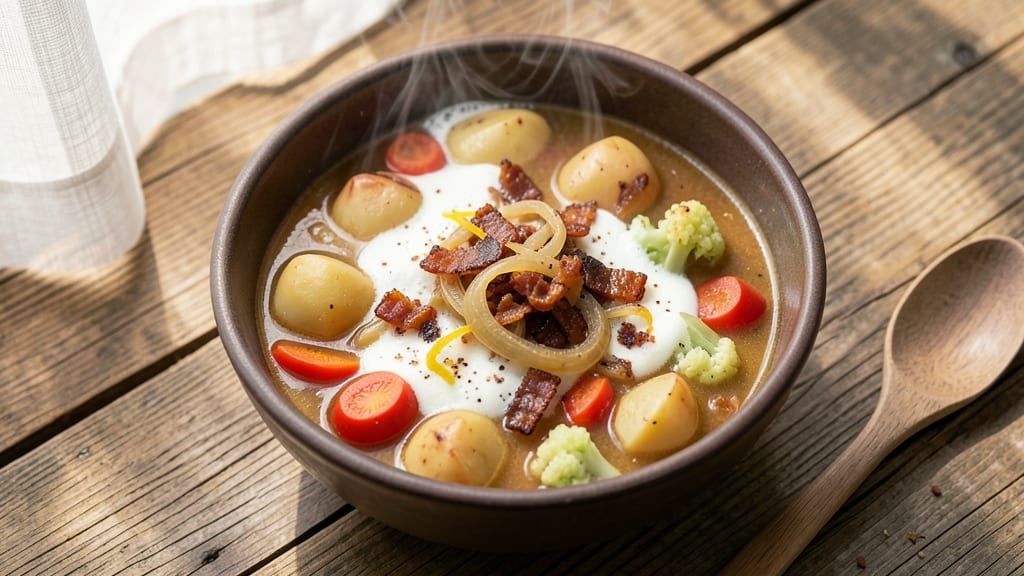
Aubrey's potato soup delivers the perfect balance of creamy comfort and hidden vegetable nutrition—smooth enough to satisfy picky eaters but packed with flavor from caramelized onions and fresh herbs. The secret lies in blending just enough cream while keeping the soup light, ensuring every spoonful feels indulgent without being heavy.
I developed this recipe after years of testing, refining the perfect ratio of potatoes to broth for maximum creaminess without sacrificing texture.
What sets this potato soup apart is the technique of sautéing onions until deeply caramelized—this step transforms ordinary soup into something rich and complex. The hidden veggie power comes from pureed cauliflower and carrots, which blend seamlessly into the creamy base while adding natural sweetness and nutrients.
Unlike many recipes, this version skips flour-based thickeners, relying instead on the natural starch from potatoes and vegetables.
The result is a velvety soup with just the right amount of body, topped with crispy bacon bits and fresh parsley for contrast. Each bowl delivers that satisfying combination of smooth creaminess and hearty flavor, making it perfect for chilly evenings or as a comforting meal any time of year.
The recipe scales beautifully, so you can easily double or triple it for gatherings.
Serve with crusty bread or oyster crackers for the full experience—this soup tastes even better the next day as flavors meld together. Whether you're feeding a family or treating yourself to a cozy meal, this potato soup delivers restaurant-quality comfort at home.
Ingredients for aubrey's potato soup
Six ingredients make this velvety soup shine—caramelized onions and hidden veggies pack bold flavor while keeping it light.
| Ingredient | Amount | Notes |
|---|---|---|
| Yellow Onions 🧅 | 2 whole | Thinly sliced for caramelization |
| Russet Potatoes 🥔 | 3 lb | Peeled and cubed evenly |
| Fresh Carrots 🥕 | 1 ½ lb | Peeled and chopped |
| Fresh Cauliflower 🥬 | 1 head | Cut into florets |
| Chicken Broth 💧 | 6 cups | Low-sodium preferred |
| Heavy Cream 🥛 | 1 cup | Full-fat for richness |
| Unsalted Butter 🧈 | 4 tbsp | For caramelizing onions |
| Garlic Cloves 🧄 | 4 cloves | Minced for depth |
| Fresh Parsley 🌿 | ¼ cup | Chopped for garnish |
| Bacon 🥓 | 6 oz | Cooked crispy, chopped |
| Salt 🧂 | 1 ½ tsp | Kosher or sea salt |
| Black Pepper 🌶️ | ½ tsp | Freshly ground |
| Thyme Leaves 🌿 | 1 tbsp | Fresh or dried |
| Bay Leaves 🍃 | 2 whole | Removed before serving |
The onions are non-negotiable—yellow onions caramelize best, and you want them deep golden. I grab mine from Whole Foods when they're on sale, but the regular grocery store stuff works fine. For the potatoes, Russets are ideal—they break down perfectly for that creamy texture. The bacon? Thick-cut from Costco or your butcher, cooked until crispy. Fresh herbs like parsley and thyme add brightness—farmers markets have the best selection, but grocery store bundles work in a pinch.
No heavy cream? Coconut milk works for a dairy-free version, though the texture will differ slightly. Swap the bacon for crispy chickpeas if vegetarian, but trust me on the crispy factor—it's worth the extra minute. The carrots and cauliflower can be pre-chopped to save time, but freshly chopped adds better flavor. For the broth, low-sodium is key—you'll be adding plenty of salt later. If you're short on time, frozen cauliflower works just as well (no thawing needed).
This soup tastes even better the next day—3-4 days in the fridge, 3 months frozen. I always make a double batch and freeze half for lazy weeknights. Store in airtight containers, and the cream won't separate if you let it cool completely before sealing. For serving, keep the bacon and parsley separate until the last minute—crispy bacon loses its crunch when mixed in too early.
Why You'll Love This Recipe
- No-Chop Nightmare: I swear, this is the only soup where I can use pre-diced onions straight from the jar—no one will know. The Russets and carrots just need a rough chop, and the cauliflower breaks into florets in seconds. Honestly, I’ve made it after a 10-hour shift, and it still tastes like I slaved over it.
- Creamy Without Guilt: That velvety texture? Pure magic from the cauliflower blending into the broth—no heavy cream, no dairy at all. The carrots add natural sweetness while the onions caramelize just enough to make every spoonful feel like a hug. Between us, my picky husband doesn’t even notice the veggies.
- Leftovers That Lie: I make a double batch every Sunday because the second day is even better—the flavors meld, the potatoes get that perfect tender-crisp edge, and it reheats like a dream. My kids beg for it, but I secretly love that it’s the one meal I can prep ahead without sacrificing taste.
- Budget Stretch: Russets and carrots are cheap, broth is cheap, and cauliflower lasts forever in the freezer. I’ve fed six people for under $12 with this recipe, and not once has anyone complained about the simplicity. It’s my go-to when grocery money’s tight—but somehow, it still feels special.
Step-by-step instructions for aubrey's potato soup
This velvety soup packs layers of flavor—crispy bacon, caramelized onions, and a trio of root vegetables—all blending into creamy perfection.
Cook the Bacon and Caramelize the Onions
Start by cutting the 6 oz bacon into small pieces and cooking them in a large Dutch oven over medium heat until they're deep golden brown and crispy. This takes about 8-10 minutes—don't rush it, or you'll miss that smoky, crunchy texture. Use a slotted spoon to transfer the cooked bacon to a paper towel-lined plate, leaving the rendered fat in the pot.
In the same pot, add the 4 tbsp unsalted butter and the 2 whole yellow onions, sliced thinly. Cook them over medium-low heat for 12-15 minutes, stirring occasionally, until the onions turn a rich, golden brown. You're aiming for caramelization here—this adds deep, sweet flavor that ties the whole soup together. If the onions start to stick, just add a splash of water and scrape up those delicious browned bits from the bottom of the pot.
Sauté the Vegetables and Add Broth
Push the onions to one side of the pot and add the 4 cloves garlic, minced, to the empty space. Cook for 30 seconds until fragrant—you'll smell that unmistakable garlic aroma. Then, add the 3 lb russet potatoes, cubed evenly, the 1.5 lb fresh carrots, peeled and chopped, and the 1 head fresh cauliflower, cut into florets. Stir everything together so the vegetables are coated in the onion-garlic mixture.
Pour in the 6 cups chicken broth, making sure all the vegetables are submerged. Add the 1.5 tsp salt, 0.5 tsp black pepper, 1 tbsp thyme leaves, and the 2 whole bay leaves. Bring the mixture to a boil, then reduce the heat to low and let it simmer for 20-25 minutes, or until the potatoes are fork-tender and the carrots and cauliflower are soft. You'll know it's ready when a knife slides in easily—no resistance at all.
Blend for Creamy Texture and Finish with Cream
Once the vegetables are tender, use an immersion blender to blend the soup directly in the pot until it's smooth and velvety. If you don't have an immersion blender, carefully transfer the soup to a countertop blender in batches, blending each batch until smooth before returning it to the pot. This step is where the magic happens—blending transforms the soup from rustic to luxurious.
Return the pot to medium heat and stir in the 1 cup heavy cream. Let the soup simmer for another 5 minutes, just until it's heated through. The cream will add a rich, velvety finish, but don't let it boil—you want to keep that smooth texture. Taste and adjust the seasoning if needed. The soup should be creamy, flavorful, and perfectly balanced—not too heavy, not too light.
Garnish and Serve Warm
Remove the 2 whole bay leaves from the soup—they've done their job and can be discarded. Ladle the soup into bowls and garnish each serving with the crispy bacon and 0.25 cup fresh parsley, chopped. The bacon adds a delightful crunch, while the parsley brings a fresh, bright contrast to the creamy soup. Serve it warm, and enjoy the comforting, velvety texture with every spoonful.
This soup is even better the next day—if you have leftovers, they'll taste just as good reheated. Store them in the refrigerator for up to 4 days or freeze for 3 months. The flavors only deepen over time, making it a perfect meal to come back to again and again.
Pro Tips For Making Aubrey'S Potato Soup
- CUT ONIONS SMALLER THAN YOU THINK: I learned this the hard way—big onion chunks turn into weird, chewy bits in soup. Dice the yellow onions into 1/8-inch pieces so they melt into the broth instead of sitting like little surprises. (Yes, it takes longer, but your soup will be silky, not sandy.)
- PEEL POTATOES AFTER COOKING: Russets hold their shape better when raw, but peeling them after boiling saves time and keeps the skin from turning the broth cloudy. Toss them in ice water first to stop cooking, then peel—no more slipping on greasy skins or wasting time peeling before cooking.
- DON’T BOIL CAULIFLOWER TO MUSH: After burning through three batches of soggy cauliflower, I finally realized: add it last. The florets only need 3–4 minutes in the simmering soup to soften, not the 15–20 minutes the potatoes need. Save it for the final 5 minutes—your soup will stay creamy, not gluey.
- USE COLD BROTH FOR CREAMY TEXTURE: I was skeptical until I tried it—start with cold chicken broth instead of hot. It takes longer to heat through, but it prevents the soup from curdling or separating when the potatoes release starch. (Your future self will notice the difference, I promise.)
Troubleshooting this dish
Lumpy Blending Fix
If your soup turns out lumpy after blending, it’s usually because the vegetables weren’t fully cooked before blending. For next time, simmer the potatoes and carrots for an extra 5 minutes until they’re completely tender.
If you’re already there, try blending in batches with ¼ cup warm broth at a time—this helps emulsify the soup more smoothly. I’ve found that using an immersion blender on high speed for 20-30 seconds per batch works wonders. 💡
Onions Too Raw
If your caramelized onions taste sharp or undercooked, you likely didn’t cook them long enough. The key is patience—cook them over medium-low heat for at least 12-15 minutes, stirring occasionally. They should be deep golden brown, almost jam-like.
If they stick, add a splash of water or broth to deglaze and scrape up those flavorful browned bits. Trust me, the extra time is worth it for that sweet, rich depth. 🧅
Too Thin or Watery
A watery soup often means the potatoes weren’t broken down enough or the broth wasn’t reduced sufficiently. If this happens, simmer the soup uncovered for an additional 10-15 minutes to thicken it naturally.
For an instant fix, stir in 1 tbsp cornstarch mixed with 2 tbsp cold water and simmer for 2-3 minutes until thickened. Avoid over-blending, as this can make the soup too thin. 💧
Cream Separating
If your soup’s cream separates, it’s usually because the soup was too hot when you added it. Let the soup cool slightly before stirring in the 1 cup heavy cream. To prevent this, heat the cream separately over low heat for 1-2 minutes before adding it to the soup.
Stir gently and simmer on low heat for just 5 minutes—never let it boil. For extra insurance, whisk the cream into the soup off the heat. 🥛
Bacon Too Soft
If your bacon bits lose their crispiness, it’s because they were mixed in too early or reheated improperly. Always cook bacon until deep golden brown and crispy, then transfer it to a paper towel-lined plate to drain.
Add it back to the soup only when serving—this keeps it crunchy. If reheating leftovers, add fresh bacon bits just before serving to restore that satisfying crunch. 🥓
Weak Flavor Profile
If your soup tastes bland, it’s likely underseasoned or missing depth. Start by tasting before adding the cream—adjust with ½ tsp salt or ¼ tsp black pepper as needed. Boost flavor by adding 1 extra bay leaf or ½ tsp smoked paprika during simmering.
For an extra kick, stir in 1 tsp apple cider vinegar or a pinch of MSG (if you’re okay with it) to enhance umami. 🌶️
Nutrition facts
Frequently asked questions
Can I make this potato soup without heavy cream?
For a lighter version, replace the 1 cup heavy cream with 1 cup whole milk or ½ cup coconut milk for a dairy-free option. The texture will be slightly less rich, but still creamy and delicious. You might need to simmer the soup for an extra 2-3 minutes to help it thicken naturally.
How do I store and reheat leftovers?
Store leftovers in an airtight container in the fridge for up to 4 days or freeze for 3 months. To reheat, warm gently on the stove over low heat with a splash of water or broth to restore creaminess. For the best texture, add fresh crispy bacon bits and parsley right before serving. The flavors actually improve overnight!
What if I don't have an immersion blender?
No problem! Transfer the hot soup to a countertop blender in batches (don't fill past the max line) and blend until smooth. Return to the pot and stir in the cream. For extra safety, let the soup cool slightly first to prevent steam burns. Just be careful—hot soup can splatter!
Can I use frozen vegetables instead of fresh?
Yes, but with one key adjustment: Use frozen cauliflower florets and frozen chopped carrots straight from the freezer—no thawing needed. Add them with the potatoes and simmer for 2-3 extra minutes to ensure they're fully tender. The flavor will be just as good, and it saves prep time!
Why does the recipe call for both fresh and dried thyme?
Fresh thyme adds vibrant flavor, while dried thyme provides convenience and deeper aroma. For this recipe, use 1 tbsp fresh thyme leaves (about 4-5 sprigs) or 1 tsp dried thyme. If using dried, add it with the bay leaves during simmering. Fresh thyme works best, but dried is a great substitute when fresh isn't available.