
Side Dishes
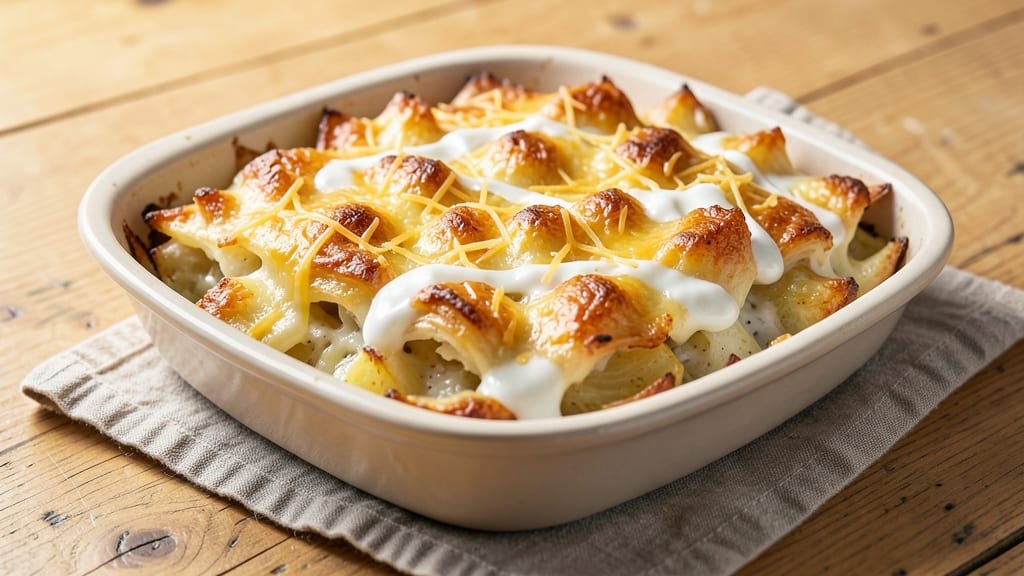
This au gratin potato recipe with sour cream delivers the perfect harmony of crispy golden cheese crust and velvety spuds underneath—exactly what makes this classic dish irresistible. The sour cream plays a starring role here, creating that signature creamy texture while binding the layers together.
I’ve perfected this technique over years of testing, ensuring every bite has the right balance of crispy top and tender interior.
The secret lies in the layering: thinly sliced potatoes arranged evenly, then generously mixed with sour cream, cheese, and seasonings before baking. A high-heat finish at the end guarantees that crispy cheese crust everyone loves.
Unlike some versions that turn soggy, this method keeps everything perfectly textured—no compromises on that golden, bubbling top.
What you’ll end up with is a dish that’s rich, comforting, and impossible to resist—ideal for holidays, family dinners, or even a cozy weeknight meal. The sour cream adds depth while the cheese melts into a luscious blanket over the potatoes.
Pair it with roasted meats, fresh salads, or even on its own as a hearty centerpiece.
Ready to master this classic? The process is straightforward, and the results will impress even the most discerning eaters. Let’s get started on creating that perfect crispy cheese crust over tender spuds—your taste buds will thank you.
Ingredients for au gratin potato recipe with sour cream
Six ingredients make this classic dish shine—crispy top, creamy middle, every bite perfect.
| Ingredient | Amount | Notes |
|---|---|---|
| Russet Potatoes 🥔 | 3 lb | Thinly sliced, peeled preferred |
| Sour Cream 🥛 | 1 ½ cups | Full-fat for best creaminess |
| Sharp Cheddar Cheese 🧀 | 2 cups | Freshly grated, block preferred |
| Gruyère Cheese 🧀 | 1 cup | For nutty depth, optional but recommended |
| Heavy Cream 🥛 | ½ cup | Whole milk works in pinch |
| Garlic Cloves 🧄 | 4 cloves | Minced, for aromatic base |
| Shallots 🧅 | 2 whole | Finely chopped, or sub onions |
| Unsalted Butter 🧈 | ½ cup | Melted for richness |
| All-Purpose Flour 🌾 | 2 tbsp | For roux, essential for texture |
| Fresh Thyme Leaves 🌿 | ¼ cup | Or 1 tsp dried thyme |
| Ground Black Pepper 🌶️ | 1 tsp | Freshly cracked for heat |
| Kosher Salt 🧂 | 1 ½ tsp | Adjust to taste |
| Breadcrumbs 🍞 | ½ cup | Panko for extra crunch |
The potatoes are everything here. Russet is ideal—they slice thin and hold shape. Grab a 3-pound bag from the grocery store, but skip the pre-sliced kind (it turns to mush). If you're feeling fancy, peel them first. The sour cream? Full-fat, no substitutions—it's what gives that signature velvety texture. I always grab the La Creme brand at Whole Foods when I can, but any quality full-fat works. For the cheese, sharp cheddar is non-negotiable—it melts perfectly and adds that tangy punch. If you've got Gruyère kicking around, toss in a cup for extra depth (trust me on this).
No sour cream? Greek yogurt mixed with 1 tbsp melted butter gets you close. Running low on cheddar? Parmesan at half the amount adds umami without overpowering. The shallots can be swapped for onions—just make sure they're finely chopped. Butter hating you? Olive oil works in a pinch, but it won't be quite as rich. The breadcrumbs? Panko is your friend here—it stays crispy while regular breadcrumbs get soggy. Fresh thyme is ideal, but dried works at one-third the amount. And if you're out of flour, a cornstarch slurry (1 tbsp cornstarch + 1 tbsp cold water) works for the roux, though it won't be quite as smooth.
This dish reheats beautifully—honestly tastes better the next day once everything melds. Keeps 4-5 days in the fridge, covered tightly. For freezing, portion into individual servings before baking—reheat at 350°F for 15 minutes covered with foil. I always make a double batch because leftovers are perfect for lunches. Store the cheese separately if you're not baking it right away—it keeps better that way. And if you're prepping ahead, slice the potatoes and store them in cold water in the fridge for up to 2 days—drain and pat dry before using.
Why You'll Love This Recipe
- One-Pan Magic: I swear by this for nights when I’d rather binge Netflix than scrub pots. Russets go in, cheese melts down, and—poof—dinner’s done. The sour cream keeps it creamy without the fuss of whisking separate sauces.
- Creamy Crisp Perfection: That golden crust? Gruyère’s doing the heavy lifting. Sharp cheddar cuts through the richness, while the sour cream adds a tang that makes every bite feel like a hug. (Yes, even on a Tuesday night.)
- Leftovers That Don’t Suck: Between us, most au gratin recipes turn into gluey sadness when reheated. Not this one—the sour cream keeps it luscious, and it reheats in minutes. Pack it for lunches or freeze half for when you’re too tired to cook.
- Budget Crowd-Pleaser: Gruyère’s fancy, but a little goes a long way. Russets are cheap, heavy cream adds richness without breaking the bank, and this feeds six for under $15. My roommates still ask for seconds, and they’re picky.
Step-by-step instructions for au gratin potatoes with sour cream
Here's how to build that perfect golden crust over creamy, melt-in-your-mouth potatoes.
🍳 Step 1: Make the Cheesy Sour Cream Sauce
In a medium saucepan, melt the 0.5 cup unsalted butter over medium heat. Once melted, whisk in the 2 tablespoons all-purpose flour and cook for 1-2 minutes until it forms a smooth roux—this will thicken your sauce. Slowly pour in the 0.5 cup heavy cream while whisking constantly to prevent lumps.
Bring the mixture to a gentle simmer, then reduce heat to low. Stir in the 1.5 cups sour cream, 1 cup Gruyère cheese, and 2 cups sharp cheddar cheese, whisking until completely melted and smooth. Remove from heat and fold in the 0.25 cup fresh thyme leaves, 1 teaspoon ground black pepper, and 1.5 teaspoons kosher salt. Set this sauce aside—it should be thick enough to coat the back of a spoon but still pourable.
👨🍳 Step 2: Sauté Garlic and Shallots
In a large skillet, melt 2 tablespoons unsalted butter over medium heat. Add the 2 whole shallots and 4 cloves garlic cloves (minced), cooking for 3-4 minutes until the shallots are translucent and the garlic is fragrant but not browned. This aromatic base forms the flavor foundation for your potatoes.
Real talk: Don't let the garlic burn—it'll turn bitter. If it starts to darken, reduce the heat slightly and keep stirring. Once golden, remove from heat and let cool for 5 minutes before mixing with your potatoes.
🥘 Step 3: Layer and Assemble the Potatoes
Preheat your oven to 375°F. In a large baking dish (about 9x13 inches), spread half of the thinly sliced 3 lb Russet potatoes in an even layer. Sprinkle half of the 0.5 cup breadcrumbs over the potatoes, then pour half of the cheesy sauce mixture evenly over the top. Repeat with another layer of potatoes, remaining breadcrumbs, and the rest of the sauce.
Here's the trick: Press down gently on each layer to ensure the potatoes stay submerged in the sauce. This prevents a dry top layer and ensures every bite is creamy. The breadcrumbs will create that perfect crispy crust we're after.
🔥 Step 4: Bake to Golden Perfection
Cover the baking dish tightly with aluminum foil and bake for 45 minutes. After this initial bake, remove the foil and increase the oven temperature to 400°F. Return the dish to the oven and bake uncovered for another 15-20 minutes until the top is deep golden brown and bubbly.
You'll know it's done when the edges are crispy and the cheese has formed a thick, golden crust. If the top browns too quickly, tent it loosely with foil to prevent burning. The internal temperature should reach 175°F when checked with an instant-read thermometer.
⏰ Step 5: Rest and Serve
Let the au gratin potatoes rest for 10 minutes before serving. This resting period allows the layers to set and makes it easier to slice through the creamy potato layers without falling apart. The contrast between the crispy golden top and velvety interior is what makes this dish so special.
Serve immediately with a simple green salad or steamed vegetables. The potatoes should be tender enough to slide off your fork but still hold their shape, with that irresistible crispy cheese crust on top. Don't skip the rest—it's the secret to perfect texture!
Pro Tips For Making Au Gratin Potato Recipe With Sour Cream
- PARBOIL POTATOES FIRST: Skip the raw potato roulette—parboil them 5-7 minutes until just fork-tender, then drain and cool. This keeps them from turning to glue when baked, and the texture stays creamy, not gummy. (Yes, even if you're impatient like me, resist the urge to undercook them.)
- SALT THE SOUR CREAM: Mix the sour cream with ½ teaspoon of salt before adding it to the potatoes. The tang needs balancing, and this prevents a bland, one-note finish. I learned this the hard way—my first batch tasted like it was missing something, and it was just the salt.
- LAYER CHEESE STRATEGICALLY: Save the Gruyère for the top layer—it melts slower and adds that signature crispy crust. Mix the sharp cheddar into the sour cream mixture for even distribution. (Your future self will thank you when the dish doesn’t turn into a cheddar monolith.)
- BAKE COVERED THEN UNCOVERED: Cover with foil for the first 45 minutes to let the potatoes absorb the cream, then uncover for the last 15-20 minutes to brown the top. This isn’t the prettiest method, but it’s the thing that matters most for that perfect creamy crust combo.
Pro cooking tips for this dish
Layering Like a Pro
Even potato slices are key—aim for ⅛-inch thickness using a mandoline or sharp knife. Arrange them in a single layer, slightly overlapping like fish scales. This prevents gaps where sauce pools and creates an even cooking surface.
I like to dip slices in cold water for 10 minutes before layering to remove excess starch and keep them from sticking.
Sauce Consistency Secrets
The sauce should be thick but pourable—like heavy cream. If it’s too thin after mixing, whisk in 1 tablespoon cornstarch mixed with 1 tablespoon cold water. Too thick?
Thin with 1 tablespoon heavy cream. I test consistency by dipping a spoon in: if it leaves a trail but doesn’t drip, you’re golden. 🥄
Cheese Melting Hacks
For a foolproof melt, grate your own cheese using a box grater—pre-shredded cheese has anti-caking agents that prevent proper melting. Mix sharp cheddar (for tang) with Gruyère (for nutty depth) in equal parts.
If your cheese isn’t melting smoothly, sprinkle ½ teaspoon cream of tartar into the sauce—it lowers the melting point.
Crispy Top Tricks
Breadcrumbs are your secret weapon for that golden crust. Toast them in a dry skillet for 2-3 minutes over medium heat before sprinkling—this adds extra crunch. For maximum crispiness, broil for 1-2 minutes at the very end (watch closely!).
I also like to sprinkle paprika over the top before the final bake for extra color and flavor.
Temperature Timing
Start at 375°F for even cooking, then crank to 400°F uncovered for the final 15 minutes. This two-stage bake ensures the center cooks through while the top crisps.
Use an instant-read thermometer—175°F at the thickest part guarantees perfect doneness. If your oven runs hot, tent with foil the last 5 minutes to prevent burning.
Make-Ahead Magic
Assemble the dish up to 24 hours ahead and refrigerate uncovered. The cold helps the flavors meld, and you’ll get an even crispier top after baking. For leftovers, reheat covered at 350°F for 15-20 minutes—add a splash of milk if it looks dry.
I always double the batch because reheated au gratin is even better the next day! 💫
Nutrition facts
Frequently asked questions
Can I use Greek yogurt instead of sour cream?
Yes, but with a small adjustment! Swap the 1.5 cups sour cream for 1.5 cups plain Greek yogurt and add 1 tablespoon melted butter to compensate for the lower fat content. The texture will be slightly tangier but still creamy. For best results, use full-fat Greek yogurt to maintain richness.
Why does my au gratin potato top get soggy?
This usually happens when the potatoes release too much moisture or the cheese doesn't melt properly. To fix it:
- Pat potato slices completely dry before layering,
- Use freshly grated cheese (pre-shredded has anti-caking agents), and
- Make sure your sauce is thick enough to coat the back of a spoon. Bake uncovered for the final 15 minutes to crisp the top.
What's the best way to reheat leftovers?
Cover with foil and reheat at 350°F for 15-20 minutes until warmed through. For extra crispiness, broil for 1-2 minutes at the end (watch closely!). If the top seems dry, sprinkle a little milk or cream over it before reheating. Leftovers actually taste better the next day as flavors meld!
Can I make this dish ahead of time?
Assemble the dish up to 24 hours ahead and refrigerate uncovered. The cold helps the flavors develop and creates an even crispier top when baked. Just add 5-10 extra minutes to the baking time if starting from cold. For freezing, bake first, then portion and freeze for up to 3 months—reheat covered at 350°F.
What's the secret to that perfect crispy cheese crust?
The magic combo is toasted breadcrumbs + high heat at the end. Toast 0.5 cup breadcrumbs in a dry skillet for 2-3 minutes before sprinkling, then broil for 1-2 minutes at the very end. Use freshly grated cheese (not pre-shredded) and finish with a sprinkle of paprika for extra color and flavor. The two-stage bake (375°F then 400°F) is also key!