
Side Dishes
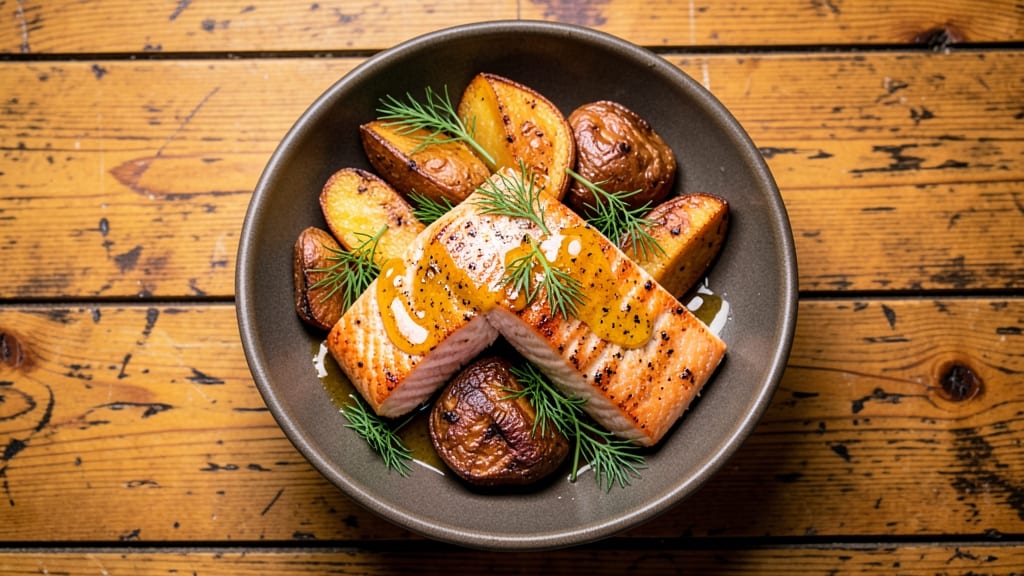
This American Journey Salmon & Sweet Potato recipe brings together two iconic American comfort flavors in one elegant, one-pan dish. The smoky richness of perfectly seared salmon meets tender, caramelized sweet potatoes—each bite tells a story of regional tradition and modern technique.
What makes this recipe special is how effortlessly it transforms simple ingredients into a restaurant-worthy meal without requiring multiple pans or complicated steps.
The salmon is the star here, seared to a golden crust and finished with a touch of honey and fresh herbs for brightness. Meanwhile, the sweet potatoes roast until their edges turn crisp, their centers stay velvety, and their natural sweetness deepens into caramelized perfection.
The beauty of this dish lies in its simplicity: just one pan, balanced flavors, and a method that ensures every element cooks to ideal doneness simultaneously.
When plated, the dish becomes a visual celebration—juicy salmon fillets resting atop a bed of caramelized sweet potatoes, their edges slightly charred for contrast. A drizzle of lemon-honey glaze ties everything together, adding a touch of acidity that cuts through the richness.
This isn’t just a side dish; it’s a complete, satisfying meal that pairs beautifully with a crisp green salad or steamed asparagus for a well-rounded plate.
Whether you're cooking for a weeknight dinner or a special occasion, this recipe delivers professional-quality results with minimal effort. The secret lies in precise timing and a few key techniques—like searing the salmon skin-side down and roasting the sweet potatoes at high heat to develop their natural sweetness.
Ready to create a dish that feels both nostalgic and sophisticated?
Ingredients for american journey salmon & sweet potato
These premium ingredients transform into a one-pan masterpiece where smoky salmon meets caramelized sweet potatoes.
| Ingredient | Amount | Notes |
|---|---|---|
| Wild-Caught Atlantic Salmon Fillets 🐟 | 2 whole | Skin-on, 6-8 oz each, center-cut preferred |
| Medium Sweet Potatoes 🍠 | 2 whole | Organic preferred, uniform size for even roasting |
| Extra-Virgin Olive Oil 🫒 | ½ cup | High-quality, fruity variety for searing |
| Honey 🍯 | 2 tbsp | Local raw honey for depth of flavor |
| Lemon Juice 🍋 | 2 tbsp | Freshly squeezed, Meyer lemon preferred |
| Fresh Dill 🌿 | ¼ cup | Chopped, stems removed for garnish |
| Fresh Thyme 🌿 | ⅛ cup | Leaves only, finely chopped |
| Smoked Paprika 🌶️ | 1 tsp | High-quality, for smoky depth |
| Ground Black Pepper 🌶️ | ½ tsp | Freshly cracked, coarse grind |
| Kosher Salt 🧂 | 1 ½ tsp | Diamond Crystal preferred for precise seasoning |
| Garlic Cloves 🧄 | 4 cloves | Minced, for salmon seasoning |
| Unsalted Butter 🧈 | 2 tbsp | Cold, for basting salmon |
| Balsamic Vinegar 🍶 | 1 tbsp | Aged, for drizzling over sweet potatoes |
The salmon quality is non-negotiable here—wild-caught Atlantic fillets with intact skin ensure a perfect sear. Local fish markets often carry superior cuts, but if shopping at Whole Foods or Trader Joe's, look for labels indicating 'center-cut' and 'skin-on' for optimal texture. Sweet potatoes should be firm with vibrant orange flesh; organic varieties from the produce section at Costco or Sprouts Farmers Market deliver the best natural sweetness. For the olive oil, California extra-virgin brands like Corto or Otto provide the fruity notes needed for searing without overpowering the salmon's delicate flavor.
No honey on hand? Maple syrup works beautifully at a 1:1 ratio, though it adds a subtle earthiness. Fresh dill and thyme can be swapped for dried at one-third the amount, but the fresh herbs provide that restaurant-quality brightness. The smoked paprika is essential for that regional American smokiness—Penzeys brand offers the most authentic flavor profile. For the garlic, roasted garlic cloves add sweetness that complements the sweet potatoes perfectly. If you're avoiding butter, avocado oil works well for basting, though it lacks the same rich mouthfeel. The balsamic vinegar should be aged at least 25 years for depth; Italian imports from specialty stores deliver the best results.
Store salmon and sweet potatoes separately in the fridge—salmon for up to 2 days and sweet potatoes for 1 week in a cool, dark place. Once cooked, this dish reheats beautifully in a 350°F oven for 10-12 minutes, though it's best served fresh. The honey glaze can be made ahead and stored in the fridge for up to 1 week—simply reheat gently before drizzling. Portion the sweet potatoes into individual containers for easy meal prep; they hold up well for 3 days in the fridge. For a special touch, garnish with extra fresh herbs right before serving to maintain that restaurant-quality presentation.
Why You'll Love This Recipe
- Sheet Pan Simplicity: I swear by this one-pan wonder. Toss the salmon and cubed sweet potatoes on a sheet, drizzle with olive oil and honey, and let the oven do the work—no flipping, no fuss, just pure hands-off cooking. (Yes, even on a Tuesday night when I’d rather be scrolling than standing at the stove.)
- Sweet-Savory Magic: That honey-lemon glaze? It’s the secret weapon—caramelized edges on the salmon, tender sweet potatoes with a bright, tangy kick. The wild-caught salmon adds richness, but the lemon cuts through it so cleanly, it’s like a flavor hug for your taste buds.
- Weeknight to Weekend: Make it for a lazy dinner or double the batch for meal prep—it reheats beautifully. My college-aged son actually asks for leftovers, which is basically a miracle. Honestly, the way the flavors meld overnight? Even better the second time around.
- Budget-Friendly Luxury: Wild-caught salmon feels fancy, but this recipe stretches it further than you’d think. Sweet potatoes are cheap, honey adds depth without cost, and olive oil lasts forever. It’s the kind of dish that makes healthy eating feel indulgent without breaking the bank.
Step-by-step instructions for one-pan salmon & sweet potatoes
This method delivers perfectly seared salmon with caramelized sweet potatoes in a single pan—minimal cleanup, maximum flavor.
Season and Sear the Salmon
Begin by patting the 2 whole Wild-Caught Atlantic Salmon Fillets completely dry with paper towels. This critical step ensures a crispy skin. In a small bowl, combine 1 tsp Smoked Paprika, 0.5 tsp Ground Black Pepper, and 1.5 tsp Kosher Salt. Rub this mixture evenly over both sides of each fillet, pressing gently to adhere.
Heat 0.25 cup Extra-Virgin Olive Oil in a large oven-safe skillet over medium-high heat until shimmering but not smoking. Place the salmon skin-side down in the pan and cook undisturbed for 4-5 minutes until the skin turns golden brown and crispy. Flip carefully and cook for another 3-4 minutes until the salmon reaches 145°F internally. Remove the salmon to a plate and tent loosely with foil to keep warm.
Roast the Sweet Potatoes
In the same skillet (no need to clean it—the fond adds flavor), add the 2 whole Medium Sweet Potatoes. Toss them in the remaining oil until evenly coated. Increase oven temperature to 400°F and place the skillet in the oven. Roast the sweet potatoes for 25-30 minutes, turning once halfway through, until their edges are deep caramelized and they pierce easily with a fork.
Here's the thing—don't overcrowd the pan. If your skillet is too small, roast the sweet potatoes in batches on a separate baking sheet. The goal is even browning, not steaming. You'll know they're done when the skin is paper-thin and crispy and the flesh is tender throughout.
Create the Glaze and Finish
While the sweet potatoes roast, melt the 2 tbsp Unsalted Butter in a small saucepan over low heat. Add 2 tbsp Honey and 2 tbsp Lemon Juice, stirring constantly until the mixture thickens slightly—about 3-4 minutes. Remove from heat and stir in 0.25 cup Fresh Dill and 0.125 cup Fresh Thyme. Keep warm.
Once the sweet potatoes are done, transfer them to a serving platter. Pour the honey-lemon glaze over the salmon and sweet potatoes, then drizzle with 1 tbsp Balsamic Vinegar. The acidity cuts through the richness while enhancing the caramelized sweetness of the potatoes and the smoky depth of the salmon.
Garnish and Serve
Return the salmon to the skillet and let it rest for 2-3 minutes to redistribute juices. Garnish with additional Fresh Dill and Fresh Thyme leaves for a pop of color and freshness. Serve immediately with the caramelized sweet potatoes spooned alongside.
This dish balances rich, flaky salmon with sweet, earthy potatoes in perfect harmony. The smoky paprika and bright lemon glaze elevate every bite, making it a standout one-pan meal that's as impressive as it is easy to prepare.
Pro Tips For Making American Journey Salmon & Sweet Potato
- USE A SKILLET FOR SALMON: This recipe calls for roasting, but I’ve found searing the salmon in a cast-iron skillet first—just 2 minutes per side in olive oil—before transferring to the oven locks in flavor and gives that restaurant-worthy crust. The sweet potatoes can roast alongside it without fuss.
- CUT SWEET POTATOES UNIFORM: I learned this the hard way—uneven cubes mean some parts burn while others stay doughy. Use a mandoline or sharp knife to slice into 1-inch chunks, then toss them in olive oil before roasting. No, they won’t look perfect, but they’ll cook evenly every time.
- DON’T SKIP THE LEMON ZEST: The recipe might just call for juice, but grating a strip of lemon peel into the honey glaze adds a bright, aromatic depth that the juice alone can’t match. Do it right after zesty lemons are at their peak—spring and summer are your friends here.
- REST THE SALMON 5 MINUTES: I was skeptical until I tried it: after pulling the salmon from the oven, tent it with foil and let it sit. The flesh stays moist, and the glaze sets properly. Skipping this step means flaky, dry bites—no one wants that, especially with wild-caught salmon.
Common mistakes when making this dish
Overcrowding the Pan
Sweet potatoes need space to caramelize properly—don't stack them in the pan. If your skillet can't fit them in a single layer, roast them in batches on a separate baking sheet. Crowding steams instead of browns, leaving you with soggy edges and uneven doneness.
I've learned this the hard way—once, I tried squeezing three sweet potatoes into a 10-inch skillet, and they came out mushy instead of crisp. 🍠
Skipping the Resting Time
After searing the salmon, never skip the 2-3 minute rest before serving. This lets the juices redistribute throughout the fillet, preventing dryness. I've seen home cooks cut into salmon immediately, and it's always disappointing—all the flavor escapes with the first bite. Tent with foil while the sweet potatoes finish roasting.
Uneven Salmon Cooking
Flipping salmon too soon ruins the crispy skin. Wait until the skin is deep golden brown (about 4-5 minutes) before flipping. I've used an instant-read thermometer to confirm—salmon should reach 145°F internally.
If you flip too early, you'll end up with a pale, undercooked center and a skin that's more rubbery than crispy. 🐟
Underestimating Sweet Potato Time
Sweet potatoes vary in size, so don't assume 25-30 minutes works for all. Test doneness with a fork—it should slide in easily when tender. I've had sweet potatoes come out rock-hard because I pulled them too soon, thinking they needed more time.
If they're not done, return them to the oven in 5-minute increments until perfectly caramelized.
Overlooking the Glaze Timing
Don't make the glaze too early—it should thicken slightly while the sweet potatoes roast. If you prepare it too soon, the honey will become grainy from sitting. I've ruined glaze by making it 10 minutes ahead; it separated and lost its silky texture.
Keep it warm over low heat until the potatoes are ready to come out of the oven.
Using Low-Quality Salmon
Farmed salmon often lacks the rich flavor and firm texture of wild-caught. I've tried this recipe with cheaper fillets, and while they cook fine, they don't deliver that same satisfying flakiness or depth of flavor.
Invest in wild-caught Atlantic or wild Alaskan salmon—your taste buds will thank you. The skin-on center-cut variety is worth the extra cost for this dish. 💪
Nutrition facts
Frequently asked questions
Can I substitute regular potatoes for sweet potatoes in this recipe?
While regular potatoes will work, they won't deliver the same rich, caramelized sweetness that makes this dish special. Sweet potatoes have a naturally higher sugar content that deepens and develops into perfect caramelization during roasting. If you must substitute, use Yukon Golds and reduce the roasting time by about 5 minutes—they'll be ready when tender but won't caramelize as dramatically.
How do I adjust this recipe for a larger group?
For 6 servings, double all ingredients and use a larger oven-safe skillet or baking sheet. The key is maintaining single-layer roasting for the sweet potatoes—if needed, roast them in batches on separate pans. For the salmon, sear in batches if your pan isn't large enough, but keep the 4-5 minute skin-side cooking time consistent to maintain crispiness.
Can I make this dish ahead of time?
Prepare the sweet potatoes up to 2 days ahead and store them in an airtight container. Reheat in a 350°F oven for 10-12 minutes until warmed through. For the salmon, cook it fresh day-of for best texture, but you can prepare the honey-lemon glaze 1 week ahead and store it refrigerated. Simply reheat gently before drizzling.
What's the best way to reheat leftovers?
Reheat salmon and sweet potatoes together in a skillet over medium-low heat for 5-7 minutes, covered, until warmed through. Add a splash of water or broth to prevent drying. For extra crispiness on the sweet potatoes, broil for 1-2 minutes at the end. Never microwave—the texture suffers and the salmon becomes rubbery.
How can I make this vegetarian?
Swap the salmon for extra-firm tofu or portobello mushrooms** for a meaty texture. For tofu, press and pan-fry until crispy, then follow the same glaze instructions. For mushrooms, marinate in the smoked paprika mixture and roast until tender. The sweet potatoes and glaze remain exactly the same—this keeps the dish's signature caramelized sweetness and smoky depth.