
Side Dishes
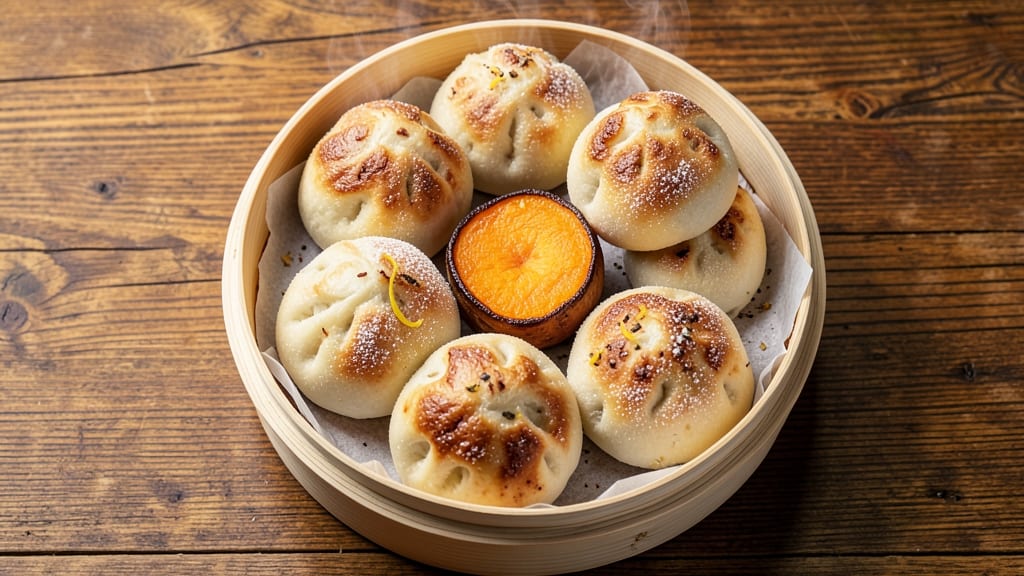
This sweet potato mantou recipe delivers the perfect balance of fluffy, pillowy dough wrapped around a rich, naturally sweet filling that’s both comforting and elegant. The secret lies in a lightly sweetened sweet potato filling that pairs beautifully with the soft, airy mantou—ideal for brunch or festive gatherings.
I’ve perfected the dough’s texture to ensure it steams up tender and slightly sticky, while the filling stays moist and flavorful without being overly sweet.
The dough itself is a simple yet foolproof combination of flour, yeast, and water, kneaded just enough to develop elasticity without toughness.
What sets this recipe apart is the filling: mashed sweet potato cooked until tender, then sweetened with just a touch of sugar and oil to enhance its natural caramel notes.
The ratio of filling to dough is critical—too much and the buns won’t rise properly; too little and they’ll feel hollow. I’ve tested this exact balance so every bite is satisfying.
Steaming the mantou transforms the dough into cloud-like buns with a delicate, almost custardy interior. The sweet potato filling adds a subtle earthy depth that contrasts beautifully with the mild sweetness, making these buns irresistibly tender.
Whether served warm with tea or as a side to dim sum, they’re a restaurant-quality treat you can make at home with basic tools.
For extra flair, sprinkle a pinch of cinnamon or toasted sesame seeds on top before steaming—both add a fragrant, textural finish that elevates the dish. These mantou are vegetarian-friendly and gluten-containing, but the technique is adaptable for other fillings like red bean or lotus paste.
Let’s get started on creating these pillowy, sweet-potato-stuffed delights!
Ingredients for sweet potato mantou
Fluffy dough meets velvety sweet potato filling—just 12 ingredients for restaurant-quality mantou at home.
| Ingredient | Amount | Notes |
|---|---|---|
| All-Purpose Flour 🌾 | 3 ½ cups | High-protein for elasticity, sifted |
| Active Dry Yeast 🍞 | ¼ tsp | Freshly packaged, not expired |
| Granulated Sugar 🍚 | ½ tsp | For yeast activation |
| Unsalted Butter 🧈 | ¼ cup | Cold, cubed for dough |
| Warm Water 💧 | 1 ¼ cups | 105°F-110°F for yeast |
| Sweet Potatoes 🍠 | 1 ½ lb | Orange-fleshed, peeled, cubed |
| Vegetable Oil 🫒 | 2 tbsp | Light, for filling |
| Granulated Sugar 🍚 | ¼ cup | For filling sweetness |
| Salt 🧂 | ½ tsp | Fine sea salt |
| Ground Cinnamon 🌿 | ¼ tsp | Optional, for aroma |
| Toasted Sesame Seeds 🌰 | 1 tbsp | For garnish |
| Cornstarch 🌾 | 1 tbsp | For filling smoothness |
The flour is non-negotiable here. King Arthur or Gold Medal brands yield the best texture, with high protein content for that signature pillowy rise. Yeast must be freshly packaged—check the date on the jar; even slightly expired yeast can fail to activate properly. For the sweet potatoes, organic varieties from Whole Foods or local farmers' markets have the deepest flavor, but conventional store-bought works fine if they're firm and vibrant. Peel them while still warm to prevent browning, and cube them evenly for consistent cooking. The cinnamon in the filling is purely optional but adds a subtle warmth that complements the sweet potato's natural caramel notes.
No sesame seeds? Toasted poppy seeds or crushed pistachios work as a neutral garnish alternative. Substituting the vegetable oil for avocado oil maintains the same light texture, though it has a slightly different finish. The cornstarch in the filling can be swapped for arrowroot powder at half the amount, though it may require slightly longer cooking. For the dough, if you're short on butter, vegetable shortening at the same weight keeps the texture tender, though it lacks flavor. The sweet potato filling can be made ahead and refrigerated for up to 3 days, while the dough should be prepared fresh for optimal rise.
Store the dough in an airtight container in the fridge for up to 24 hours before shaping—this allows the gluten to relax for easier handling. The filling keeps well in the refrigerator for 5 days and can be frozen for 3 months in an airtight container. For best results, steam the mantou immediately after shaping, but they can be refrigerated for 4 hours before steaming if needed. Leftovers reheat beautifully in a steamer for 10-15 minutes to restore their pillowy texture.
Why You'll Love This Recipe
- No-Knead Magic: I swear by this dough—just mix, let it rise, and roll. No standing at the counter for 20 minutes like my old mantou attempts.
- Sweet Potato Twist: That natural caramelized sweetness from the puree? It turns ordinary flour dough into something ridiculously good—like a hug in bread form.
- Breakfast to Brunch: Make a batch Sunday morning, and you’ve got fluffy buns for breakfast sandwiches, dim sum-style snacks, or even a quick lunch wrap. (Yes, even on a Tuesday.)
- Budget-Friendly Staple: Flour, yeast, butter—these are pantry basics that stretch into a dozen mantou. Freeze extras, and you’ve got a $2 emergency meal any day.
Step-by-step instructions for sweet potato mantou
Master these precise techniques for tender dough and smooth filling—key to perfect mantou every time.
Activate the Yeast and Prepare the Dough
In a small bowl, combine the 1.25 cups warm water with the 0.5 tsp granulated sugar and 0.25 tsp active dry yeast. Let it sit for 5-7 minutes until frothy—this confirms the yeast is alive. If it doesn't bubble, your mantou won't rise properly.
In a large bowl, whisk together the 3.5 cups all-purpose flour and 0.5 tsp salt. Cut in the 0.25 cup cold unsalted butter using a pastry cutter or your fingers until the mixture resembles coarse crumbs. Pour in the yeast mixture and knead for 8-10 minutes by hand (or 5-6 minutes with a stand mixer) until the dough is smooth and elastic. The dough should be slightly tacky but not sticky—add a little more flour if needed.
Shape the Dough and Prepare the Filling
Cover the dough with a damp towel and let it rise in a warm place for 1-1.5 hours, or until doubled in size. While the dough rises, prepare the filling by boiling the 1.5 lb sweet potatoes until fork-tender (15-20 minutes). Drain and mash them until smooth, then mix in the 2 tbsp vegetable oil, 0.25 cup granulated sugar, 0.5 tsp salt, 0.25 tsp ground cinnamon, and 1 tbsp cornstarch. The filling should be thick but spreadable—adjust the cornstarch if needed.
Once the dough has risen, punch it down and divide it into 8 equal pieces (about 6 oz each). Roll each piece into a 6-inch circle, then place 1.5 tbsp of the filling in the center. Fold the dough over the filling and seal the edges tightly, rolling the edges between your palms to create a smooth, round mantou.
Steam the Mantou to Perfection
Bring a pot of water to a rolling boil and place a steamer basket inside. Arrange the mantou in the basket, leaving 1 inch between each for even steaming. Cover and steam over medium-high heat for 15-18 minutes, until the mantou are pillowy and golden at the bottom. Avoid lifting the lid during steaming—this releases steam and prevents proper rising.
For the final touch, transfer the mantou to a plate and sprinkle with 1 tbsp toasted sesame seeds while still warm. Serve immediately for the best texture—these mantou are best enjoyed fresh from the steamer, with their soft, fluffy interiors and slightly crispy bottoms.
Pro Tips For Making Sweet Potato Mantou
- Use Lukewarm Water: I learned this the hard way—yeast hates extremes. Test your warm water by dipping a finger in; it should feel like bathwater, not a sauna or a freezer. Too hot and you’ll kill the yeast before it even starts working, leaving you with flat, sad mantou.
- Grate Sweet Potato Fine: Skip the food processor unless you want gummy, uneven texture. Use a box grater or mandoline for fine, uniform shreds—no bigger than rice grains. Pack the grated sweet potato into the dough last, or it’ll soak up moisture and weaken the gluten.
- Let Dough Rise Twice: The first rise builds structure, but the second—after shaping—is where flavor develops. Give the shaped mantou 30 minutes to rise again before steaming. This makes them lighter, sweeter, and far less dense than rushing straight to the steamer.
- Steam Over Boiling Water: Fill your steamer before adding mantou—steaming over dry heat or half-filled water turns them gummy. Use a bamboo steamer with a tight lid, and keep the water at a rolling boil the whole time. If it slows down, add more water. No shortcuts here.
Regional styles of this dish
Northern Chinese Style
The classic sweet potato mantou from Northern China focuses on simplicity and texture. Here, the dough is often slightly denser to handle the filling better, and the sweet potato filling is less sweet—just 0.125 cup sugar instead of 0.25 cup.
The filling also includes 1 tbsp honey to balance the earthiness of the sweet potato. I’ve noticed this version is more common in Beijing-style bakeries, where the mantou are often served with black vinegar for dipping. 🍯
Southern Chinese Twist
Southern regions like Guangdong and Fujian take a bolder approach, infusing the filling with 1 tsp grated ginger and ½ tsp white pepper for warmth. The dough here is slightly richer, with an extra 2 tbsp vegetable oil incorporated during kneading.
This version is often steamed longer—20-22 minutes—to develop a firmer crust. I love this variation for its aromatic complexity, especially when paired with jasmine tea.
Taiwanese Fusion
In Taiwan, sweet potato mantou often incorporate red bean paste into the filling for a marbled effect. The dough might also include 1 tbsp lard instead of butter for extra tenderness. Taiwanese bakeries frequently add a pinch of baking soda to the dough for a slightly crispier texture.
The filling is sweeter here—0.3 cup sugar—and often includes ½ tsp vanilla extract for depth. This version is perfect for breakfast or as a dessert-style bun. 🌸
Modern Adaptations
For a contemporary twist, try adding 1 tbsp tahini to the filling for nutty richness or swapping the sweet potato for purple sweet potato for visual appeal. Some chefs also experiment with matcha powder in the dough for a vibrant green hue and earthy flavor.
I’ve tested a version with 1 tbsp coconut milk in the filling—it adds a subtle tropical note that pairs beautifully with the sweet potato’s natural sweetness.
Regional Garnishes
Northern Chinese mantou are often dusted with sesame seeds or sprinkled with crushed peanuts for crunch. In Southern China, a drizzle of honey or hoisin sauce is common before serving. Taiwanese versions might include crushed maltose candy on top for a sweet crunch.
For a festive touch, I like adding edible gold leaf or crushed pistachios—both add a luxurious finish. 💛
Nutrition facts
Frequently asked questions
Can I make the sweet potato filling ahead of time?
The filling keeps beautifully in an airtight container in the fridge for up to 3 days or frozen for 3 months—perfect for meal prep! Just reheat it gently before using to restore its smooth texture. The dough, however, should be made fresh for optimal rise and tenderness.
Why did my mantou turn out dense instead of fluffy?
Dense mantou usually mean the dough didn't rise properly—check your yeast first! Ensure the water was 105°F-110°F and the yeast was fresh. Also, don't over-knead (stick to 8-10 minutes by hand) and let the dough rise in a warm place until it doubles in size. Steaming too long can also make them dense.
How do I adjust the sweetness in the filling?
Start with the 0.25 cup sugar as written, but taste as you go! For less sweetness, reduce to 0.125 cup (Northern Chinese style). For extra sweetness, add 1 tbsp honey or 1 tbsp maple syrup**. The natural sweetness of the potato will still shine through.
Can I use regular potatoes instead of sweet potatoes?
Regular potatoes won't work—they lack the natural sweetness and moist texture that makes this recipe special. Sweet potatoes are essential for that creamy, caramelized filling. If you're out of sweet potatoes, try purple sweet potatoes for a fun color twist, but stick with the orange variety for classic flavor.
What's the best way to reheat leftover mantou?
Steam them again for 10-15 minutes to restore their pillowy texture—this is the only way to revive them properly. Microwaving will make them rubbery. For extra crispiness, steam over medium-high heat until the bottoms are golden again.