
Soups & Stews
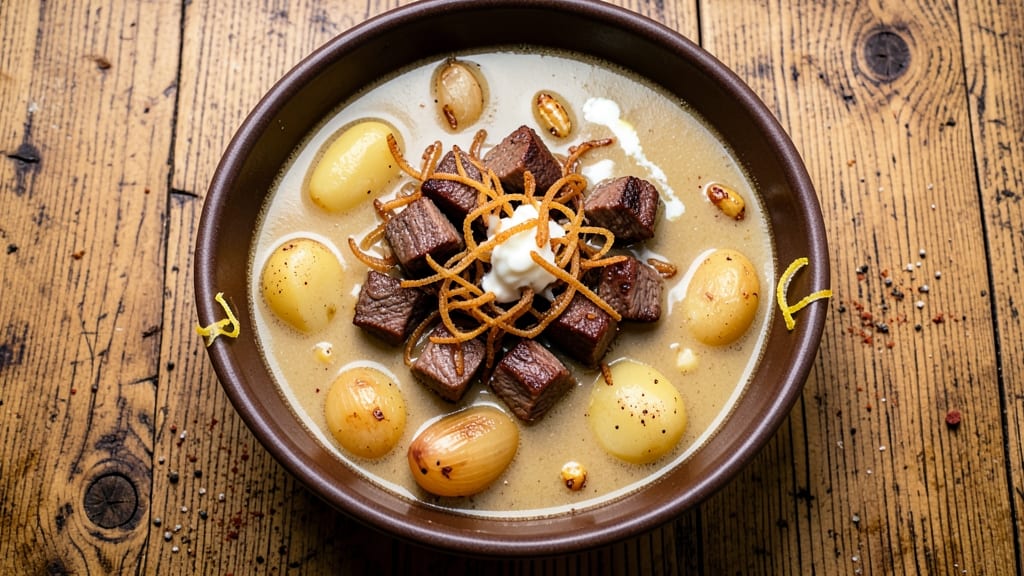
This beefy potato soup recipe delivers the kind of soul-warming comfort that turns chilly evenings into cozy gatherings. The secret lies in slow-browning beef and building flavor through a rich roux—techniques that transform simple ingredients into a hearty stew where tender potatoes and savory meat shine.
I developed this version after years of testing, ensuring every spoonful delivers that perfect balance of creamy texture and robust beefy depth.
The foundation starts with properly seared beef chunks that develop deep, caramelized flavors, while onions and garlic form the aromatic base. A classic roux—equal parts butter and flour—creates the velvety body that makes this soup irresistibly smooth.
The potatoes, chosen for their waxy texture, absorb the rich broth while maintaining their shape, creating that satisfying bite in every spoonful.
What you’ll end up with is a soup so satisfying it becomes the centerpiece of any meal—perfect for family dinners, game days, or when you need a meal that feels like a hug in a bowl.
The slow simmering process ensures the beef becomes fork-tender, while the herbs and spices add layers of warmth that linger on the palate. This isn’t just soup; it’s a restaurant-quality dish you can make at home with simple ingredients and a little patience.
Serve it with crusty bread for dipping or a sprinkle of fresh parsley for brightness. The leftovers reheat beautifully, making it an ideal make-ahead meal for busy weeks. Let’s get started on creating this timeless classic that always delivers.
Ingredients for beefy potato soup
Sixteen ingredients for a soup that tastes like a restaurant-quality hug in a bowl.
| Ingredient | Amount | Notes |
|---|---|---|
| Chuck Roast Beef 🥩 | 1 ½ lb | Cut into 1-inch chunks |
| Yukon Gold Potatoes 🥔 | 3 lb | Waxy variety, cut into 1-inch cubes |
| Yellow Onion 🧅 | 1 whole | Diced, medium size |
| Garlic Cloves 🧄 | 4 cloves | Minced for aromatic base |
| Unsalted Butter 🧈 | ½ cup | For roux, cold preferred |
| All-Purpose Flour 🌾 | ½ cup | White flour for roux |
| Beef Broth 💧 | 6 cups | Low-sodium preferred |
| Whole Milk 🥛 | 1 cup | Full-fat for creaminess |
| Fresh Thyme 🌿 | 2 sprigs | Leaves only, or 1 tsp dried |
| Fresh Parsley 🌿 | ¼ cup | Chopped, for garnish |
| Bay Leaves 🍃 | 2 whole | Remove before serving |
| Salt 🧂 | 1 ½ tsp | Kosher or sea salt |
| Ground Black Pepper 🌶️ | ½ tsp | Freshly ground preferred |
| Worcestershire Sauce 🍶 | 1 tbsp | For umami depth |
The beef is non-negotiable—chuck roast delivers that melt-in-your-mouth texture after slow cooking. Look for cuts with good marbling at Costco or your local butcher shop, where they can cut it for you. Yukon Gold potatoes are ideal—their waxy texture holds up perfectly to simmering without turning mushy. For the roux, Land O'Lakes unsalted butter works best, but any cold butter will do. If you're short on time, pre-cut frozen diced potatoes save chopping effort without sacrificing quality. The beef broth should be low-sodium to control seasoning, but Swanson's beef broth is a reliable pantry staple.
No chuck roast? Stew meat or even brisket works in a pinch, though chuck has the best balance of flavor and tenderness. Skipping the milk? Half-and-half or heavy cream gives similar richness, but the milk adds that signature velvety texture. Fresh thyme is ideal, but dried thyme at one-third the amount gets you close. Worcestershire sauce is the secret weapon here—if you don't have it, soy sauce plus a pinch of sugar mimics the umami-sweet balance. For the flour, King Arthur all-purpose is my go-to, but any white flour will work. The key is whisking it into the butter quickly to avoid lumps.
This soup tastes even better the next day as flavors meld. Store leftovers in an airtight container in the fridge for up to 5 days, or freeze for 3 months in portions. I like to double the recipe and freeze half—perfect for lazy weeknights. For serving, keep the garnish simple: a sprinkle of fresh parsley and a drizzle of extra milk or cream if you want it richer. The bay leaves can be removed early if you prefer less herbal flavor, but I like to let them steep for the full 30-45 minutes of simmering.
Why You'll Love This Recipe
- One-Pot Magic: I swear by this recipe because it’s actually one-pot—no chopping boards cluttered with scraps, no multiple pans to scrub. Just brown the chuck roast in butter, toss in the onions and garlic, add the potatoes, and let it simmer. The beef practically falls apart on its own, and the potatoes absorb all that rich flavor without extra work.
- Rich Without Effort: That chuck roast? It’s the secret weapon here. Slow-cooked until tender, it melts into the soup, turning it into something hearty and satisfying without needing fancy techniques. The Yukon Golds hold their shape while soaking up the beefy broth, and the butter? It adds that velvety finish that makes every spoonful feel like a hug.
- Leftovers That Don’t Suck: Between us, most soups turn into sad, watery leftovers. Not this one. The chuck roast stays juicy, the potatoes stay firm, and the flavor only deepens overnight. I’ve reheated this soup for days, and it’s still the star of my lunch—no sad, mushy textures here.
- Budget-Friendly Crowd-Pleaser: This recipe feeds a family (or a group of hungry friends) without breaking the bank. Chuck roast is affordable, potatoes fill you up, and the ingredients list won’t make you flinch. Plus, it’s the kind of dish that feels special enough for a dinner party but simple enough for a Tuesday night. Honestly, it’s my go-to for when I need to impress without stressing.
Step-by-step instructions for beefy potato soup recipe
Here's how to craft a deeply flavorful beef and potato stew with tender meat and creamy texture.
Brown the Beef for Deep Flavor
Heat a large Dutch oven over medium-high heat. Add the 1.5 lb chuck roast beef cut into 1-inch chunks and brown on all sides, working in batches if needed. This step is crucial—it develops the meat's rich, caramelized crust that carries through the entire soup. You'll know it's ready when the beef releases easily from the pan and has a deep golden color.
Once browned, remove the beef and set aside. Add the diced yellow onion and minced garlic cloves to the same pot, cooking until the onion softens and becomes translucent, about 3-4 minutes. This aromatic base will form the flavor foundation for your soup.
Build the Roux for Creamy Texture
Reduce the heat to medium and add the 0.5 cup unsalted butter to the pot. Once melted, sprinkle in the 0.5 cup all-purpose flour all at once and whisk vigorously for 2 minutes until the mixture turns a rich, golden brown color. This roux will thicken your soup beautifully and create that velvety finish.
Real talk: Don't rush this step. A properly browned roux makes all the difference in the final texture. If it starts to darken too quickly, lower the heat slightly. You want it to be the color of peanut butter—not white flour, not burnt toast.
Deglaze and Simmer the Potatoes
Slowly pour in the 6 cups beef broth while whisking constantly to prevent lumps. Add the 1.5 tsp salt, 0.5 tsp ground black pepper, 1 tbsp Worcestershire sauce, and the 2 sprigs fresh thyme and 2 whole bay leaves. Return the browned beef to the pot along with the 3 lb Yukon Gold potatoes cut into 1-inch cubes.
Bring everything to a gentle boil, then reduce heat to low and let it simmer uncovered for 45-50 minutes until the potatoes are fork-tender. You'll see the potatoes float to the surface as they cook—this is your visual cue they're nearly done. Stir occasionally to prevent sticking at the bottom.
Finish with Creamy Richness
Once the potatoes are tender, stir in the 1 cup whole milk to create that signature creamy texture. The soup should thicken slightly but remain smooth. If it's too thick, you can add a splash of broth or water to reach your desired consistency. Taste and adjust seasoning if needed—this is where you can really refine the balance of flavors.
Simmer for an additional 10 minutes to let the flavors meld together. Remove the bay leaves before serving, as they're not meant to be eaten. The soup should have a rich, hearty aroma with layers of beefy, savory, and slightly sweet potato flavors.
Serve Warm with Fresh Herbs
Ladle the soup into bowls and garnish with 0.25 cup chopped fresh parsley for a pop of color and freshness. Each spoonful should deliver tender beef, creamy potatoes, and that deep, savory broth. This soup tastes even better the next day as the flavors continue to develop, so consider making a double batch for leftovers.
For maximum comfort, serve with crusty bread to soak up every last drop of that rich, flavorful broth. The combination of tender beef, creamy potatoes, and aromatic herbs makes this more than just soup—it's a satisfying, hearty meal in a bowl.
Pro Tips For Making Beefy Potato Soup
- SEAR THE CHUCK ROAST: Hit that chuck roast with a screaming-hot pan—no rushing—and let it brown for 5-6 minutes per side before pulling it out. I learned this the hard way: skipping the sear means flavorless beef that’ll dissolve into mush instead of tender, beefy chunks. (Yes, even if you’re impatient like me.)
- CUT POTATOES UNIFORMLY: Yukon Golds need to cook evenly, so aim for 1.5-inch cubes—no smaller, or they’ll turn to glue. I used to eyeball it and ended up with a soup where some potatoes were al dente and others had turned to paste. A knife and a ruler (yes, really) solve this.
- SWEAT ONIONS LOW AND SLOW: Onions should cry like a sad movie scene before they caramelize—this means 8-10 minutes on medium-low heat, stirring often. After burning three batches, I finally figured out: high heat = bitter onions. Let them soften first, then you can crank up the heat later.
- SALT THE BUTTER FIRST: Toss a pinch of salt into the butter before melting it—this guarantees the soup isn’t bland, even if you forget to season later. I skip this when I’m lazy, but the dish is noticeably better when I don’t. (Your future self will thank you.)
Storing and reheating this beefy potato soup
Refrigerator Storage
Let your beefy potato soup cool to room temperature (about 30-45 minutes) before transferring to airtight containers. I use glass Pyrex bowls with lids because they distribute heat evenly and prevent odors from seeping in.
Store in the fridge at 40°F or below—it’ll keep its rich texture and flavors for up to 5 days. The soup actually improves overnight as the roux and broth meld together beautifully. 🥣
Freezer Prep Tips
For long-term storage, divide the soup into quart-sized freezer bags or airtight containers, leaving 1-inch headspace for expansion. Press out excess air to prevent freezer burn. Label with the date—this soup stays delicious for 3 months.
When ready to reheat, thaw overnight in the fridge for best texture. I like to freeze portions in single-serving sizes for quick lunches. ❄️
Stovetop Reheating
My preferred method is stovetop reheating because it preserves the creamy texture. Transfer soup to a pot and heat over medium-low heat for 10-15 minutes, stirring occasionally. Add 1-2 tablespoons of milk or broth if it thickens too much.
Never boil vigorously—this can make the potatoes mushy. Taste and adjust seasoning after reheating, as flavors can concentrate during storage. 🔥
Microwave Shortcut
For quick reheating, use a microwave-safe bowl and heat on 50% power in 2-minute intervals, stirring between each interval. Cover loosely with a microwave-safe lid to retain moisture.
The soup should reach 165°F internal temperature—use a thermometer if unsure. This method works best for single servings and takes about 3-4 minutes total. 💡
Reviving Texture
If your reheated soup seems too thick, stir in 1-2 tablespoons of milk or broth until creamy. For extra richness, add a pat of butter or a splash of cream.
The roux-based texture can sometimes separate during storage, so whisk vigorously before serving. A sprinkle of fresh parsley or a dash of Worcestershire sauce can also refresh the flavors. 🌟
Make-Ahead Pro Tip
Double the recipe and freeze half for future meals—this is my secret to always having a comforting meal ready. When reheating frozen soup, add 1 extra tablespoon of milk or broth per serving to compensate for moisture loss during freezing.
The first batch you make will be your best teacher—adjust seasoning and cooking times based on your preferences. 💪
Nutrition facts
Frequently asked questions
Can I substitute chuck roast with another beef cut?
For similar tenderness, try stew meat or brisket—both work well with long simmering. If using ground beef, brown it first to develop flavor, but expect a slightly different texture. For leaner cuts like sirloin, add 1 tablespoon cornstarch to the roux to help thicken the soup.
Why does my roux turn dark too quickly?
This happens when the heat is too high. Keep the pan on medium-low heat and whisk constantly for that perfect peanut-butter color. If it darkens too fast, remove from heat immediately—it can recover slightly when you add the broth. A properly browned roux gives the soup its rich, velvety texture.
Can I make this soup in a slow cooker?
Yes! Brown the beef first, then transfer everything to the slow cooker. Cook on low for 7-8 hours or high for 4-5 hours. Add the milk during the last 30 minutes to prevent curdling. The slow cooker method actually enhances the beef's tenderness even more.
How do I fix mushy potatoes?
Use waxy potatoes like Yukon Gold—they hold their shape better. If yours turn mushy, reduce simmering time by 10-15 minutes next time. For immediate fixes, mash a few potatoes with a fork to thicken the soup slightly. Avoid overcrowding the pot during cooking.
What's the best way to make this soup kid-friendly?
Blend a portion with an immersion blender for a smoother texture, or remove the beef and shred it finely before serving. Reduce salt and add a pinch of sugar to balance flavors. Serve with buttered noodles on the side for extra appeal. Kids love the creamy texture!