
Side Dishes
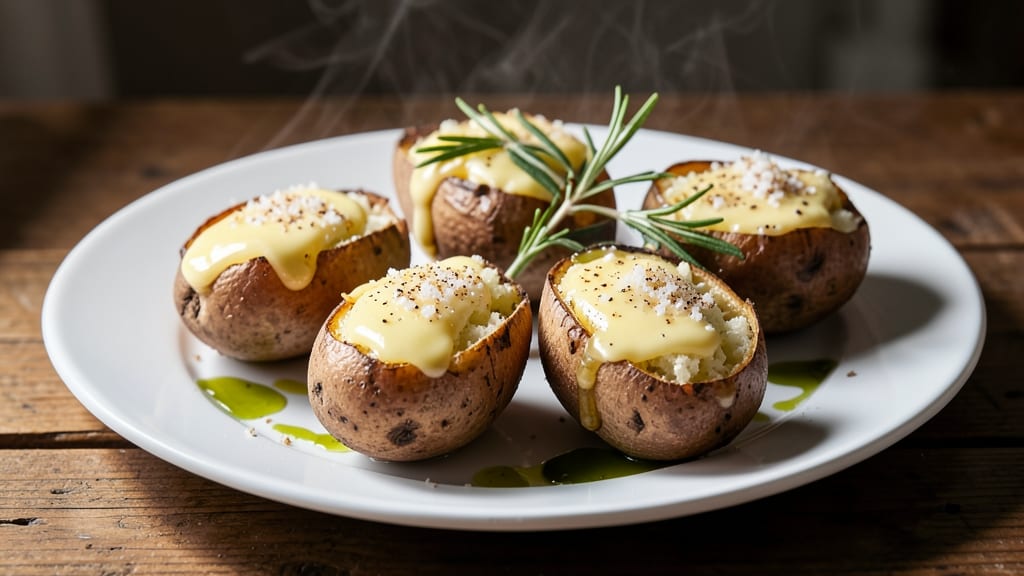
This baked potato dinner recipe delivers restaurant-quality results with crispy skin and fluffy interiors in just 45 minutes—perfect for a hearty, satisfying meal. The secret lies in high-heat baking and proper seasoning, transforming simple russet potatoes into golden, buttery masterpieces that pair beautifully with complementary sides.
Whether you're feeding a family or treating yourself, this method ensures every bite is tender yet crispy at the edges.
What sets this recipe apart is its simplicity: no fancy techniques, just a hot oven and a few key steps. I bake the potatoes directly on the oven rack for even browning, then finish with a sprinkle of garlic powder and butter for extra flavor.
The result is a golden, crackling exterior that gives way to a fluffy, creamy interior—the kind of texture that makes every bite irresistible.
To round out the meal, I recommend pairing these potatoes with a simple roasted vegetable medley or a protein like herb-roasted chicken. The crispy skin holds up perfectly, while the fluffy center soaks up any toppings—whether it’s sour cream, chives, or melted cheese.
This is comfort food at its finest, elevated without the fuss.
The best part? This recipe scales effortlessly for crowds, and leftovers reheat beautifully. With just one pan and minimal prep, you’ll have a satisfying dinner ready in under an hour—no takeout required. Let’s get started!
Ingredients for baked potato dinner
Four russet potatoes, butter, and herbs transform into restaurant-quality dinner masterpieces.
| Ingredient | Amount | Notes |
|---|---|---|
| Russet Potatoes 🥔 | 4 whole | Medium-sized, unpeeled, scrubbed clean |
| Unsalted Butter 🧈 | ½ cup | Cold, cut into 1-inch cubes |
| Garlic Powder 🧄 | 1 tbsp | Freshly ground preferred |
| Diamond Crystal Kosher Salt 🧂 | 1 ½ tsp | Divided for seasoning and finishing |
| Olive Oil 🫒 | 2 tbsp | Extra-virgin for best flavor |
| Fresh Rosemary 🌿 | ½ tsp | Finely chopped, stems removed |
| Fresh Thyme 🌿 | ½ tsp | Leaves only, finely chopped |
| Black Pepper 🌶️ | ½ tsp | Freshly cracked for intensity |
| Sour Cream 🥛 | ½ cup | For serving, full-fat preferred |
| Chives 🌱 | 2 tbsp | Finely chopped, for garnish |
| Shredded Cheddar Cheese 🧀 | 1 cup | Sharp variety for best melt |
| Chicken Broth 💧 | ¼ cup | Low-sodium for seasoning control |
The russets are non-negotiable—Idaho-grown russets from Costco or local farmers markets deliver the best texture. Look for potatoes with smooth, unblemished skin and a firm feel; avoid any with sprouts or soft spots. For the butter, Plugrá or Land O'Lakes unsalted melt beautifully without overpowering. Fresh herbs elevate the dish, so Whole Foods or Trader Joe's are great for high-quality rosemary and thyme. If you can't find fresh, dried works at half the amount, but the flavor won't be as vibrant. Prep the potatoes by piercing each with a fork twice—this prevents explosions in the oven.
No sour cream? Greek yogurt at full-fat works perfectly, though it won't be as tangy. Substitute the chicken broth with vegetable broth for a vegetarian option, but reduce the salt by half since broths vary in sodium content. For the cheese, sharp cheddar is ideal, but Monterey Jack or pepper jack add different but delicious flavors. If you're scaling up for a crowd, increase the butter by 25%—it enhances the crispiness without making the potatoes greasy. The key to the crispy skin is the high-heat bake, so don't skip the oven rack placement; it ensures even browning on all sides.
Store leftover potatoes in an airtight container for up to 3 days, though they're best enjoyed fresh. Reheat in a 350°F oven for 10-15 minutes to restore crispiness. The butter and herbs keep well in the fridge for 3 months, while the cheese should be used within 2 months for optimal flavor. For meal prep, bake an extra potato or two—reheated portions make quick lunches. Garnish with chives and cheese right before serving to keep toppings fresh and vibrant.
Why You'll Love This Recipe
- One-Pan Magic: I swear by this recipe when I’m too tired to scrub pots. Toss those Russets straight from the bag onto a sheet pan—no peeling, no fuss—just a drizzle of olive oil, a sprinkle of salt, and a whiff of garlic powder. Forty minutes later, you’ve got dinner without washing a single extra dish.
- Crispy-Creamy Bliss: That first bite? Buttery skin so crisp it shatters, giving way to a fluffy interior that melts like a cloud. Honestly, the secret’s in the butter—don’t skimp, and let it get golden at the edges. It’s the kind of flavor that makes people ask, “What’s in this?”
- Weeknight to Potluck: Make a double batch on Sunday and reheat them all week—microwave or oven, they’re just as good. Bring them to a picnic, a game day, or even a holiday spread. They’re hearty enough for a crowd but simple enough to throw together when you’re running late.
- Budget Stretch: Russets are cheap, and this recipe feeds four for under $5. Between us, it’s my go-to when money’s tight but I still want something satisfying. The garlic powder and salt elevate them without breaking the bank—just good, honest flavor that fills the plate and the wallet.
Step-by-step instructions for baked potato dinner
Here's the method to achieve restaurant-quality baked potatoes with perfectly crispy skin and fluffy interiors.
Preheat and Prepare the Potatoes
Preheat your oven to 425°F—this high temperature is essential for achieving that signature crispy skin. While the oven heats, scrub the 4 whole Russet Potatoes thoroughly under cold water to remove any dirt, but leave the skin intact. This scrubbing removes surface starch that could prevent crispiness.
Using a fork, pierce each potato 4-6 times around the surface. This step prevents them from bursting during baking by allowing steam to escape. Place the potatoes directly on the oven rack (no pan needed) to ensure even heat circulation on all sides. This positioning is crucial for developing that coveted crispy exterior.
Season and Roast for Initial Crisp
In a small bowl, combine 1 tablespoon Garlic Powder, 1 teaspoon Diamond Crystal Kosher Salt, 0.5 teaspoon Fresh Rosemary, and 0.5 teaspoon Fresh Thyme. Rub this mixture evenly over each potato, pressing the seasoning into the skin. The rosemary and thyme will infuse the potatoes with aromatic depth while baking.
Bake the potatoes for 30 minutes until the skin begins to develop golden-brown spots. You'll notice the edges start to crisp—that's your signal to flip them. Rotate each potato 180 degrees and continue baking for another 15 minutes. This two-stage approach ensures even browning and prevents any one side from overcooking.
Add Butter and Broth for Moisture
After the initial baking, remove the potatoes from the oven and let them cool slightly for 2 minutes. Using a sharp knife, carefully slice each potato lengthwise to create two halves. Arrange them cut-side up on a baking sheet. Place the 0.5 cup Unsalted Butter (cut into 1-inch cubes) and 0.25 cup Chicken Broth between the halves.
Return the potatoes to the oven and bake for an additional 10 minutes at 425°F. The butter will melt and baste the interior, while the broth adds moisture to prevent dryness. You'll know they're done when the edges are deeply golden and the flesh is tender enough to pierce easily with a fork. The butter should be completely melted and absorbed.
Create the Topping Mixture
In a small bowl, combine the remaining 0.5 teaspoon Diamond Crystal Kosher Salt, 0.5 teaspoon Black Pepper, and 1 cup Shredded Cheddar Cheese. Stir in the 2 tablespoons Olive Oil to create a creamy, flavorful base. This mixture will become the rich, cheesy topping that complements the fluffy potato interior.
Once the potatoes are out of the oven, use a spoon to fluff the flesh gently, creating room for the toppings. Spoon the cheese mixture evenly over each potato half, pressing down lightly to help it melt into the creamy texture. The cheese should begin to soften immediately from the residual heat.
Serve with Sour Cream and Chives
Let the potatoes rest for 3 minutes to allow the cheese to fully melt and set. This resting period ensures the toppings adhere properly and creates a smooth, cohesive surface. Serve each portion topped with a dollop of 0.5 cup Sour Cream and sprinkled with 2 tablespoons Chives.
The contrast between the crispy skin, fluffy interior, and creamy toppings creates a perfect balance of textures and flavors. Each bite should deliver the savory depth of the herbs, the richness of the butter and cheese, and the cooling tang of the sour cream. This technique guarantees a restaurant-quality baked potato dinner every time.
Pro Tips For Making Baked Potato Dinner
- PIERCE POTATOES FIRST: Stick a fork in each potato before baking—yes, even if it feels like overkill. I learned this the hard way when my potatoes turned out dense and undercooked inside. A few quick jabs lets steam escape, guaranteeing a fluffy interior every time.
- USE 450°F, NOT LOWER: Russets need high heat to crisp properly. I used to bake them at 400°F and ended up with soggy skins. Crank your oven to 450°F for the first 20 minutes, then drop to 400°F—this builds that perfect crust without burning the outside.
- SALT THE SKIN BEFORE OIL: Sprinkle kosher salt directly on dry potato skins before drizzling olive oil. The salt dissolves into the moisture, seasoning the flesh as it bakes. I skipped this once and regretted it—flat, bland potatoes are no fun.
- REST THEM WRAPPED: Pull potatoes out of the oven, wrap them in foil, and let them sit for 5-10 minutes. This traps steam and keeps them from turning gummy when you cut into them. I know, I know—it feels like cheating, but it’s the only way to avoid sad, dry insides.
Perfect pairings for this dish
Classic Topping Trio
Start with the sour cream and chives combo—it’s a timeless pairing that adds creaminess and freshness. Dollop ½ cup full-fat sour cream on each half and sprinkle with 2 tbsp finely chopped chives for a pop of color and bright onion flavor.
I like to press the chives gently into the potato so they stay put. For extra richness, add a pinch of ½ tsp Diamond Crystal Kosher Salt and ¼ tsp black pepper to the sour cream before serving. 🥛
Cheesy Loaded Potato
Transform your baked potato into a loaded masterpiece with 1 cup shredded sharp cheddar cheese mixed with 2 tbsp olive oil, ½ tsp garlic powder, and ½ tsp black pepper.
Spoon this mixture over the fluffy potato halves and broil for 2-3 minutes at 400°F until the cheese melts into a golden, bubbly blanket. For a smoky twist, swap ½ cup cheddar for ½ cup smoked gouda—it adds depth without overpowering. 🧀
Protein Pairings
Balance the richness with lean protein like grilled lemon-herb chicken or pan-seared salmon.
For chicken, marinate 4 boneless breasts in 2 tbsp olive oil, 1 tbsp lemon juice, 1 tsp fresh rosemary, and ½ tsp garlic powder for 30 minutes, then grill at 400°F for 15-18 minutes.
Serve with a simple arugula salad tossed in 1 tbsp balsamic vinaigrette to cut through the buttery potatoes. For salmon, season with ½ tsp paprika and ½ tsp salt, then pan-sear for 4-5 minutes per side. 🍗
Roasted Veggie Medley
Roast 1 lb baby carrots, 1 lb baby potatoes, and 1 red onion (cut into wedges) on a sheet pan with 2 tbsp olive oil, 1 tsp garlic powder, and ½ tsp smoked paprika at 425°F for 25-30 minutes.
Toss with 1 tbsp fresh thyme before serving. The caramelized edges and earthy flavors complement the buttery potatoes beautifully. For a pop of color, add ½ cup cherry tomatoes in the last 10 minutes of roasting. 🥕
Crunchy Additions
Add texture with toasted pumpkin seeds or crispy bacon. For seeds, toss ½ cup raw pumpkin seeds with 1 tsp olive oil and ¼ tsp salt, then toast in a dry skillet over medium heat for 3-4 minutes until golden.
For bacon, cook 4 slices until crispy, then crumble on top. Both add a satisfying crunch that contrasts the creamy potato. 🥓
Dipping Sauces
Serve with garlic aioli or spicy ranch for dipping. For aioli, mix ½ cup mayonnaise, 1 minced garlic clove, 1 tsp lemon juice, and ½ tsp salt.
For ranch, blend ½ cup sour cream, 2 tbsp buttermilk, 1 tbsp chopped dill, 1 tsp onion powder, and ½ tsp cayenne pepper. Both sauces elevate the meal with extra flavor layers. 🍽️
Nutrition facts
Frequently asked questions
Why do I need to pierce the potatoes before baking?
Piercing the potatoes 4-6 times with a fork prevents them from bursting during baking. Russets contain moisture that turns to steam—without holes, the pressure builds up and can cause explosions in the oven. The small holes let steam escape gradually, ensuring even cooking and that perfect fluffy interior.
Can I bake the potatoes in foil instead of on the oven rack?
Foil will make the skin soggy instead of crispy! The oven rack is key for even heat circulation on all sides. If you must use foil, wrap each potato individually, leaving the top uncovered to allow browning. For best results, stick with the rack method described in the recipe.
How do I reheat leftover baked potatoes?
For crispy skin, reheat in a 350°F oven for 10-15 minutes on a baking sheet. To speed things up, use the microwave for 1-2 minutes (covered) to warm the interior, then finish in the oven. Avoid the microwave alone—it steams the potatoes instead of crisping them.
What's the best way to test if a baked potato is done?
Use a fork to pierce the potato—if it slides in easily with no resistance, it's perfectly cooked. The skin should also be golden-brown and crispy. For extra assurance, cut into one potato: the flesh should be fluffy with no hard spots.
Can I use sweet potatoes instead of russets?
Sweet potatoes work differently—they're naturally sweeter and have a softer texture. For best results, reduce baking time by 10-15 minutes and lower the oven to 400°F. The skin won't get as crispy, but they'll still be delicious. For a classic baked potato experience, stick with russets.