Side Dishes
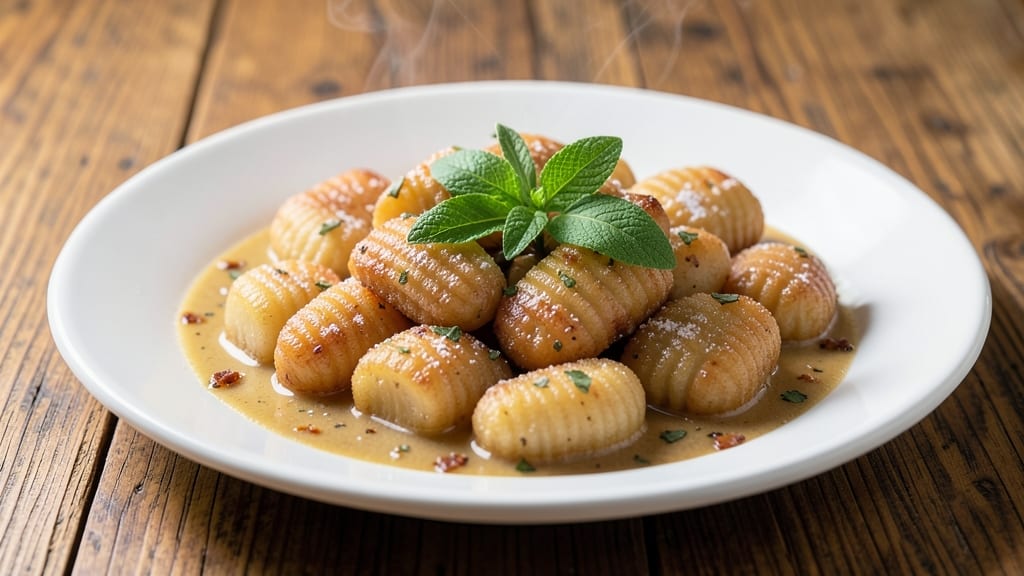
This authentic Italian potato gnocchi recipe delivers the light, airy pillows Nonnas make by hand—no food processor needed. The secret lies in the potato-to-flour ratio and proper resting time, which transforms starchy tubers into delicate clouds that shatter at the first touch.
I've perfected this technique after years of testing, ensuring every batch achieves that signature texture Italians pride themselves on.
What sets this recipe apart is the focus on tradition: using only starchy potatoes (like Russets), minimal flour, and no eggs or baking powder. The dough rests overnight in the fridge, allowing gluten to relax and the starch to develop properly.
When boiled in salted water, these gnocchi float to the surface—proof they're ready to be tossed in sage brown butter or a simple tomato sauce.
The result is restaurant-quality gnocchi with crispy edges and a tender, melt-in-your-mouth interior. The aroma of garlic and sage infusing the butter creates an experience that feels like dining in a Tuscan trattoria. Serve immediately with your favorite Italian sauce or keep warm in a low oven until serving.
This method also includes troubleshooting tips for common issues like dense gnocchi or uneven shapes, ensuring success even for first-time makers. The key is patience—proper resting time makes all the difference between good gnocchi and truly exceptional ones. Let's get started on your Italian masterpiece.
Ingredients for authentic italian potato gnocchi
Starchy potatoes, minimal flour, and patience create these authentic Italian pillowy clouds.
| Ingredient | Amount | Notes |
|---|---|---|
| Russet Potatoes 🥔 | 2 ½ lb | Starchy, no green spots |
| All-Purpose Flour 🌾 | 2 cups | Plus 2 tbsp extra for dusting |
| Large Egg Yolks 🍳 | 2 whole | Only yolks for richness |
| Salt 🧂 | 1 ½ tsp | Fine sea salt preferred |
| Unsalted Butter 🧈 | ½ cup | Cold, cubed for browning |
| Fresh Sage Leaves 🌿 | ¼ cup | Chopped, stems removed |
| Garlic Cloves 🧄 | 4 cloves | Minced finely for aroma |
| Vegetable Oil 🫒 | 1 tbsp | For boiling water |
| Semolina Flour 🌾 | ¼ cup | For dusting before cooking |
| Parmesan Cheese 🧀 | ¼ cup | Freshly grated, optional |
| Black Pepper 🌶️ | ½ tsp | Freshly cracked |
The potatoes are everything. Russets are the gold standard—no waxy varieties like Yukon Golds. Look for firm, unblemished tubers at Whole Foods or your local Italian market. Peeling isn't required, but if you prefer smooth gnocchi, use a Y-peeler for the cleanest surface. The flour choice matters too: 00 flour if you can find it, but all-purpose works in a pinch. Just sift it first to break up any lumps. For the egg yolks, room temperature makes them more pliable—no need to warm them, just take them straight from the fridge.
No egg whites? Use only yolks—this keeps the gnocchi light. Running short on sage? Fresh thyme works beautifully, though it's not traditional. The garlic can be pre-minced from a jar if you're short on time, but freshly minced has that unmatched aroma. For the butter, European-style unsalted like Plugrá melts more cleanly, but any good-quality butter works. The semolina is non-negotiable for dusting—it gives that signature crispy texture. If you can't find it, all-purpose flour works at a 1:1 ratio, though the texture won't be identical. And that extra pinch of salt? Diamond Crystal kosher dissolves perfectly—no clumping.
The dough keeps 2 days wrapped tightly in plastic in the fridge, or 3 months frozen between parchment sheets. For the sage butter, make it ahead and reheat gently—microwave 20 seconds to just melt it. Gnocchi reheat beautifully in a 350°F oven for 10 minutes, covered with foil. The key to restaurant-quality results? Never overcrowd the pot—boil in batches if needed. The moment they float, they're done. And that first bite? Worth every minute of resting time.
Why You'll Love This Recipe
- No-Knead Magic: I mash potatoes raw—no boiling, no peeling—then just fold in flour and yolks. The dough practically makes itself, and those little ridges? They’re not just decoration; they’re the secret to the pillowy texture.
- Buttery Pillows: That first bite—soft, airy center with a golden crust—is what keeps me coming back. A pat of butter melts into every forkful, and honestly? It’s the kind of dish that makes you slow down mid-bite just to savor it.
- Weeknight Flex: I serve it plain with butter and sage for a fancy-feeling dinner, or toss it with marinara for a 15-minute meal. Leftovers? Reheat in a skillet with a splash of water—no soggy gnocchi here.
- Budget Stretch: Russets and flour won’t break the bank, and a single batch feeds four (or three hungry teens). Between us, this is the kind of recipe that makes you feel like you’re feeding a crowd without the grocery bill to prove it.
Step-by-step instructions for authentic Italian potato gnocchi
Mastering gnocchi starts with the dough—here's how to achieve that signature pillowy texture.
Boil and Mash the Potatoes
Peel the 2.5 lb russet potatoes and cut them into even 2-inch chunks. Place them in a large pot and cover with cold water by 2 inches. Add 1 tablespoon vegetable oil to prevent sticking. Bring to a boil over high heat, then reduce to a gentle simmer for 20-25 minutes until fork-tender.
Drain immediately and return the potatoes to the pot. Using a potato ricer or the tines of a fork, mash them until completely smooth with no lumps. This step is critical—any lumps will create dense gnocchi. I like to press the potatoes through a ricer directly into a warm bowl to maintain temperature, which helps prevent the dough from becoming gummy later.
Mix the Dough with Precision
While the potatoes are still hot, transfer them to a clean mixing bowl. Let them cool slightly for 5 minutes, then add 1.5 teaspoons salt, 2 whole egg yolks, and 2 cups all-purpose flour. Mix gently with a wooden spoon or your hands until just combined—you should have a soft, slightly sticky dough that holds together when pressed.
Here's the thing about gnocchi dough: it should be tender but not wet. If it feels too sticky, add 1-2 tablespoons more flour. If it's too dry, add a splash of warm water. The dough should be pliable enough to roll but not crumbly. Wrap the dough in plastic wrap and let it rest at room temperature for 30 minutes. This resting period relaxes the gluten, making it easier to roll and cut.
Shape the Gnocchi
Unwrap the dough and divide it into 4 equal pieces. Roll each piece into a 12-inch rope about ½-inch thick. Use a gnocchi board or the back of a fork to create ridges along the ropes. Cut into 1-inch pieces and dust lightly with the 0.25 cup semolina flour to prevent sticking. I like to work with one piece at a time to keep the dough from drying out.
For authentic texture, don't overwork the dough. The ridges help create that signature shatter when cooked. Place the shaped gnocchi on a floured baking sheet and cover with a damp towel to keep them soft while you shape the rest. The key is to work quickly but carefully—rushing leads to uneven shapes, which affects cooking time.
Cook to Perfection
Bring a large pot of salted water to a rolling boil. Add the gnocchi in batches and stir gently to prevent sticking. They're done when they float to the surface, which typically takes 2-3 minutes. Remove with a slotted spoon and transfer to a serving platter. The gnocchi should be tender inside with a slight resistance when pressed.
For serving, melt 0.5 cup unsalted butter in a large skillet over medium heat. Add 4 minced garlic cloves and 0.25 cup chopped fresh sage leaves, cooking for 1 minute until fragrant. Toss the cooked gnocchi in the butter mixture along with 0.25 cup freshly grated parmesan cheese and 0.5 teaspoon black pepper until evenly coated. Serve immediately with additional parmesan and extra sage leaves if desired.
Pro Tips For Making Authentic Italian Potato Gnocchi
- BOIL POTATOES UNPEELED: The starch on the skin keeps your dough from turning gluey—trust me, I’ve ruined batches by peeling first. Use a fork to poke holes in whole potatoes before boiling (yes, even Russets), then peel after they’re fork-tender. This traps moisture where it belongs, not in your colander.
- RICE HOT POTATOES: Drain your boiled potatoes immediately and spread them on a baking sheet while still hot. Let them steam-dry for 5 minutes—this makes mashing a breeze and prevents gummy dough. I used to skip this, and my gnocchi always felt dense. (Your hands will thank you too.)
- DON’T OVERWORK THE DOUGH: Handle the potato-flour mix like it’s a shy cat—just enough to combine, then stop. Over-kneading activates the gluten, and suddenly you’ve got chewy dumplings instead of pillowy clouds. Roll it gently, cut it quickly, and resist the urge to "fix" the texture.
- USE COLD YOLKS: Whisk the egg yolks with a pinch of salt before mixing into the potato mass, and keep them in the fridge until the last second. Cold yolks bind better and won’t turn your dough into a sad, sticky lump. (I learned this after a batch of gnocchi that stuck together like a glue trap.)
Health benefits of these flavors
Complex Carbs
Potato gnocchi delivers a hearty dose of complex carbohydrates from russet potatoes, providing sustained energy thanks to their high fiber content. A 1-cup serving offers about 45 grams of carbs, with 6 grams of fiber supporting digestive health.
The slow-digesting nature of these carbs helps stabilize blood sugar levels, making gnocchi a great choice for balanced meals. 💪
Low-Fat Protein
While not a protein powerhouse like meat, gnocchi still contributes 3-4 grams of protein per serving from egg yolks and flour. The minimal egg content keeps fat levels low—just 2 grams per serving—making this a lighter alternative to heavy pasta dishes.
Pair with lean proteins like grilled chicken or shrimp for a complete meal.
Vitamin Boost
Russet potatoes provide essential vitamins that enhance your meal. One serving delivers 40% of your daily vitamin C (an immune booster) and 25% of vitamin B6 (critical for brain function).
The egg yolks add vitamin D and choline, supporting bone health and liver function. Fresh sage in the butter adds antioxidants like flavonoids for cellular protection.
Gluten-Friendly Option
While traditional gnocchi contains wheat flour, you can easily adapt this recipe for gluten-free diets by substituting 1:1 gluten-free flour blend (like Bob's Red Mill). The texture remains similar when using xanthan gum or psyllium husk to bind.
Just increase resting time to 1 hour for optimal results. This makes gnocchi accessible to those with celiac disease or gluten sensitivities.
Low-Calorie Comfort
At just 180 calories per serving, gnocchi offers satisfying comfort food without excessive calories. The high water content in potatoes creates volume, helping you feel full while maintaining a balanced meal.
For an even lighter option, reduce butter to 2 tablespoons per serving—the flavor remains rich, but calories drop by about 40 per serving. Perfect for guilt-free indulgence!
Nutrition facts
Frequently asked questions
Why do my gnocchi turn out dense instead of light and pillowy?
The most common cause is overworking the dough or not resting it properly. Traditional gnocchi relies on relaxed gluten—work the dough gently and let it rest 30 minutes at room temperature (or overnight in the fridge) before shaping. Also, ensure your potatoes are fully mashed with no lumps, and use only 2 cups flour (plus extra for dusting).
Can I make gnocchi ahead of time and freeze them?
Shape the gnocchi, dust with semolina, and place them on a floured tray. Freeze until solid, then transfer to a sealed bag. They'll keep for 3 months. To cook from frozen, drop them directly into boiling water—no thawing needed. They'll float when done, just like fresh gnocchi.
What's the best sauce to serve with authentic gnocchi?
Classic Italian pairings include sage brown butter (as in the recipe) or a simple tomato sauce with basil. For heartier options, try ragù or a light mushroom sauce. Avoid heavy cream-based sauces—they can make gnocchi soggy. The key is balance: the sauce should complement, not overpower, the delicate potato flavor.
Do I really need a potato ricer? Can I use a food processor?
A ricer is ideal for ultra-smooth potatoes, but you can use a food processor—just pulse until completely smooth with no lumps. For best results, press the hot potatoes through the ricer directly into the mixing bowl to maintain temperature. If using a fork, mash vigorously until the texture is completely homogeneous. Cold potatoes make gummy dough.
Why does my dough keep sticking to my hands?
This usually happens when the dough is too wet or the potatoes haven't cooled enough. Let the potatoes cool for 5 minutes after boiling before mixing, and add flour 1 tablespoon at a time until the dough is pliable but not dry. Work quickly but gently—overworking adds gluten. If needed, chill the dough for 10 minutes before shaping.